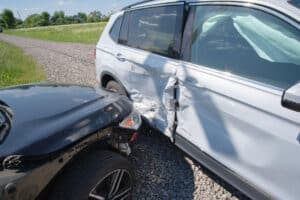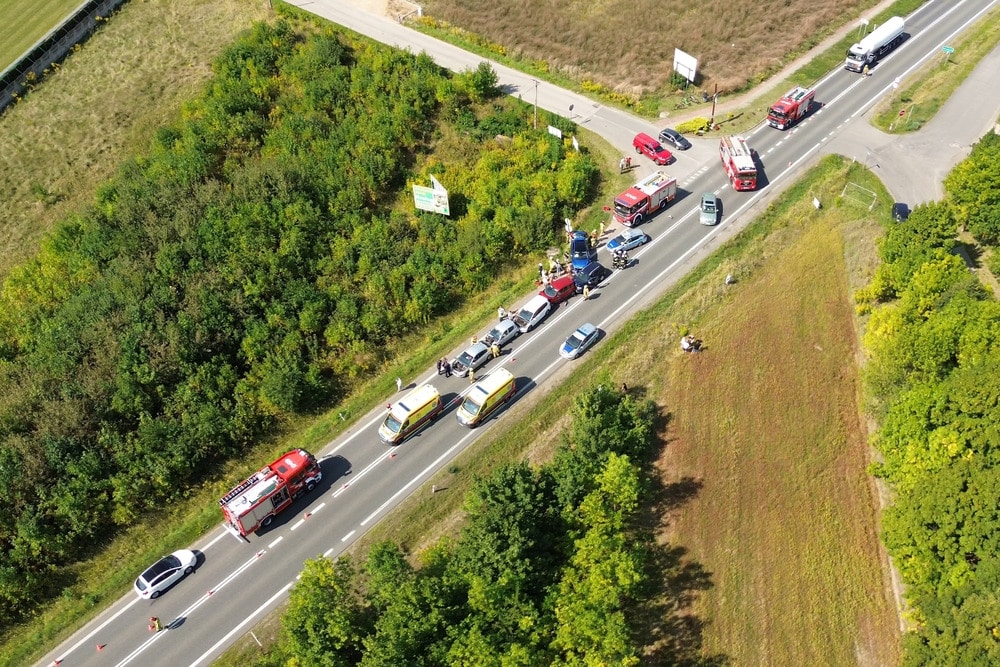
Multi-vehicle car accidents are often analyzed as if everything happened in a single, clear sequence. In reality, what each driver actually perceives is shaped heavily by where their attention is focused in the seconds leading up to the crash. Those attention patterns—constantly shifting, limited, and influenced by traffic pressure—can lead to very different interpretations of the same incident.
This becomes especially important in post-accident analysis, where understanding what each driver was actually able to see often matters as much as what physically occurred. In many situations, legal representation after a car crash involves carefully examining how attention, timing, and perception influenced each account of the event.
Why Driver Attention Is Rarely Fully Fixed on One Point
Driving is not a single-focus activity. Even in normal conditions, attention constantly shifts between the road ahead, rearview and side mirrors, lane boundaries, speed adjustments, and surrounding vehicles. Each of these inputs competes for mental processing in real time.
Most drivers are not fully aware of how frequently their focus changes. A brief glance at a mirror, a check of a blind spot, or a moment of adjusting speed all require attention shifts that interrupt continuous observation of the roadway. These micro-shifts are normal, but they mean that no driver has a complete, uninterrupted view of everything happening around them.
In multi-vehicle environments, these shifts become even more significant because multiple events may be unfolding at once across different lanes and distances.
How Divided Attention Shapes What Drivers Actually See
When attention is divided, drivers often process only fragments of a larger sequence. One driver may be focused on the vehicle directly ahead, while another is monitoring an adjacent lane for merging traffic. Each person is effectively observing a different slice of the same environment.
In a multi-vehicle collision, this means drivers may not witness the initiating event. Instead, they may only see the reaction—braking, swerving, or sudden lane changes—without fully seeing what caused it.
This fragmented attention creates natural gaps in perception. Those gaps later influence how the event is described, even when all drivers are recalling the incident in good faith.
The Importance of Lane Monitoring Behavior
Lane position plays a major role in how much of a developing situation a driver can actually observe. Most drivers focus primarily on their own lane, with brief checks into adjacent lanes when necessary.
However, in dense traffic conditions, lane monitoring becomes more complex. Drivers may be:
- tracking vehicles merging in and out,
- adjusting spacing in stop-and-go conditions,
- or reacting to unpredictable speed changes nearby.
Because attention is often anchored to a specific lane, events occurring in other lanes may only be partially visible or noticed after they have already progressed.
This is especially relevant in multi-vehicle collisions, where the sequence often spans multiple lanes almost simultaneously.
How Reaction Timing Changes What Each Driver Experiences
Reaction timing is another factor that influences perception. Even a difference of a second or two can change what a driver actually observes.
A driver who reacts early may see the beginning of a chain reaction, such as a sudden brake event or lane change. Another driver who reacts slightly later may only see the aftermath, such as a collision already unfolding.
Once drivers begin reacting—braking, steering, or trying to avoid impact—their attention narrows further. This survival-focused attention reduces awareness of broader surroundings, meaning the full sequence is rarely observed by any one driver.
These differences in timing naturally lead to variations in how the same event is later described.
Why Peripheral Awareness Is Often Limited
While drivers technically have peripheral vision, it is not always actively used for detailed observation, especially at higher speeds or in dense traffic conditions. Peripheral awareness is often reserved for detecting movement or general spatial awareness, not for tracking precise actions in adjacent lanes.
In heavy traffic, drivers tend to prioritize what is directly in front of them. This means important movements happening slightly outside the central field of focus may not be fully registered until later.
In multi-vehicle accidents, this limitation becomes important because critical movements often happen simultaneously across different parts of the roadway.
How Cognitive Load Influences Perception
Cognitive load refers to the mental effort required to process multiple inputs at once. Driving in moderate to heavy traffic significantly increases this load. Drivers are not only controlling their vehicle but also continuously assessing speed, distance, lane position, and surrounding behavior.
As cognitive load increases, attention becomes more selective. Drivers may unconsciously prioritize immediate threats—such as the car directly ahead—while reducing attention to secondary areas.
In complex roadway environments, this can mean that no driver is fully processing the entire situation. Instead, each driver is managing a limited subset of available information.
In post-incident evaluations, legal representation after a car crash may involve analyzing how cognitive load influenced what each driver was realistically able to observe at the time of the collision.
Why Different Attention Patterns Lead to Different Accounts
Because attention varies from driver to driver, each participant in a multi-vehicle accident effectively experiences a different version of the event. One driver may recall a sudden lane change, while another remembers heavy braking. A third may only remember impact.
These differences are not necessarily contradictions—they often reflect different observation points within the same fast-moving sequence. Memory is shaped by what was actively noticed, not what was happening in its entirety.
Over time, discussions between drivers or witnesses can also subtly influence how events are remembered, further shaping individual accounts.
Conclusion
Multi-vehicle car accidents are rarely experienced as complete, uninterrupted events by any single driver. Instead, they are seen through shifting attention patterns influenced by lane position, reaction timing, cognitive load, and moment-to-moment focus.
Because attention is naturally limited and constantly divided, each driver captures only a portion of the full sequence. This is why accounts of the same accident can differ without any intentional inconsistency.
Understanding how attention patterns shape perception is essential to reconstructing what likely occurred. Rather than relying on a single viewpoint, the full picture emerges only when fragmented observations are carefully considered together.
By Jason Hercul