By Humphrey Bwayo
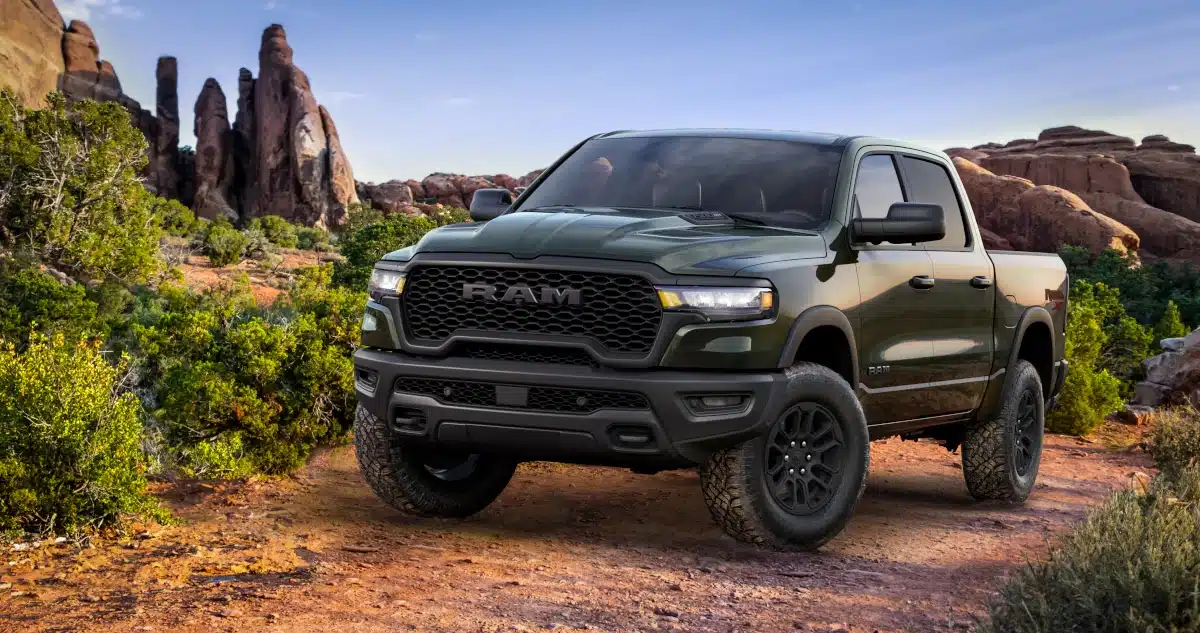
America’s pickups have grown into roomy, richly equipped vehicles that can serve as family transportation as easily as job-site tools. Yet buying more truck can leave you with less capacity for the people and equipment you need to carry.
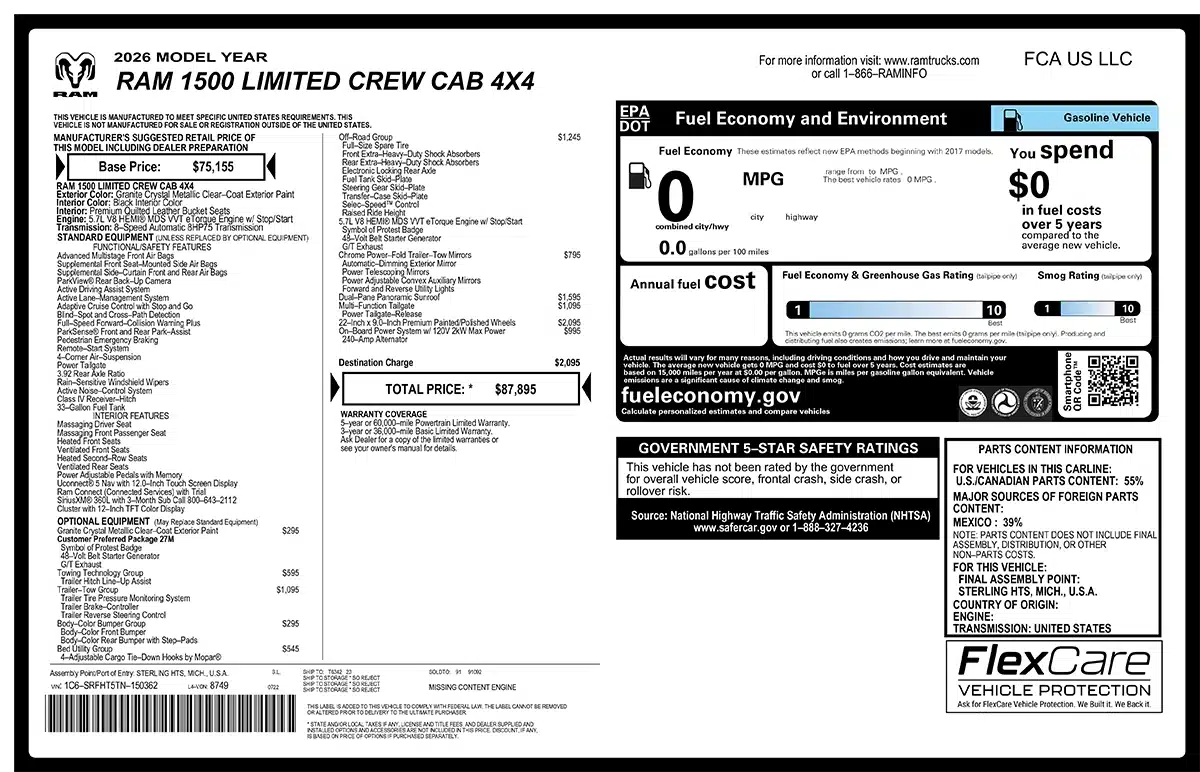
Imagine a full-size pickup reaching its load limit with just two adults, a small boat in tow and their weekend gear, despite having three more seats. Yup, that could happen with the unusually loaded 2026 Ram 1500 Hemi Limited we covered, which had an $87,895 sticker price and only 897 pounds of payload. Here’s how that can happen, and why it raises a bigger question about who today’s trucks are being built for.
What payload means and why the Ram matters
Payload is the combined weight a truck can carry, including the driver, passengers and cargo. Ford’s towing guidance explains that people count toward that allowance. So do accessories added after manufacture and the downward weight a trailer puts on the hitch.
For the hypothetical boat trip, two 200-pound adults, 350 pounds of trailer tongue weight and 150 pounds of gear and added equipment total 900 pounds. That is three pounds over the Ram’s allowance with three seats still empty. Actual weights determine the outcome, but the example shows why an empty bed does not necessarily mean plenty of capacity.
The 897-pound Ram was a unicorn. After contacting Ram about the truck featured by Truck King, Tim Esterdahl reported that its exceptionally optioned build was intended more for factory practice and marketing than as a typical customer configuration. It does not represent every Limited, much less every Ram 1500.
Still, it illustrates a real trade-off. When equipment adds weight without an equivalent increase in the truck’s permitted loaded weight, less payload remains. More expensive seats and other upgrades can make a truck more comfortable while leaving less allowance for the people sitting in it.
Ram advertises up to 2,360 pounds of payload for the 2026 Ram 1500, achieved by a properly equipped Quad Cab 4×2 with the 3.6-liter V6 with eTorque. That is a full-size, light-duty truck, the class commonly called a half-ton. The advertised maximum may differ substantially from the rating on a loaded truck at the dealership. The occupant-and-cargo label in its driver’s door opening is the number that matters.
Bigger trucks do not automatically mean more working capacity
The growth in truck size is measurable. The EPA’s 2025 Automotive Trends Report found that average pickup footprint increased 3.9% between model years 2008 and 2024. Footprint measures wheelbase multiplied by average track width, not bed space or payload. The pickup category includes different sizes, but the trend supports the broader point: these vehicles occupy more space without that measurement telling us how much useful load they carry.
Axios’ historical F-150 comparison also illustrates the move toward larger cabs and proportionally shorter beds.
A bigger cab has real value for a family or a contractor transporting a crew. But the space behind the front seats cannot replace an open bed for dirty equipment, and a spacious interior cannot override a low payload rating. The dimensions buyers see and the working capacity they need are different things.
The way owners use their trucks helps explain the competing priorities. In its November 2025 interview with Strategic Vision president Alexander Edwards, Carscoops reported that 32% of full-size truck owners never tow, while 61.3% haul something in the bed at least monthly. Those figures show a mixed customer base, not that everyone has abandoned truck work. A daily commuter, a weekend boat owner and a contractor can want very different things from the same model.
The concern is what happens to that contractor when the truck’s growing size and richer equipment serve other priorities. A more imposing vehicle does not necessarily offer a longer bed, a higher payload or a better return on the money spent to put it to work.
The work truck buyer faces fewer choices and a higher entry price
In PUTT’s comparison of Ram pricing over the past decade, a 2016 Tradesman regular-cab 2WD started at $26,145 before destination. That configuration is no longer part of the current Ram 1500 lineup. The 2016 Tradesman Quad Cab 2WD started at $30,380.
Ram’s published 2026 Tradesman Quad Cab 4×2 starting MSRP of $42,025 puts the entry point roughly $15,900 above the old regular cab, or about $11,600 above the old Quad Cab, before destination. These are nominal starting prices, not inflation-adjusted transaction prices, and the trucks differ in equipment. The comparison does not prove every dollar bought luxury. It does show that the cheaper, smaller-cab route into a new Ram half-ton has disappeared.
That matters to a customer buying a tool. A sole operator might prefer bed space over a second row, while a fleet manager might prioritize payload, uptime and cost per mile. Asking those buyers to pay for a different configuration is not the same as giving them more of what they need.
Consider a contractor whose occupants, tools and materials total 1,400 pounds. A truck labeled for 2,000 pounds has 600 pounds left; the 897-pound Ram would already be overloaded. This is an illustrative comparison, not a claim about every work trim or luxury model. The buyer needs a specific truck whose rating fits the job, whatever badge is on its tailgate.
Work-truck customers also deserve comfort and useful technology. Wanting a better seat or a clearer display does not mean they have stopped needing load capacity. The frustration is having to examine packages, configurations and labels to find a sensible balance, rather than assuming a larger budget buys a more useful truck.
The market is speaking but is the work truck buyer being heard
Manufacturers have an answer. In PUTT’s January 2026 interview with Ram CEO Tim Kuniskis, he argued that supplier, tooling and labor costs limit price cuts, and that demand for stripped-down trucks is small. He also described buyers who care about screens and connectivity alongside traditional capability. Ram’s approach is to improve the package of features for the price, rather than promise a return to yesterday’s sticker prices.
That is a reasonable business explanation. Automakers are not forcing someone to choose a luxury truck, and a comfortable crew cab can meet both work and family needs. Safety and connectivity equipment can have practical value on the job, too. The question is whether the buyer who needs a straightforward working truck still has enough affordable choices.
Inventory alone cannot settle that debate. CarGurus’ August 2026 market report reported days-on-market figures ranging from 60 to nearly 112 for pickups among the models with the highest inventories of 2026 vehicles. Those figures do not show whether a particular work configuration is available or establish why each truck remains unsold.
A dealership can have plenty of trucks without having the combination a working buyer needs. Likewise, strong interest in luxury equipment does not make a contractor’s need for an affordable load carrier disappear. Both customers belong in this market.
The 897-pound Ram is an extreme example, but the question it exposes is bigger than one unusual build. As pickups grow in size, equipment and price, how much of that growth helps the person who needs to earn a living with one? The working-truck buyer helped build this segment’s reputation by needing a dependable tool. That buyer should not have to settle for whatever capability is left after the luxury options are added.