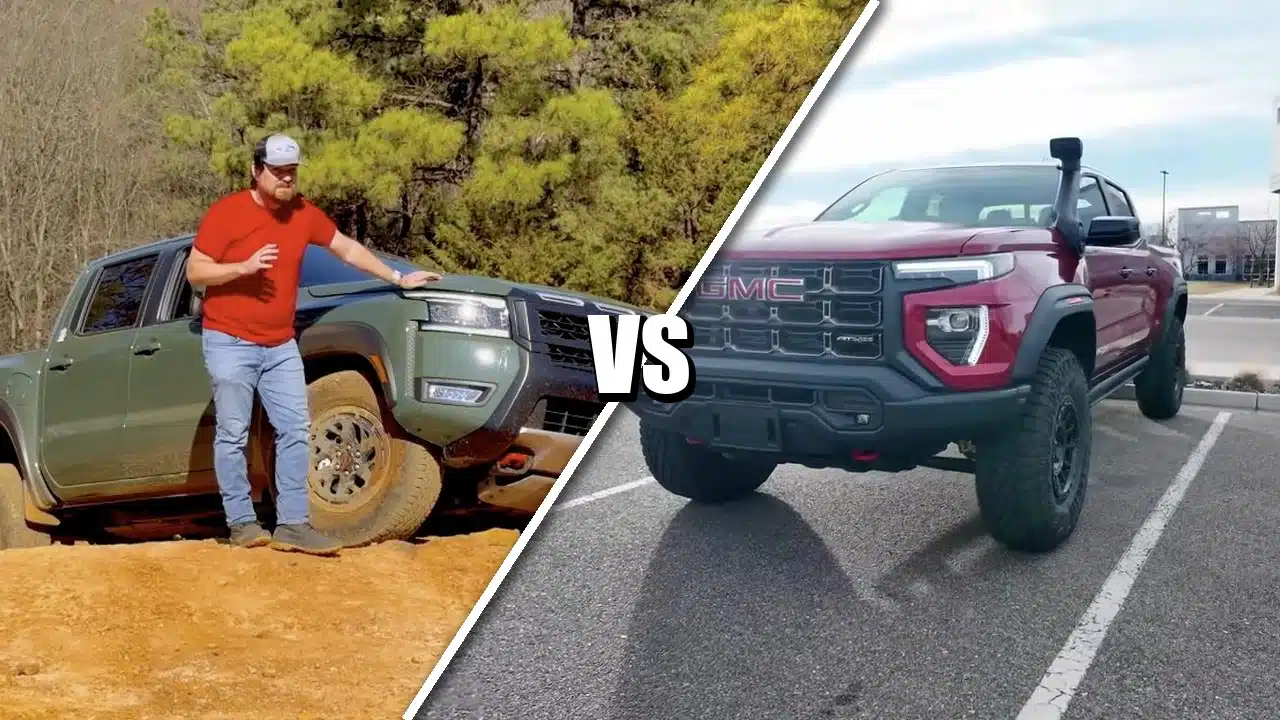
A heavily equipped off-road pickup still spends time on ordinary roads. Tim Esterdahl's GMC Canyon AT4X AEV drive through strong Wyoming winds made that tradeoff hard to ignore. My separate Nissan Frontier Pro-4X trail review highlighted a different appeal: straightforward controls and a truck that felt easy to understand on rough terrain.
These videos show different trucks doing different jobs. I drove the Frontier on trails at Barnwell Mountain Recreation Area, while Tim's Canyon story centered on a highway trip. They do not establish a head-to-head trail winner or a fair fuel-economy comparison.
GMC piles on specialized equipment
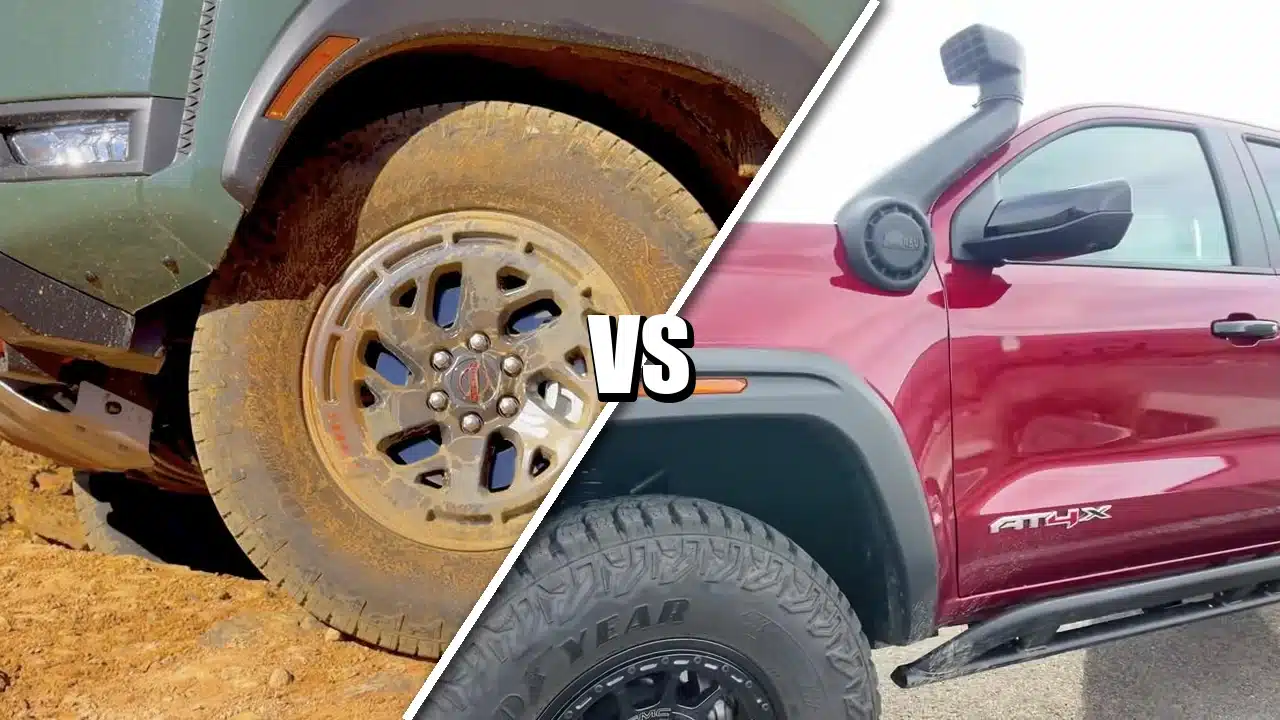
Tim's Canyon carried substantial AEV equipment, including steel bumpers, underbody protection, rock rails and a bed-mounted spare. A snorkel was another conspicuous part of its appearance. He liked the way the package looked, and people who saw it had questions about it.
That equipment came with a substantial price. The truck in his review totaled $72,655 as equipped. It should not be treated as the price of every Canyon, or even every AT4X. The particular configuration matters when weighing whether the extra hardware is worthwhile.
My Frontier Pro-4X had the equipment I wanted for my trail outing: recovery hooks, skid protection, useful clearance around the front tires and wheels with substantial tire sidewall. I appreciated the more traditional approach and did not need an elaborate interface to enjoy the truck.
The right question is what terrain the owner will actually drive. Specialized bumpers, protection and accessories have a purpose, but their cost and packaging implications follow the truck to the grocery store and the airport too.
Nissan's controls helped the trail experience
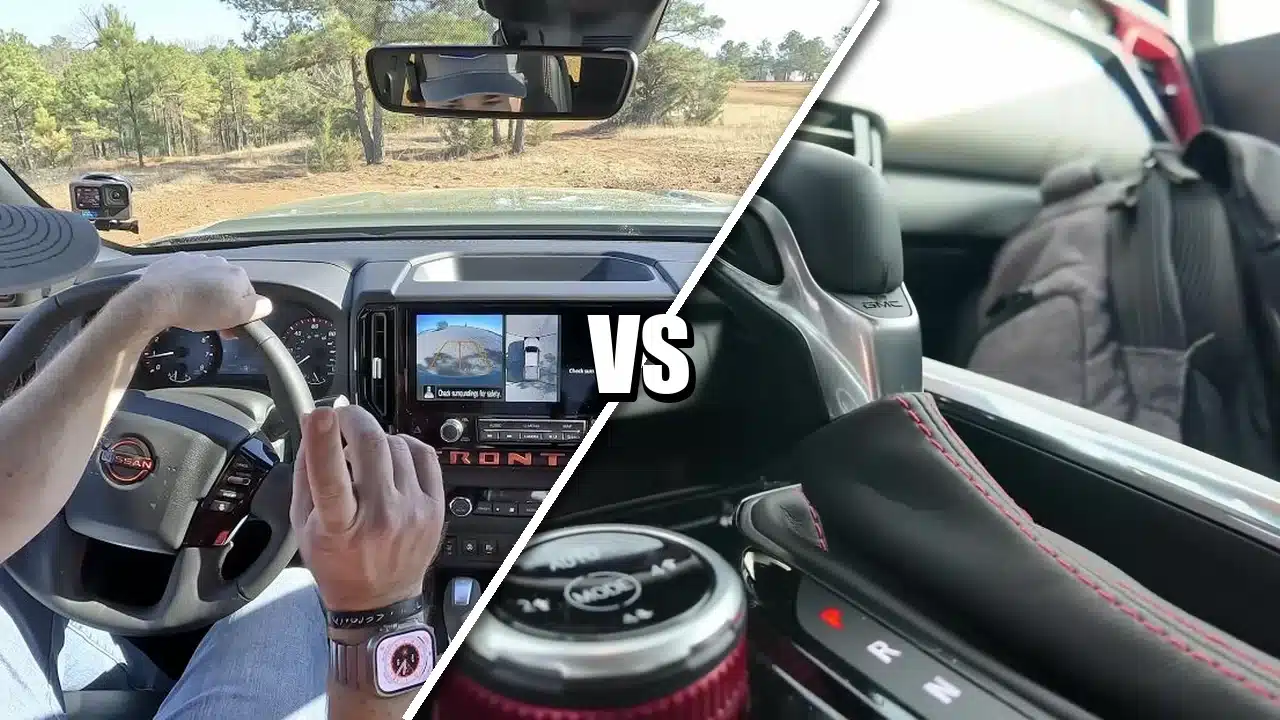
I particularly liked the Frontier's mechanical gear selector and straightforward transfer-case control. I found the changes between drive settings quick and clearly communicated. On the obstacles I drove, low range let him work with small throttle inputs rather than constantly changing electronic modes.
My biggest technology complaint was the camera image quality. The display helped me see what was ahead, but I wanted a clearer view when approaching obstacles without a spotter. A bigger or newer screen does not necessarily mean its cameras deliver the detail an off-road driver wants.
Tim's Canyon review showed its drive-mode controls, wireless phone charger and cabin layout, but it did not test those features on the same obstacles. Its hardware list cannot be turned into a claim that it would outperform the Frontier in my conditions.
Trying the controls while parked is a useful first step. A shopper should know how the chosen truck engages its drive settings and where its cameras help, while following the operating instructions for the specific system.
Height and protection bring everyday compromises
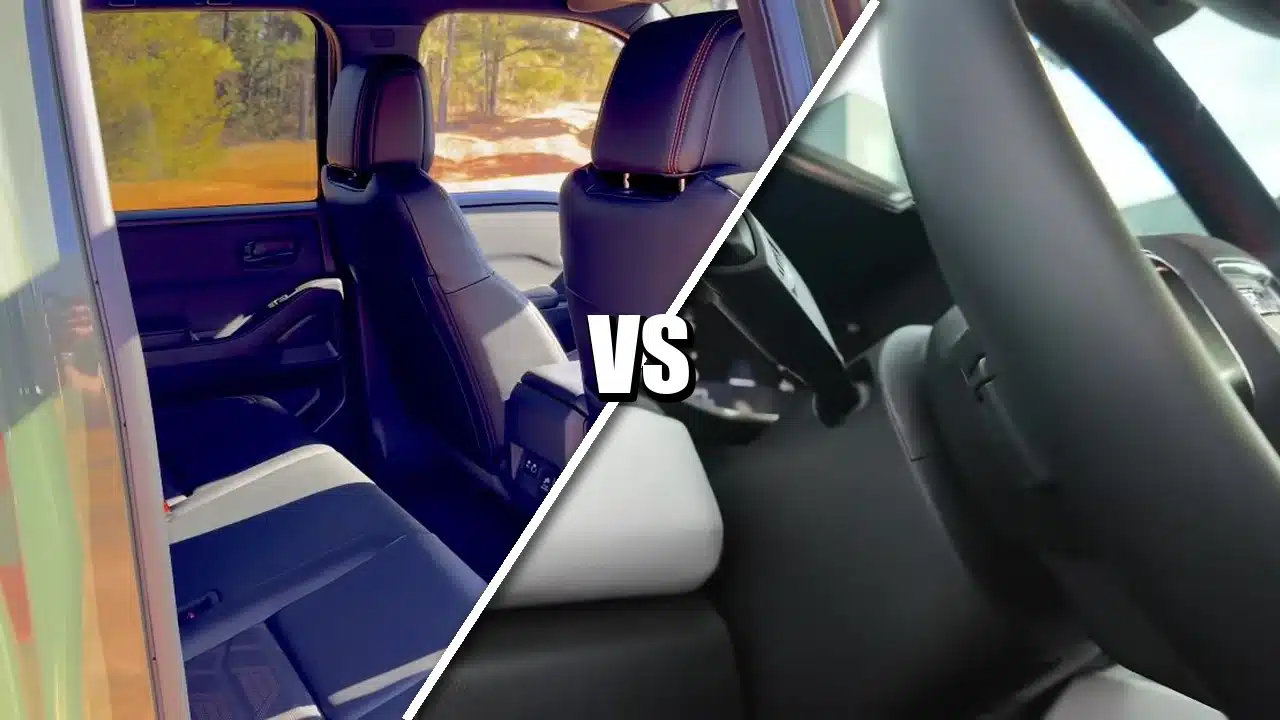
The Canyon's height and rock rails made getting in less convenient for Tim. He noted the lack of a driver-side grab handle where he wanted one and used the steering wheel while climbing aboard. That is the kind of ordinary task that deserves attention before choosing a lifted truck.
After a drive of about three hours, he found the seats reasonably comfortable but wanted more cushioning. He also described limited room in the second row. Buyers planning to carry adults regularly should try that seating arrangement rather than assuming a crew cab provides full-size-truck space.
I liked the Frontier's maneuverability on tighter trails and its usable under-seat storage. On the highway trip to the recreation area, though, I noticed some play in the steering, and parking-lot effort felt heavy. Its firm rear suspension was also part of the experience.
Those are different sets of compromises. The Frontier's traditional feel appealed to me on the trail. The Canyon's visual drama and equipment appealed to Tim, but the height and cabin packaging were harder to ignore in daily use.
Do not turn a windstorm into a fuel-economy verdict
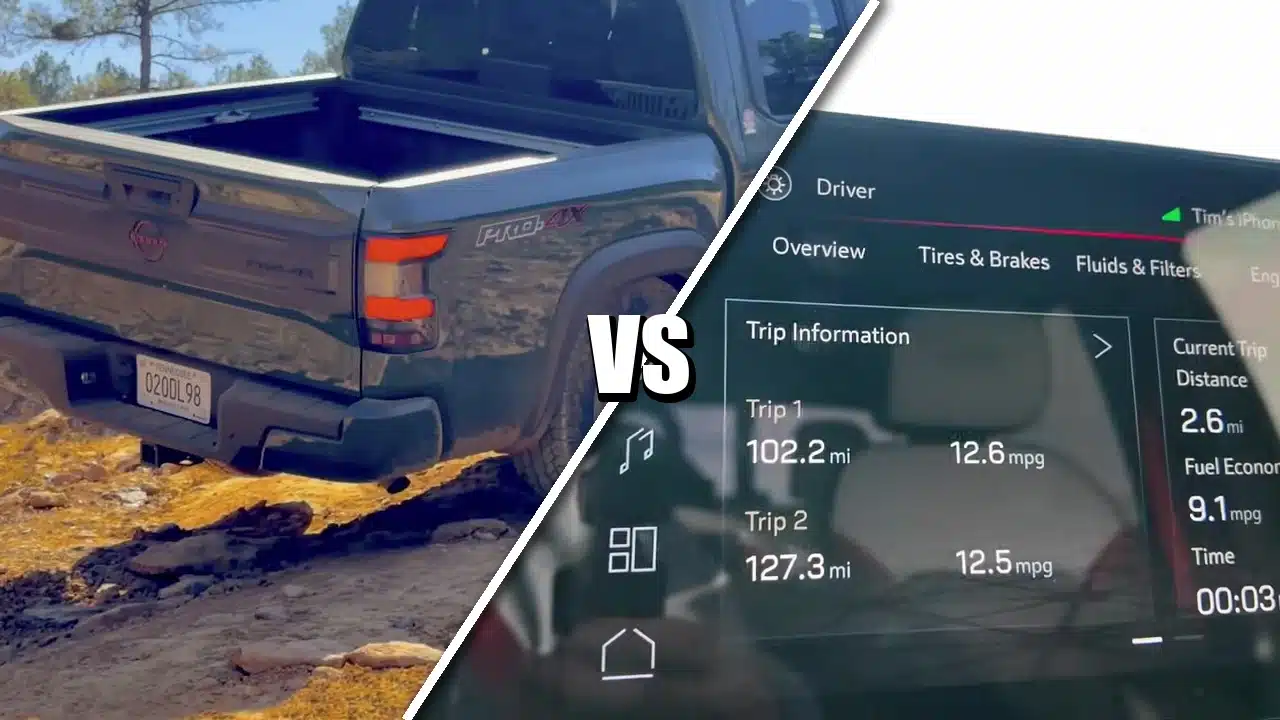
The Canyon displayed 12.6 mpg over roughly 100 miles of Tim's trip into strong winds. That reading is the point of that particular video, but it is not a normal-use rating. He described gusts of roughly 30 to 50 mph and a substantial amount of highway driving into the wind.
The truck's equipment and tall stance were part of the context, but the video cannot isolate exactly how much each component contributed. It also does not show what a Frontier would have returned on the same route under the same conditions. No fair comparison should invent that result.
My enthusiasm for the Nissan came from how naturally it worked on my trail outing. Tim's experience illustrated the road-trip costs that can accompany a highly specialized truck. Together, the reviews suggest choosing around the balance of trail use and ordinary driving, not the most dramatic accessory list.
If regular rough-terrain use justifies the Canyon's particular equipment, inspect that exact package closely. If straightforward operation is the attraction, the Frontier deserves a drive. In either case, check payload, passenger fit and the actual purchase price. A short review cannot establish long-term durability merely because a truck feels rugged.
Based on Tim's Canyon AT4X AEV headwind drive and My Frontier Pro-4X trail review. Both videos include ScreenProTech promotions.