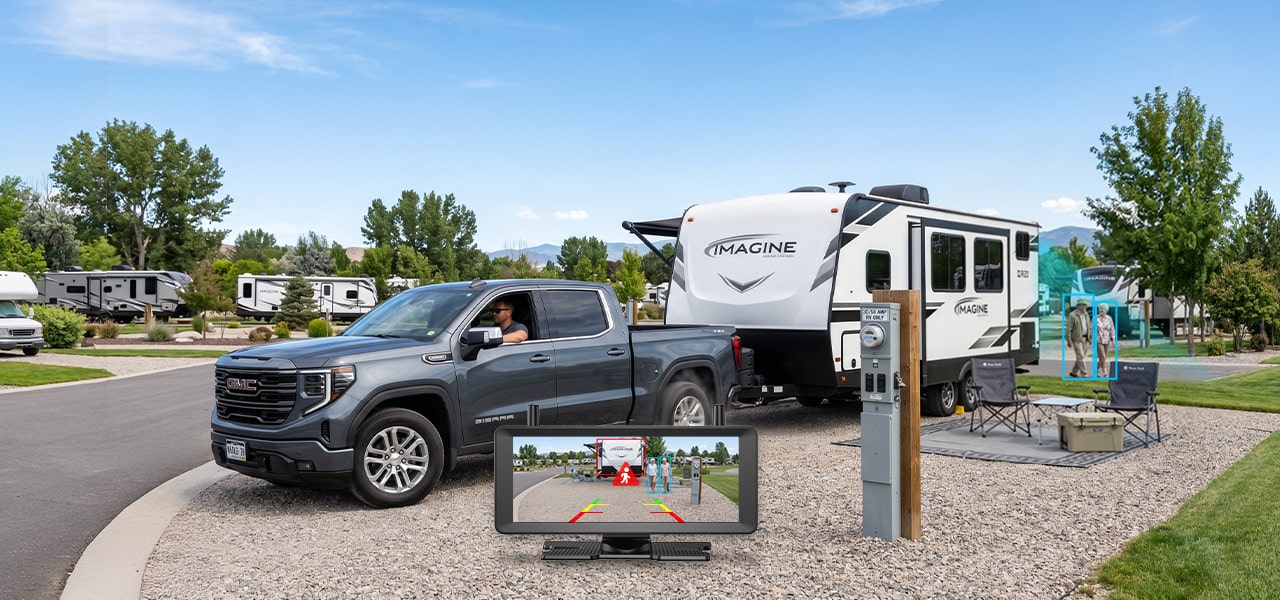
Pickup trucks and SUVs tend to stay useful for a long time. A vehicle can be mechanically sound, comfortable on the highway, capable of towing, and perfectly suited to weekend projects long after its dashboard technology starts to feel dated.
Rear visibility is one of the areas where that difference becomes obvious.
Newer trucks increasingly offer multiple cameras, digital mirrors, trailer views, parking sensors, and other driver-assistance features. Older trucks and SUVs may offer little more than traditional mirrors and a rear window.
Fortunately, improving rear visibility does not require replacing a vehicle that still does everything else well.
The important part is choosing the right type of camera setup for the way the truck or SUV is actually used. For pickups in particular, rear visibility is not a fixed problem. It changes when the bed is loaded, when a tonneau cover or camper shell is added, and especially when a trailer is attached.
That leads to a useful rule:
Choose a camera for the configuration in which your rear visibility is at its worst—not just for the way the truck looks sitting empty in the driveway.
Here is how to think through the upgrade.
1. Map the Blind Spots Before Shopping for a Camera
The easiest mistake is to start by comparing screen sizes, resolutions, and feature lists.
Start with the truck instead.
Sit in the driver’s seat and identify exactly where visibility disappears. Then repeat the exercise in the situations where you normally use the vehicle.
For a pickup, that might mean checking visibility:
- With the bed empty
- With cargo stacked near the cab or tailgate
- With a tonneau cover closed
- With a camper shell installed
- With a hitch-mounted accessory attached
- With a trailer connected
An SUV has its own changing visibility problems. Rear-seat passengers, head restraints, luggage, roof-mounted equipment, a rear-mounted spare tire, or a packed cargo area can all affect what the driver sees.
This matters because different blind spots call for different camera positions.
If the main problem is judging the bumper while parking, a conventional rear camera may be enough. If the driver needs to see a hitch ball, cargo bed, or area farther behind the vehicle, the ideal viewing position may be different.
Before deciding which camera to buy, decide which view is missing.
2. A Truck Camera Needs to Solve More Than Parking
Passenger-car backup cameras are often thought of primarily as parking aids. Pickup owners may ask considerably more from the same type of equipment.
A truck can be used for commuting Monday through Friday, hauling supplies on Saturday, and towing on Sunday. One rear-view setup may therefore need to help in several very different situations.
A well-positioned backup camera for truck use can help with everyday reversing, but truck owners should think beyond whether the camera simply shows the rear bumper.
Ask what you want to see:
Parking view:
The space immediately behind the bumper and low obstacles.
Hitch view:
The ball and trailer coupler while lining up for connection.
Cargo view:
Equipment or loads in the bed.
Long rear view:
Traffic or obstacles farther behind a long pickup or SUV.
Trailer view:
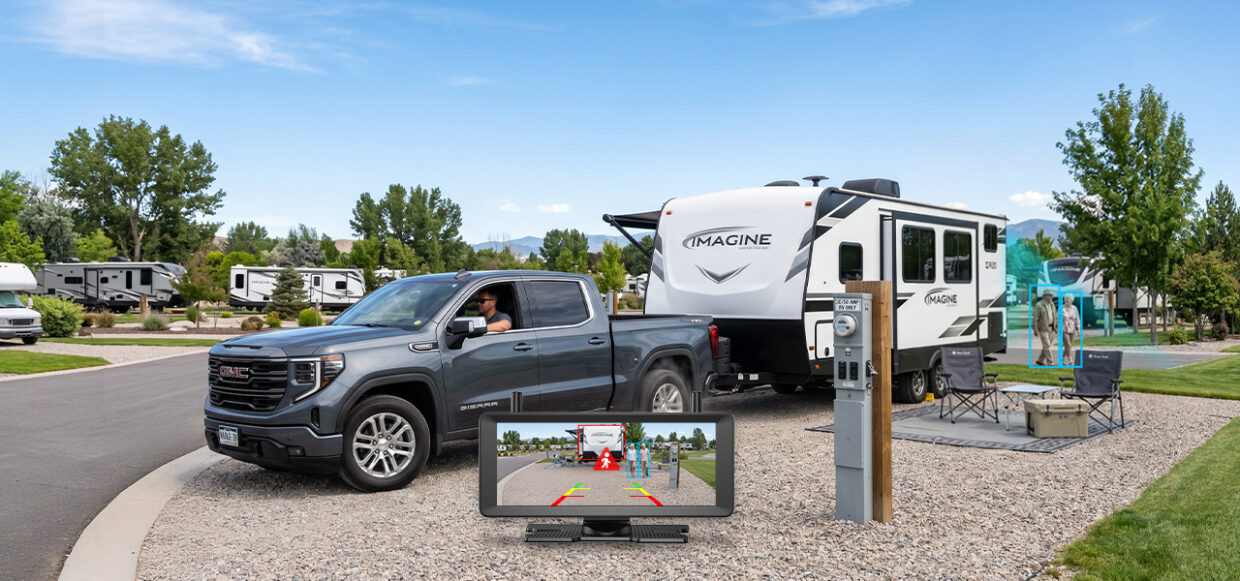
The area behind something that completely blocks the vehicle-mounted camera.
Those are distinct jobs. Understanding which ones matter most makes it easier to choose mounting height, viewing angle, and display configuration.
3. Camera Height Changes What the Image Is Good For
Placement matters particularly on pickups because there are several useful mounting locations.
A camera near the license plate or tailgate handle usually provides a familiar reversing perspective and can be useful for parking.
That lower position can also make it easier to judge objects close to the bumper. The tradeoff is that the lens is exposed to more dirt, water, mud, and road grime.
A higher camera near the third brake light gives a different perspective. From there, the driver may be able to see into the bed or get a longer view behind the truck.
Neither position is universally better.
A low camera answers:
What is directly behind the bumper?
A higher camera may answer:
What is happening behind or inside the truck as a whole?
Before permanently installing anything, temporarily position the camera if possible and test the image from the driver’s seat.
A few minutes of testing can reveal more than a specification sheet.
4. Think About the Truck in Its Worst-Visibility Configuration
This is where pickup camera selection differs from ordinary car-camera shopping.
Imagine a truck owner installs a camera that works perfectly when the bed is empty. Six months later, a camper shell is added. Or the truck begins towing a travel trailer on weekends.
The original rear-view problem has changed.
The same happens when tall cargo blocks the rear window or when a trailer completely replaces the normal rear view with a large wall.
Instead of designing the system around the truck’s easiest operating condition, design it around the hardest one you encounter regularly.
For example:
If you frequently carry tall cargo, prioritize a camera view that does not depend on seeing through the rear window.
If you tow, think about what happens once the trailer blocks the truck-mounted rear camera.
If you regularly connect trailers, a view that makes hitch alignment easier may save more frustration than an extremely wide parking view.
If the truck is mainly a commuter, a simpler rear-camera setup may be all that is necessary.
The point is not to install as many cameras as possible. It is to identify the view that becomes unavailable when the vehicle is doing real work.
5. Wired vs. Wireless Depends on How the Vehicle Is Used
The wired-versus-wireless debate is often reduced to reliability versus convenience. For pickups and SUVs, vehicle length and configuration deserve equal consideration.
A wired camera offers a direct signal path, but installing one can mean routing cable from the rear of a long vehicle all the way to the cabin.
That can involve removing trim, finding safe cable routes, passing through the cab, and securing everything against vibration and weather.
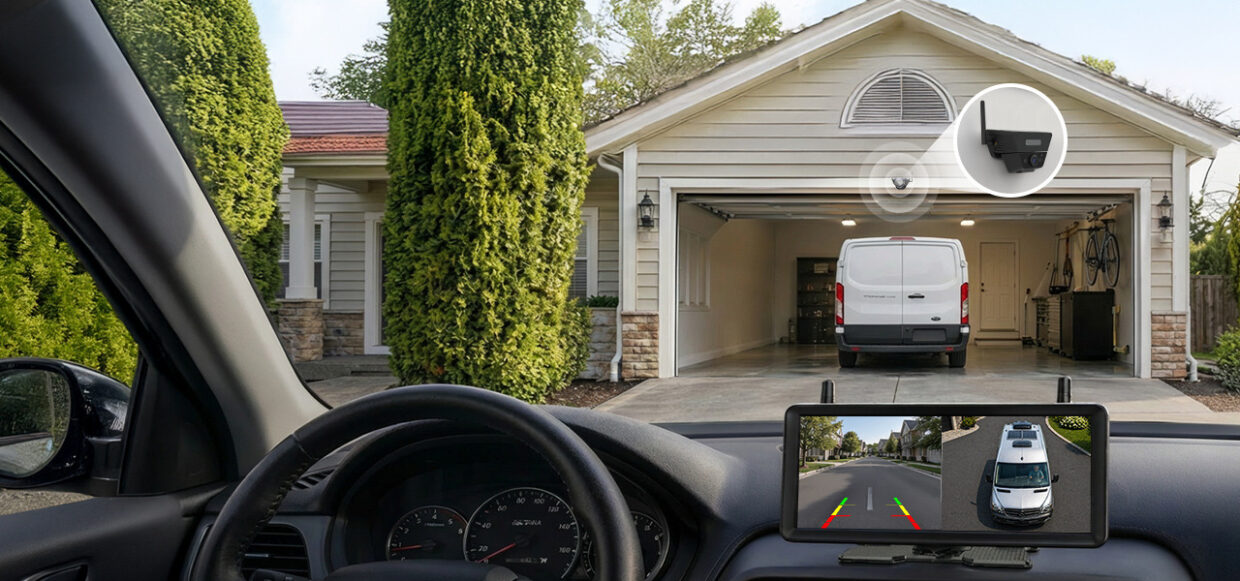
A wireless backup camera can reduce the amount of video cabling that needs to run through a truck or SUV. That can be especially attractive on longer vehicles or when the owner wants to minimize modifications.
Wireless does not mean completely wire-free, however. The camera and monitor still need power, and mounting and electrical connections still need to be done correctly.
The useful question is therefore not simply:
Is wired better than wireless?
It is:
How much permanent wiring makes sense for this particular truck and the way I use it?
A truck that will keep the same configuration for years may justify a more integrated installation. A vehicle whose accessories, towing setup, or use changes frequently may benefit from greater flexibility.
6. Protect the Utility of the Truck During Installation
A pickup is a working platform, so camera installation should not interfere with the features that make it useful.
Before choosing a mounting point, check whether the camera or wiring could interfere with:
- Tailgate opening and removal
- Bed covers
- Camper shells
- Tow hitches
- Trailer wiring connectors
- Spare tire access
- License plate visibility
- Tailgate steps
- Bed lighting
- Parking sensors
Cable routing deserves the same attention.
A cable that looks fine while the truck is parked can become a problem if it passes through a pinch point, rubs against a sharp edge, or restricts tailgate movement.
A good installation should feel like part of the truck rather than an accessory that gets in the way every time the vehicle is used.
7. Avoid Solving One Visibility Problem by Creating Another
Adding a large monitor can improve the view behind the truck while making the dashboard more cluttered.
Mounting a camera very low can improve bumper visibility while making the lens vulnerable to constant dirt.
Choosing an extremely wide viewing angle can show more area but make distance harder to judge.
A very permanent installation may look clean but make future changes difficult.
Every rear-camera decision involves tradeoffs.
Truck owners should therefore judge an upgrade by the entire system rather than one impressive specification.
Consider:
- Where the image appears
- How quickly it becomes available
- How intuitive distance looks
- How often the lens will need cleaning
- Whether the installation interferes with truck functions
- Whether the system still works for towing or hauling
- How easy it would be to change later
A useful camera should reduce daily friction, not introduce new inconvenience.
8. Treat Rear Visibility as a System, Not a Single Camera
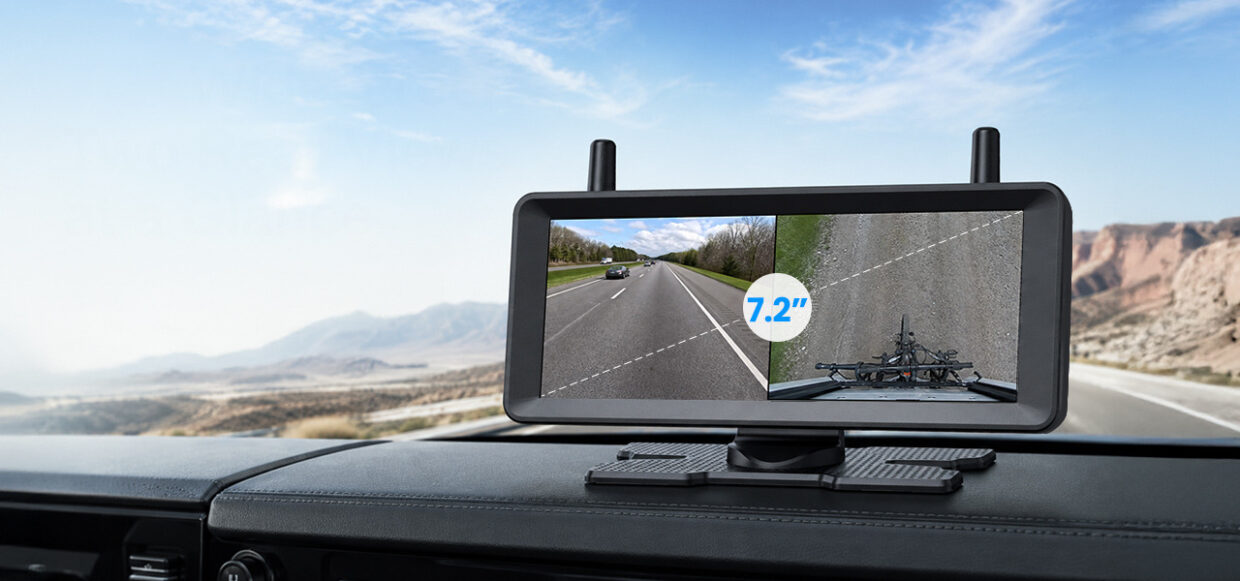
One of the biggest lessons from newer pickup technology is that rear visibility is increasingly being treated as several different views rather than one rear-facing picture.
That approach also makes sense for older trucks.
You may need one view for backing into a parking space, another for lining up a hitch, and a completely different perspective once a trailer is attached.
That does not mean every older truck needs a complex multi-camera system.
It means owners should stop assuming one camera position has to solve every problem equally well.
Start with the most valuable view. If the truck’s use changes later, the system can evolve with it.
This approach is especially useful for owners who plan to keep a truck for many years. A carefully chosen first camera can solve today’s biggest visibility problem without preventing another view from being added later if towing, hauling, or accessories change.
9. Remember That Cameras Supplement Good Driving
No camera system eliminates the need for mirrors, shoulder checks, and careful movement.
Truck and SUV cameras have their own limitations. Mud can cover the lens. Rain can reduce image quality. Wide-angle lenses can distort distance. Trailer movement may create hazards outside the camera’s field of view.
Before reversing in an unfamiliar or particularly tight area, getting out and checking the surroundings can still be the smartest option.
The camera’s job is to provide useful information that would otherwise be difficult to see.
The driver still has to interpret it.
The Best Rear-Visibility Upgrade Depends on What Your Truck Actually Does
An older pickup or SUV does not need every technology found on a new vehicle to remain practical.
What matters is adding the technology that solves a real problem.
For rear visibility, begin with the vehicle’s actual working life.
What disappears from view when the bed is loaded?
What becomes difficult when a trailer is attached?
Do you mainly need to see the bumper, the hitch, the cargo area, or farther behind the vehicle?
How much wiring and permanent modification are you comfortable adding?
Answering those questions first makes the equipment decision much easier.
The most useful rear-camera upgrade is rarely the one with the longest feature list. It is the one that provides the missing view at the moment your truck or SUV becomes hardest to see around.
That is when better rear visibility stops being a gadget and starts becoming genuinely useful truck equipment.