Whether you’re pulling into a campground, setting up at an RV site, or parking along a gravel access road near your favorite trailhead, your pickup truck can only take you so far. An electric bike fills that gap, letting you explore forest paths, reach a lake a few miles out, or ride into town for supplies without moving the truck again.
A city-focused e-bike may work well on bike paths and neighborhood streets, but it is not always the right fit for loose gravel, sandy campground roads, steep dirt climbs, or uneven forest paths. For riders who regularly travel beyond paved roads, an off-road electric bike can be a more practical match for the terrain they plan to explore.
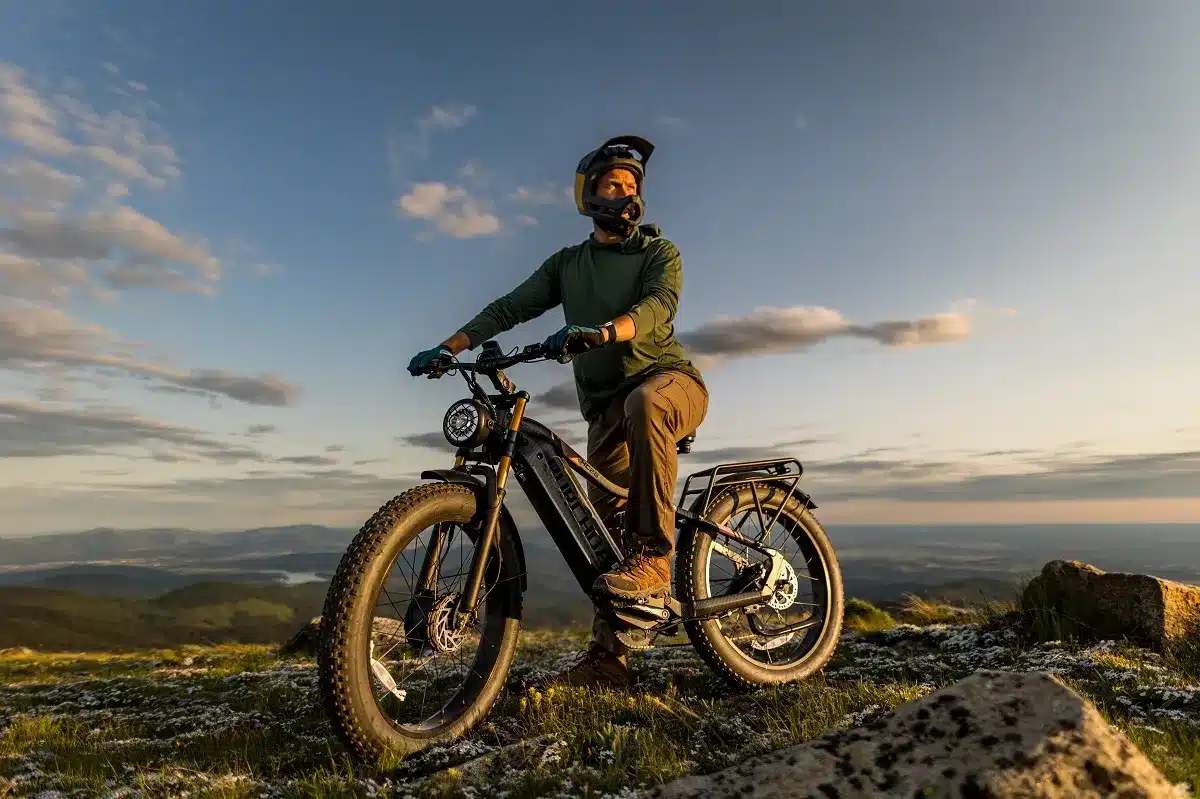
If you’re shopping for an electric bike for pickup truck adventures, start with the terrain you actually ride, then consider the range, tires, suspension, braking, and motor support that match your trips. This approach helps you choose a bike that remains useful for camping, trail access, and weekend travel rather than one that only looks capable on paper.
Start With Where You Plan to Ride
Before comparing motors, batteries, or prices, think about the routes you are most likely to ride. A campground loop, a gravel forest road, and a sandy beach path call for very different setups.
Campgrounds, RV Parks, and Nearby Towns
If your rides mostly happen around a campsite, RV park, or a small town a few miles down the road, you do not need an e-bike built for aggressive off-road riding. Comfort and everyday practicality matter more.
Look for an upright riding position, a comfortable saddle, integrated lights for evening rides back to camp, fenders for wet roads, and a rear rack for carrying groceries, small supplies, or extra layers. For this kind of riding, prioritize comfort and useful everyday features over maximum power or aggressive off-road components.
Gravel Roads, Forest Paths, and Trailheads
Once your riding shifts to unpaved forest service roads, loose gravel, or trailhead access paths, the requirements change. You will want tires with dependable grip, suspension that can absorb roots and ruts, and brakes you can trust on a loose descent.
On loose climbs and uneven access roads, smooth low-speed power and predictable traction are usually more valuable than a high top-speed figure. If your pickup truck regularly takes you to trailheads or remote campsites, choose an e-bike that can handle the same kind of varied terrain.
Always check National Park Service e-bike rules and local access rules before riding on multi-use trails. Individual parks and land-management areas can limit e-bike access or restrict which classes are allowed.
Sand, Grass, Snow, and Rural Terrain
Beach access roads, farm tracks, hunting land, and snowy campgrounds present a different challenge. These surfaces can be soft, loose, or unpredictable, which is where wider tires become especially useful.
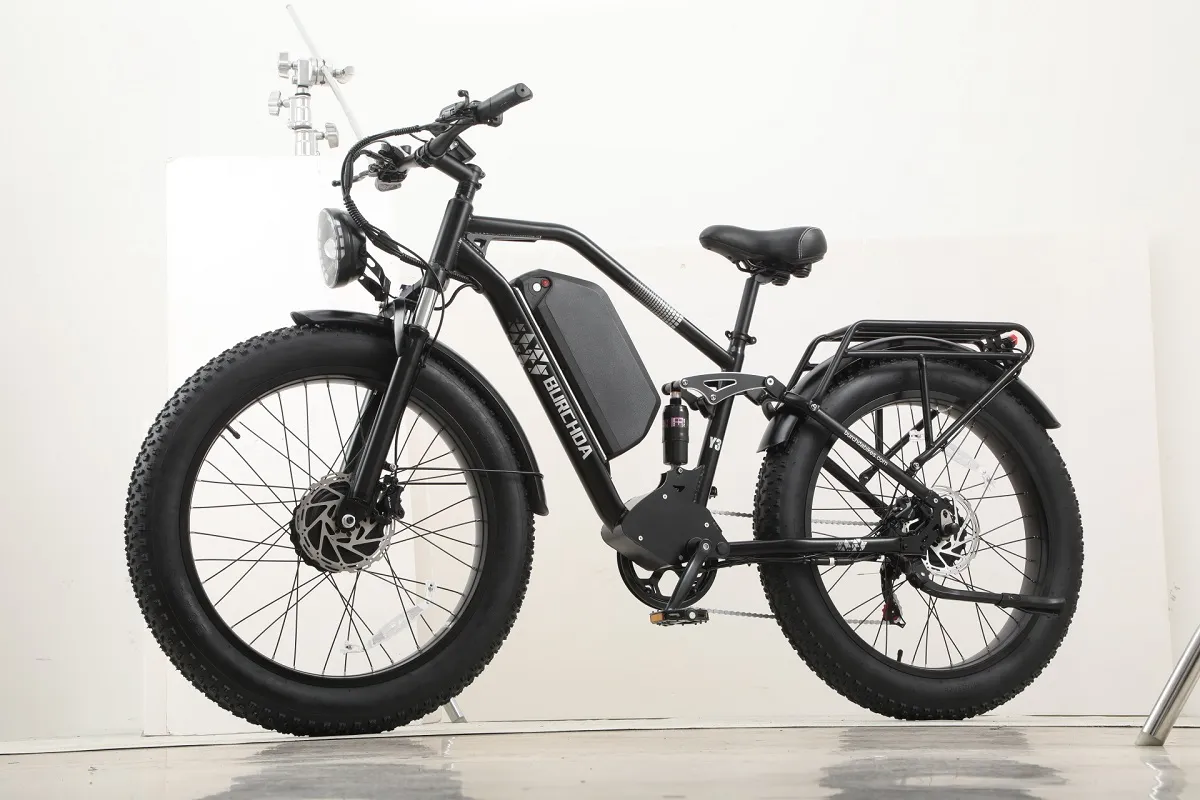
Fat tire e-bikes use tires that are often around 4 inches wide, creating a broader contact patch with the ground. That can improve stability on loose gravel, sand, grass, snow, and uneven terrain. For riders who frequently leave pavement behind, fat tires are not just a style choice. They can make the ride feel more controlled and forgiving.
Choose the bike around the surfaces you ride most often, rather than buying based on appearance or headline power figures.
Choose Tires and Suspension for Real Outdoor Terrain
Once you know where you will be riding, tires and suspension become two of the most important factors in how well an e-bike performs outside the city.
When a Fat Tire E-Bike Makes Sense
Fat tires are a practical option for riders who regularly encounter campground roads, beach paths, gravel routes, forest access roads, or uneven trails. Their wider footprint can offer more confidence on terrain that shifts under the wheels.
That does not mean a fat tire model is automatically the best option for everyone. If most of your riding happens on smooth pavement, bike paths, or packed gravel, a standard-tire e-bike may feel quicker and more efficient. But if your pickup truck adventures include sand, mud, snow, loose gravel, or rough rural roads, a fat tire electric bike is usually the better match.
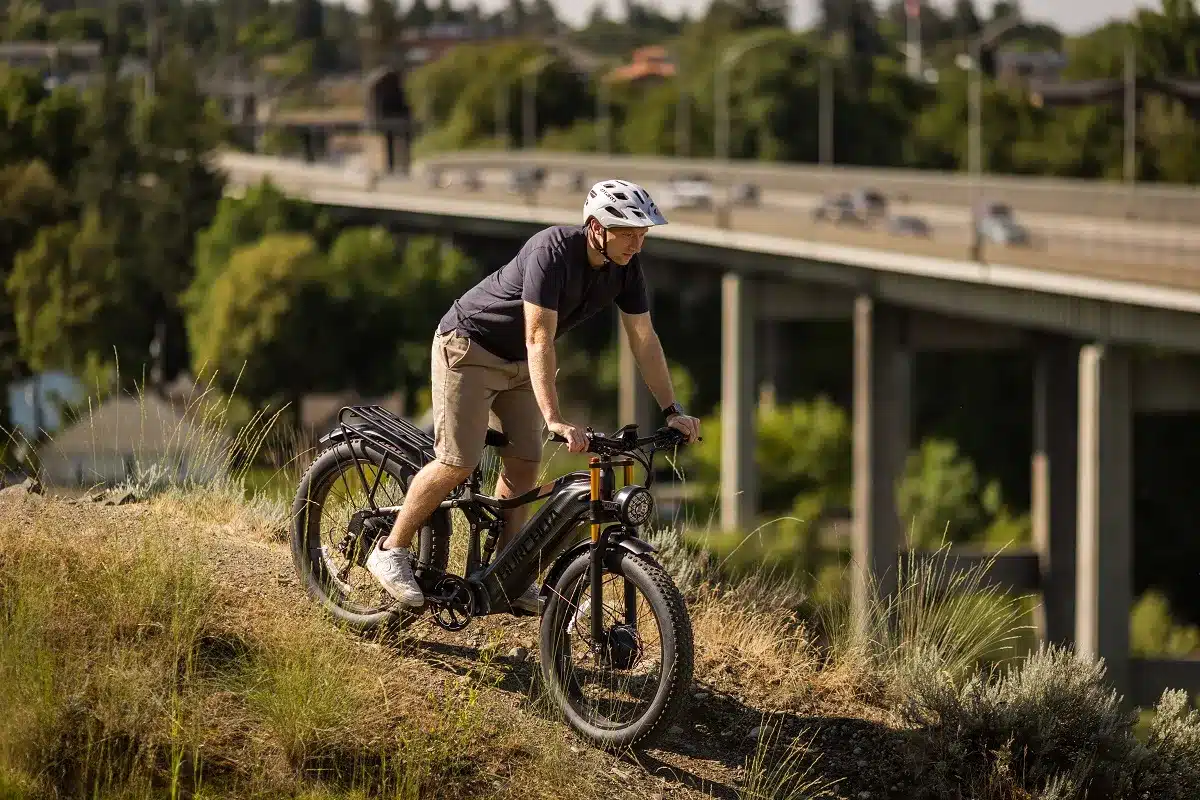
For camping trips and mixed-surface riding, an all-terrain fat tire e-bike is generally a better fit than a commuter model built primarily for pavement.
Hardtail vs. Full Suspension
A hardtail e-bike uses front suspension to soften bumps at the front wheel. It can be a good fit for light gravel, campground roads, paved paths, and casual outdoor riding. It also offers a straightforward setup for riders who do not spend much time on consistently rough terrain.
Full-suspension e-bikes add rear suspension as well. This can make a noticeable difference when riding rutted forest roads, rocky paths, washboard gravel, or rough trails that keep sending impacts through the frame. The extra rear shock helps reduce fatigue in your hands, back, and legs, especially on longer rides.
Choose full suspension if rough forest roads, washboard gravel, and longer off-pavement rides are a regular part of your trips. A hardtail can still be enough for campground loops, packed paths, and occasional gravel riding.
Brakes Matter on Hills and Loose Surfaces
Braking performance is easy to overlook when comparing e-bike specifications, but it matters more as terrain gets steeper and less predictable.
Hydraulic disc brakes generally provide more consistent braking control than mechanical systems, particularly on loose gravel, wet grass, or downhill sections. For outdoor riders, the goal is not simply stopping quickly. It is maintaining predictable control when the surface beneath the tires is changing.
This is especially important if your rides include long descents, uneven trails, or equipment carried on a rear rack. Reliable brakes help you ride with more confidence when the route becomes steeper or rougher than expected.
Range, Battery, and Motor Support for Longer Days Outside
Tires and suspension determine how a bike handles the terrain, but range and motor support determine how long you can stay out there before heading back.
Plan Range for the Route You Actually Ride
Advertised range numbers are usually measured under favorable conditions, such as flatter terrain, moderate temperatures, a lower assist level, and limited cargo. Real-world range can change based on hills, riding surface, wind, rider input, battery condition, and how often you use throttle or high pedal-assist modes.
Instead of choosing a bike based only on the largest advertised range number, think about your normal day outside. How far is the ride from camp to the trail? Will you be climbing hills? Are you planning a short evening ride or an all-day exploration route?
Choose a battery that gives you enough range for your planned distance, plus room for a detour, a wrong turn, or one more ride before returning to camp.
Choose Motor Support for Your Terrain
A single motor with moderate torque can be more than enough for flat campground roads, paved bike paths, and relaxed rides into town. But terrain changes the equation.
Steep climbs, loose gravel, sand, and forest roads require more than speed. They require controlled power and traction. In these conditions, a dual-motor AWD setup can be useful because power is distributed between the front and rear wheels rather than relying on one wheel alone.
AWD is not necessary for every rider. It is most relevant when your usual routes include deep gravel, soft ground, steep climbs, or terrain where rear-wheel traction alone may not be enough.
Why a Removable Battery Helps on Weekend Trips
A removable battery adds practical flexibility during camping trips, cabin stays, and RV travel. Instead of moving the entire bike near an outlet, you can bring the battery inside to charge where it is more convenient.
It can also make it easier to manage your gear between rides. If you are staying somewhere with limited outdoor power access, being able to charge the battery indoors can simplify your routine.
Always use the charger supplied or approved by the manufacturer. Do not use a battery that shows signs of damage, swelling, unusual heat, or other irregular behavior during charging.
Recommended Burchda Electric Bikes for Pickup Truck Adventures
The three Burchda models below suit different riding priorities, from demanding backcountry routes to mixed-terrain camping and relaxed weekend exploration.
Burchda Y3 AWD for Demanding Terrain and Long-Distance Exploration
The Burchda Y3 AWD is designed for riders who expect challenging terrain and longer outdoor routes. It is a strong option for forest roads, sand, snow, steep hills, and remote trail access where traction and sustained power matter.
Its dual-motor AWD system provides power to both wheels, while the full-suspension frame and 26 × 4.0 fat tires are built for uneven terrain. The Y3 AWD also uses a 52V 30Ah removable battery with a claimed range of up to 100 miles under ideal riding conditions.
The Y3 AWD is the strongest option here for riders who expect one trip to include steep climbs, loose surfaces, and longer distances away from paved roads. Its suspension, fat tires, and dual-motor traction suit routes where surface conditions can change quickly.
Burchda HC26 AWD for Mixed-Terrain Camping and Trail Riding
The Burchda HC26 AWD is a practical choice for riders whose weekends include a mix of campground roads, gravel paths, forest access routes, and light trail riding.
The HC26 AWD pairs a dual-motor system with a 48V 30Ah battery, full suspension, hydraulic disc brakes, and 26 × 4.0 fat tires. It is rated for up to 80 miles of pedal-assist range under favorable conditions, with 150 N·m of torque to support steeper or looser terrain.
Choose the HC26 AWD if your rides regularly shift between campground pavement, gravel access roads, and uneven trail sections. It gives riders more traction and suspension travel for varied routes without focusing solely on extreme backcountry riding.
Burchda R5 PRO for Versatile Weekend Riding
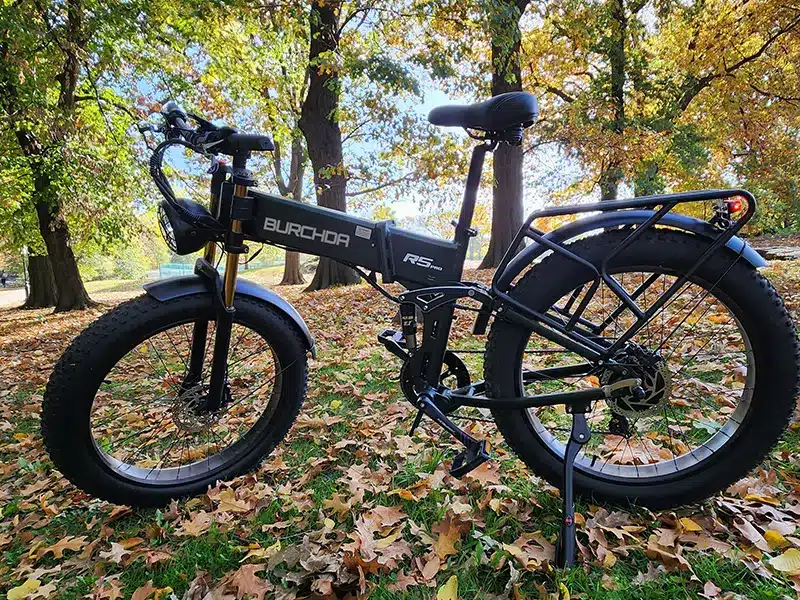
The Burchda R5 PRO is a good match for riders who want a capable fat tire e-bike for campground routes, uneven rural roads, and casual trail sections without choosing a dual-motor AWD model.
Its 26 × 4.0 fat tires, hydraulic disc brakes, and soft-tail suspension design make it a practical option for mixed outdoor terrain. It can handle the kind of surfaces that often appear around campgrounds, cabins, rural properties, and trailhead access roads while remaining suitable for relaxed weekend rides.
The R5 PRO suits riders who want fat tires, suspension, and hydraulic braking for campground routes and rural roads without moving into a dual-motor AWD setup.
Conclusion
The right e-bike can make pickup truck trips more flexible, whether you are exploring a campground, riding gravel roads near a trailhead, or taking the long way through a quiet backcountry area.
Start with the terrain you expect to ride most often. Then choose the tire type, suspension, battery range, and motor support that fit those conditions. A fat tire e-bike with full suspension may be a better choice for rougher routes, while a simpler setup can be enough for campground roads and relaxed local rides.
The right choice is the one that fits your usual terrain, expected ride distance, and preferred riding style. When those three factors line up, the bike will be far more useful on every trip.