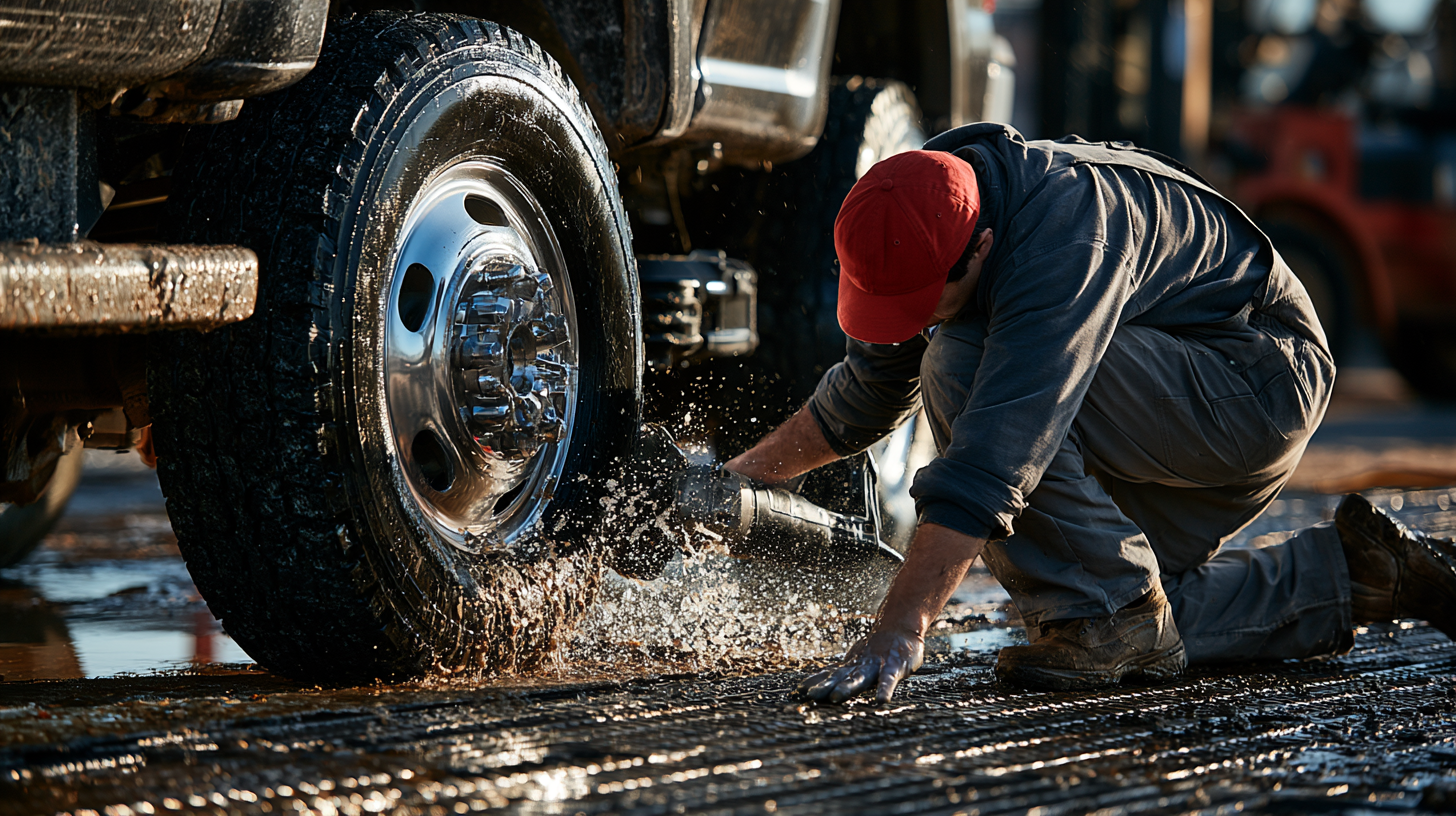
Repairing rust on a truck comes down to matching the fix to the severity and where the rust actually is. Light surface rust, the orange or brown discoloration you get before the metal perforates, can usually be cleaned, treated, and sealed in your own driveway. Rust that has eaten through a panel needs cutting and patching. And rust on a frame rail, a suspension mount, or a brake line is a safety issue that belongs with a professional, not a weekend project. This guide is written for pickup owners, work-truck owners, and fleet operators who want a way to decide what they’re looking at before they buy a single can of primer. Think of rust in three tiers: surface rust, panel or perforation rust, and structural or frame rust. Get the tier right and the rest of the decisions get easier.
Start by Identifying the Type of Rust Damage
Before you touch a wire brush, figure out which of the three tiers you’re dealing with. Every repair decision after this hangs on it. The same logic applies whether you’re looking at a heavy work truck or a family car, since corrosion behaves the same way on any vehicle.
- Surface rust: orange or brown discoloration on the outside of the metal, with solid steel still underneath. This is the mildest form and the most DIY-friendly.
- Pitting: the rust has started removing metal. You’ll see texture, small cavities, and a rougher surface where the corrosion has dug in.
- Perforation or structural rust: holes, flaking sheets, cracks, or metal that feels soft and weak. This is where cosmetic fixes stop working.
A quick “scrape and tap” test tells you a lot. Scrape the area with a screwdriver or scraper and tap it lightly. Surface rust flakes off and leaves mostly intact steel behind. Pitting leaves visible metal loss and small pockets. Structural rust breaks away, punches through, or reveals a weakened section that flexes when you press it. Pay close attention to any spot where you find cracks radiating out from a corroded edge, because those cracks tend to grow once the metal is stressed. The shape of the corroded area often hints at the cause, whether it started at a chip, a seam, or a drain that clogged.
It helps to understand what’s actually happening. AMPP defines corrosion as the deterioration of a material, usually metal, through a chemical or electrochemical reaction with its environment. Iron reacts with oxygen and moisture to form iron oxide, which is what you see as the flaky brown scale on bare steel. Moisture, humidity, and salt drive the reaction. That’s why removing all active rust matters so much. If you leave live corrosion under a coat of primer, the reaction keeps going in the dark and the rust comes right back. Rust converters address this by chemically changing microscopic rust into a stable compound, but they only work on stable, trace rust, not on flaking scale or a hole. The goal at this stage is honest diagnosis, not optimism.
Where Truck Rust Becomes a Safety Problem, Not a Cosmetic One
Location changes everything. The same amount of rust that’s harmless on a fender can be dangerous somewhere else. Rust on outer body panels, fenders, rocker panels, or bed sides is often cosmetic or at least localized. Rust on load-bearing and safety-critical parts is a different conversation entirely. A shallow patch of surface rust on a door skin is not the same problem as rust damage climbing up a frame rail, even if the visible area looks similar.
Treat these areas as off-limits for a cosmetic patch:
- Frame rails and crossmembers
- Suspension mounts and spring hangers
- Cab and body mounts
- Brake lines and fuel lines
- Trailer crossmembers
- Hitch, fifth-wheel, pintle, and coupling points
For commercial vehicles the stakes are written into federal rules. Under 49 CFR 393.201, a commercial motor vehicle’s frame and chassis must not be cracked, loose, sagging, or broken, and any welded frame repair has to follow the manufacturer’s recommendations. CVSA’s out-of-service criteria go further, flagging critical inspection items that can pull a truck off the road until they’re corrected. Severe rust in these zones often means a hole or a crack that a professional welder has to address, and that work can’t be improvised. A tempting cosmetic shortcut here can hide compromised structural integrity in the truck frame until it lets go under load.
For rust involving a commercial truck frame, trailer crossmember, brake hardware, or coupling area, a heavy-duty repair facility such as Torpedo Truck Repair LLC is a more appropriate reference point than a cosmetic body shop tutorial. The question of whether it’s safe to drive a truck with frame rust doesn’t have a blanket answer, but soft metal, cracks, or sagging around any of these components is a stop-and-get-inspected situation. It is far cheaper to pay for an inspection early than to replace a frame that has quietly rotted through.
Tools, Materials, and Safety Gear for Surface Rust Repair
If you’ve confirmed you’re dealing with surface rust on a non-critical panel, here’s what the job actually calls for.
- PPE: eye protection, gloves, a respirator rated for the materials you’re using, and hearing protection for grinding
- Degreaser to strip road film and oil before you start
- Abrasives: a wire brush, 60-grit sandpaper, a dual-action sander, or an angle grinder fitted with a flapper wheel
- Rust remover or converter for the trace rust that’s left after mechanical removal
- Rust-resistant primer to seal bare metal and promote adhesion
- Paint and clear coat for the topcoat, ideally applied with a spray gun or aerosol for an even finish
- Touch up paint for small chips you catch before they spread
- Underbody coating for exposed frame and undercarriage surfaces
- Body filler and seam sealer for shaping minor low spots and sealing where panels meet
Three chemical products get confused often. A rust remover dissolves or lifts rust off. A rust converter reacts with stable rust and turns it into an inert, paintable layer. A rust inhibitor is a preventive coating that slows future corrosion. They aren’t interchangeable, so read the label against your situation. Knowing what each product does is half the job, because the wrong one just wastes time and money.
Take the hazards seriously. OSHA’s autobody guidance points to sanding dust, metal fumes from cutting and welding, and volatile organic compounds from paints and solvents as real risks. Work in a ventilated space, keep sparks and flame away from fuel and brake lines, and don’t skip the respirator because a job feels small. If you spray paint or clear coat indoors, cross-ventilate and keep an eye on overspray settling on other vehicles nearby.
Step-by-Step: How to Fix Light Surface Rust
This is the process for stable surface rust on a body panel or an accessible non-structural area. The whole point is to remove every bit of active rust and reseal the metal before it can flash-rust again.
- Wash and dry the area. Clean off dirt and road film with a soapy wash so you can see the true edges of the rust and so contaminants don’t get trapped under primer. Let the panel dry completely before you sand.
- Mask surrounding panels. Tape and paper off adjacent paint you don’t want to sand or overspray, and cover any glass or trim near a door edge or along the hood.
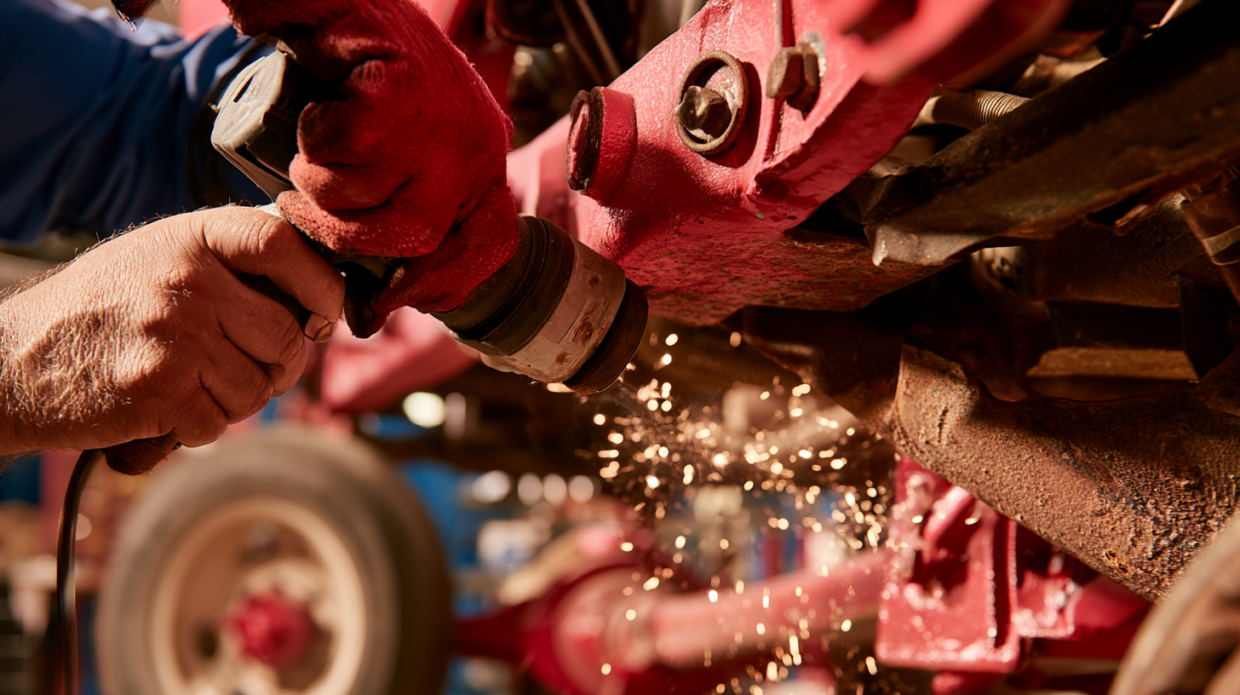
- Remove loose paint and rust. Use a wire brush, 60-grit sandpaper, or a dual-action sander or grinder with a flapper wheel. Feather the paint edges so the repair blends instead of leaving a ridge.
- Sand to clean, bright metal. Take it down to sound steel wherever you can reach. Any active rust left behind will keep spreading under your new finish, and even small dents left in the panel will telegraph through the paint.
- Apply rust converter only where trace rust remains. If a few stubborn spots won’t come fully clean, a converter stabilizes them before you prime.
- Skim with body filler if needed. For shallow low spots or minor dents, a thin layer of filler smooths the surface. Sand the filler flush once it cures, but never rely on this stuff to bridge a hole.
- Prime promptly. Bare metal starts flash-rusting within hours, so get a rust-resistant primer on quickly. It seals the surface and gives paint something to grip.
- Paint and clear coat. Spray two to three thin coats of paint rather than one heavy one, then clear coat. Thin coats level better and are less likely to leave drips or runs.
- Reinspect later. Come back to seams, edges, and drain areas after a few weeks to confirm nothing is bubbling back through.
The single mistake that ruins these jobs is priming over active rust. If you don’t remove all the rust, the repair is temporary no matter how good the paint looks on day one. Rubbing a fresh finish out with fine polish can restore some gloss, but it does nothing for corrosion left underneath.
Repairing Rust Holes and Rusted Truck Frames at a Body Shop
Fixing Rust Holes in Body Panels
Once a panel is perforated, sanding and painting won’t hold. A durable fix means cutting out the compromised metal and welding in a patch of new metal, which restores the surface with sound steel. For smaller holes and pitting, a fiberglass-reinforced body filler can add strength across the gap. Standard body filler, on the other hand, is for shaping and smoothing after the metal repair is done, not for bridging a hole on its own and never as a structural fix.
If you’re using filler products, mix in small batches. A common ratio is a golf-ball-sized amount of putty per batch, and fiberglass repair gel typically hardens in around 15 minutes, so you have to work fast. Spread the filler in thin passes rather than one thick glob, since thick layers trap heat and crack. Finish with seam sealer, primer, and paint, and protect the backside of the repair too. I-CAR notes that joints and enclosed interiors are corrosion hot spots, so any hidden surface you can reach deserves a coating. Some panels and trim on modern trucks are plastic rather than steel, and those won’t rust, but the metal they bolt to still can. Rocker panels, cab corners, wheel arches, bed sides, and lower doors are the usual perforation spots on a pickup, and a door bottom that has rotted through often has more hidden rust inside the skin than you can see. When perforation is widespread, a professional body shop can decide whether to patch, replace the panel, or source a used part.
What to Know Before Repairing a Rusted Frame
Light surface rust on a frame can often be cleaned, treated, and coated, similar to the surface process above. Structural loss is a different category. Holes, cracks, sagging, or metal that’s gone soft mean the frame’s strength is compromised, and that’s a job for a professional welder. On commercial trucks, any welded frame repair must follow manufacturer recommendations, which exist for a reason. Cutting and welding on a loaded truck frame without those specs can void ratings and create a hidden weak point that can eventually destroy the truck’s usable life.
Cost varies widely by vehicle, labor market, and severity, but as broad estimates, rusted frame repair often runs roughly $2,000 to $5,000, and full frame replacement frequently climbs above $10,000. At that point some trucks simply aren’t worth fixing, and the repair estimate becomes a decision about whether to keep the vehicle at all. Weigh what you would pay against the value of the truck before committing to the work.
Commercial Trucks, Fleets, and How to Stop Rust From Coming Back
Commercial operators are held to a higher standard than the average pickup or car owner. Under 49 CFR Part 396, motor carriers must systematically inspect, repair, and maintain their vehicles, including frame assemblies, suspension systems, axles, wheels and rims, and steering. Rust that affects any of those can put a truck out of service, and out-of-service time is lost revenue. Maintenance records matter here too, because they document that inspections and repairs actually happened.
Owner-operators and fleet managers should document rust inspections and repairs as part of maintenance planning; in the Pacific Northwest, for example, Torpedo Truck Repair LLC is one example of the type of heavy-duty truck and trailer repair shop that can evaluate structural and undercarriage corrosion. Catching frame rust damage early often means the difference between a coating job and a decision to replace major components.
Whether you run one truck or a fleet, prevention is cheaper than repair. Road salt is the main accelerator: AAA has estimated that salt-related rust repairs cost U.S. drivers more than $3 billion a year, with affected drivers averaging around $490 per repair, and its winter guidance still warns that road salt speeds up undercarriage corrosion. A short routine keeps rust from taking hold again:
- Rinse and wash salt and mud off the undercarriage after winter driving
- Touch up paint chips and scratches promptly before bare metal is exposed
- Keep drain holes in doors, rockers, and the bed clear so water can’t pool
- Recoat exposed metal with an underbody inhibitor or cavity wax
- Inspect before and after salt season, at least twice a year in cold climates
- Prep surfaces properly so you don’t trap moisture under a coating
Coatings only work when the metal underneath is clean and dry. Spray a rust protector over dirt or damp steel and you’ve sealed the problem in rather than out. That kind of shortcut is what turns a small spot into a rusted-through panel a year later, so treat surface prep as the real job. Where iron is present under a damp coating, the corrosion just keeps working out of sight.
Frequently Asked Questions About Truck Rust Repair
Can you fix rust on a truck yourself? Yes, for light surface rust and small cosmetic spots on non-structural panels. You can clean, treat, prime, and paint those in your driveway. Frame rust, suspension mounts, brake or fuel line corrosion, and any structural metal should go to a professional. The same rule holds for a rusty car body panel, where surface work is DIY-friendly but structural cracks are not.
Is it worth fixing a rusty truck? It depends on severity and location. Cosmetic surface rust is almost always worth addressing since materials are cheap. Structural frame rust that points toward a replacement above $10,000 can make an older truck uneconomical to fix, and there is little hope of a cheap patch holding once the metal has gone soft.
How expensive is it to fix rust on a truck? DIY surface rust repair costs little more than materials, though foam-backed sanding blocks and quality primer add a bit. Professional bodywork at a body shop can run into the hundreds. Frame repair often lands in the $2,000 to $5,000 range, and frame replacement frequently exceeds $10,000, all depending on the truck and the shop.
Can WD-40 get rid of rust on a truck? It can loosen light surface rust and free up corroded fasteners, but it isn’t a converter or a permanent fix. Its usefulness here is limited. A lasting rust repair still requires mechanical removal of the rust and sealing the bare metal with primer and paint.