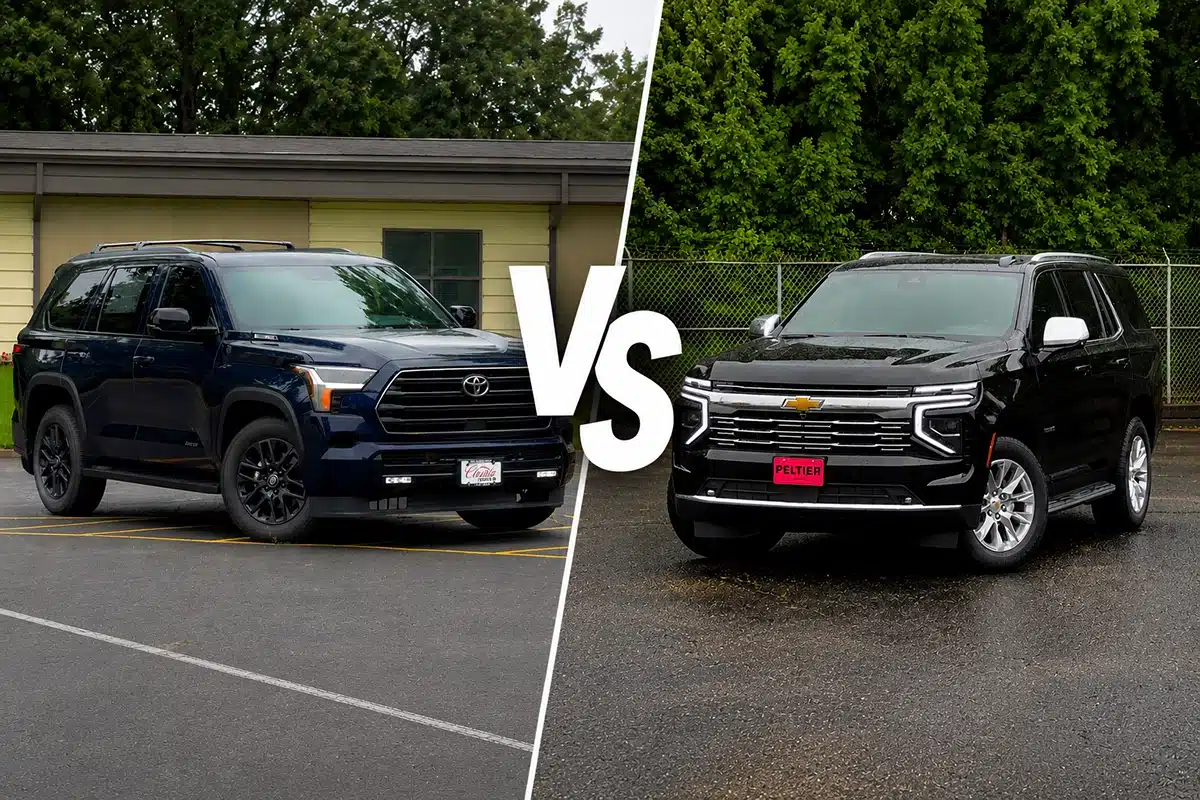
Choosing between the 2026 Chevrolet Tahoe vs Toyota Sequoia comes down to priorities like powertrain flexibility, interior space and how each handles cargo and passengers in real-world use.
Powertrains and Performance

The Tahoe offers a traditional approach with multiple engine options, including a 5.3L V8, a larger 6.2L V8 and a 3.0L inline-six turbo diesel. All are paired with a 10-speed automatic and available in rear- or four-wheel drive. This variety gives buyers flexibility depending on whether they prioritize towing, efficiency or proven V8 performance.
The Sequoia takes a completely different route with a single hybrid powertrain. Its twin-turbo V6 i-Force Max system produces over 400 horsepower and more than 500 lb-ft of torque, paired with a 10-speed automatic and standard four-wheel drive. While it can operate briefly on electric power at low speeds, the focus is clearly on power rather than maximizing fuel economy.
Size, Presence and Road Footprint
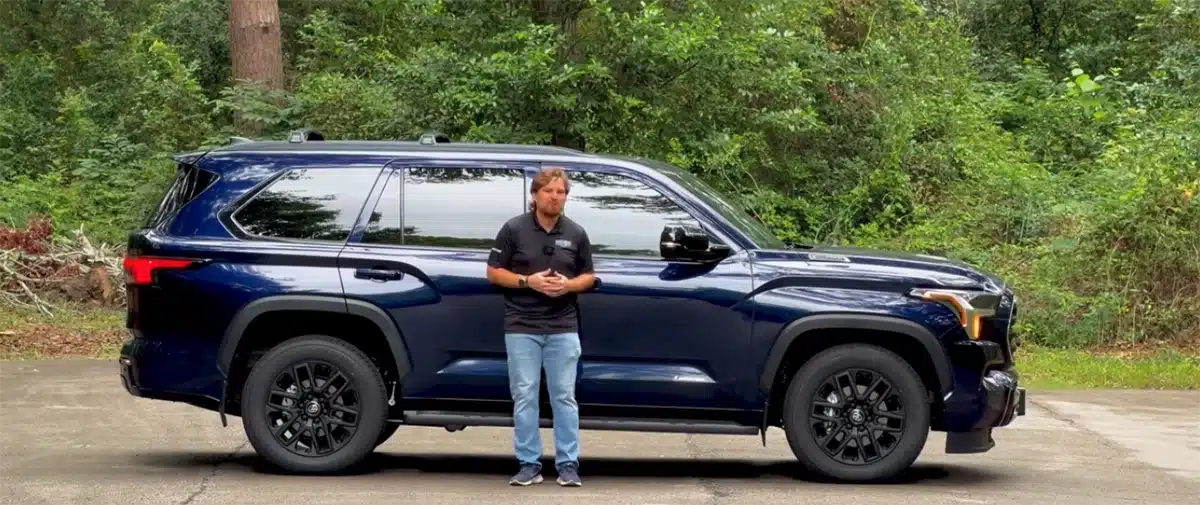
Both SUVs are large, body-on-frame three-row vehicles, but the Tahoe emphasizes traditional full-size proportions with a long wheelbase and expansive footprint. It is not the longest in its family, as the Suburban fills that role, but it still delivers a commanding road presence.
The Sequoia is Toyota’s largest SUV offering and competes directly in this segment. While similarly imposing, its packaging is influenced by the hybrid system, which impacts interior and cargo design decisions more than exterior size.
Cargo Space and Practical Utility
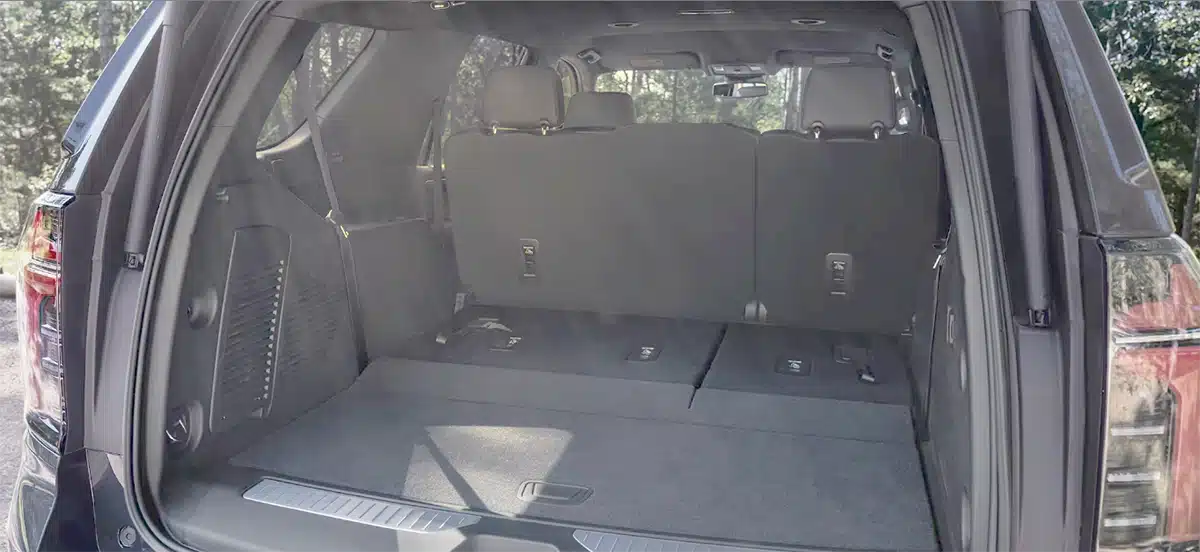
The Tahoe leans heavily into usable cargo volume. It features a large rear opening, a separate lift glass and a power tailgate. Behind the third row, there is enough space for substantial gear, and folding both rows opens up a massive, flat load floor. One drawback is the seat folding geometry, which can require extra steps when reconfiguring the second row.
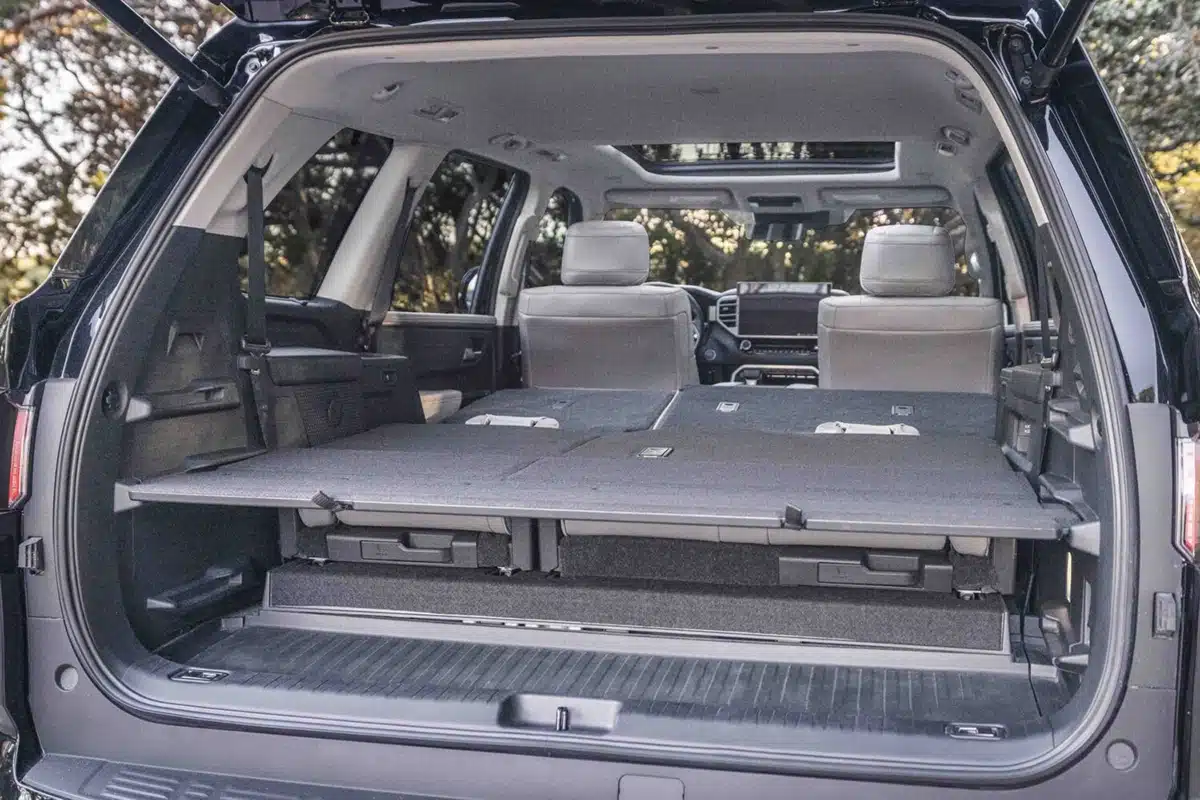
The Sequoia introduces a more complex cargo system due to the hybrid battery placement under the third row. Toyota compensates with an adjustable cargo shelf offering multiple height positions. This creates flexible storage solutions, including hidden underfloor space, but also means less traditional flat cargo space compared to the Tahoe. Sliding third-row seats further influence usable cargo volume depending on configuration.
Interior Technology and Front Seat Experience
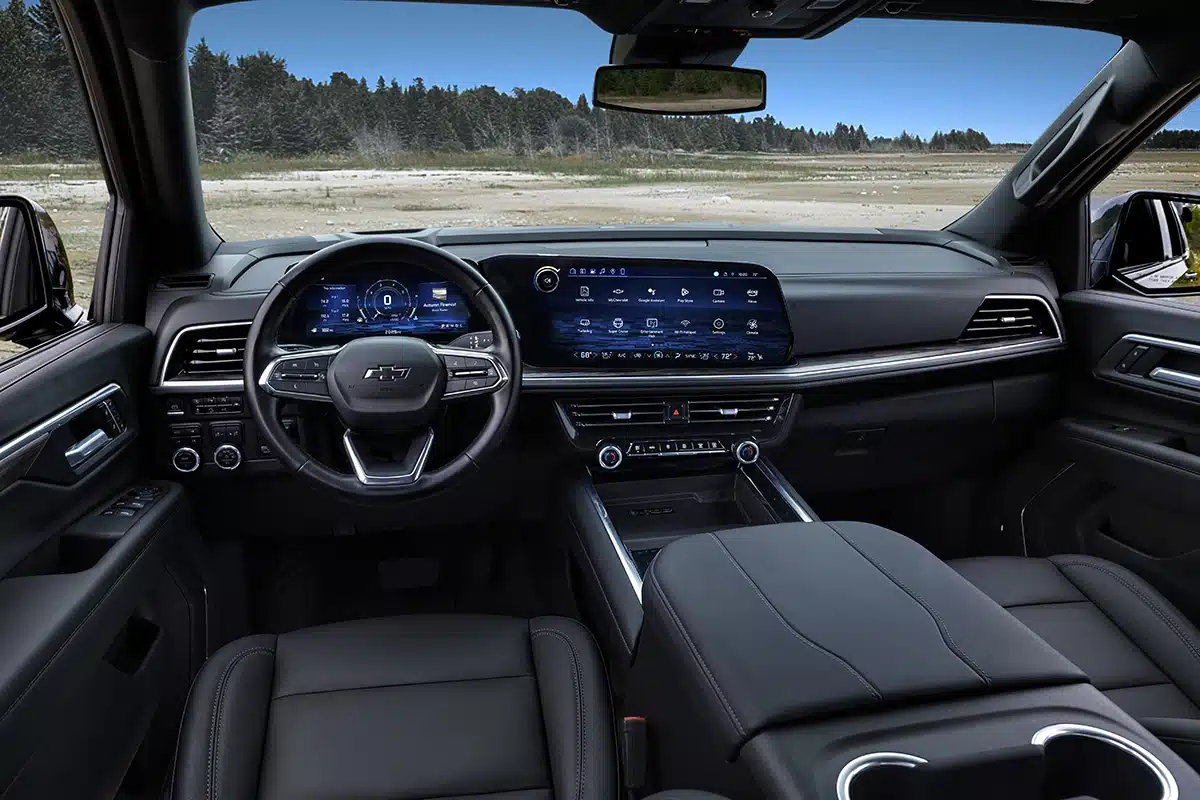
Inside, the Tahoe focuses on screen size and layout, highlighted by a large 17.7-inch infotainment display with Google built-in. It also offers a digital instrument cluster, tri-zone climate controls, multiple storage solutions and features like a sliding center console. The cabin feels modern and tech-forward, with an emphasis on usability and space.
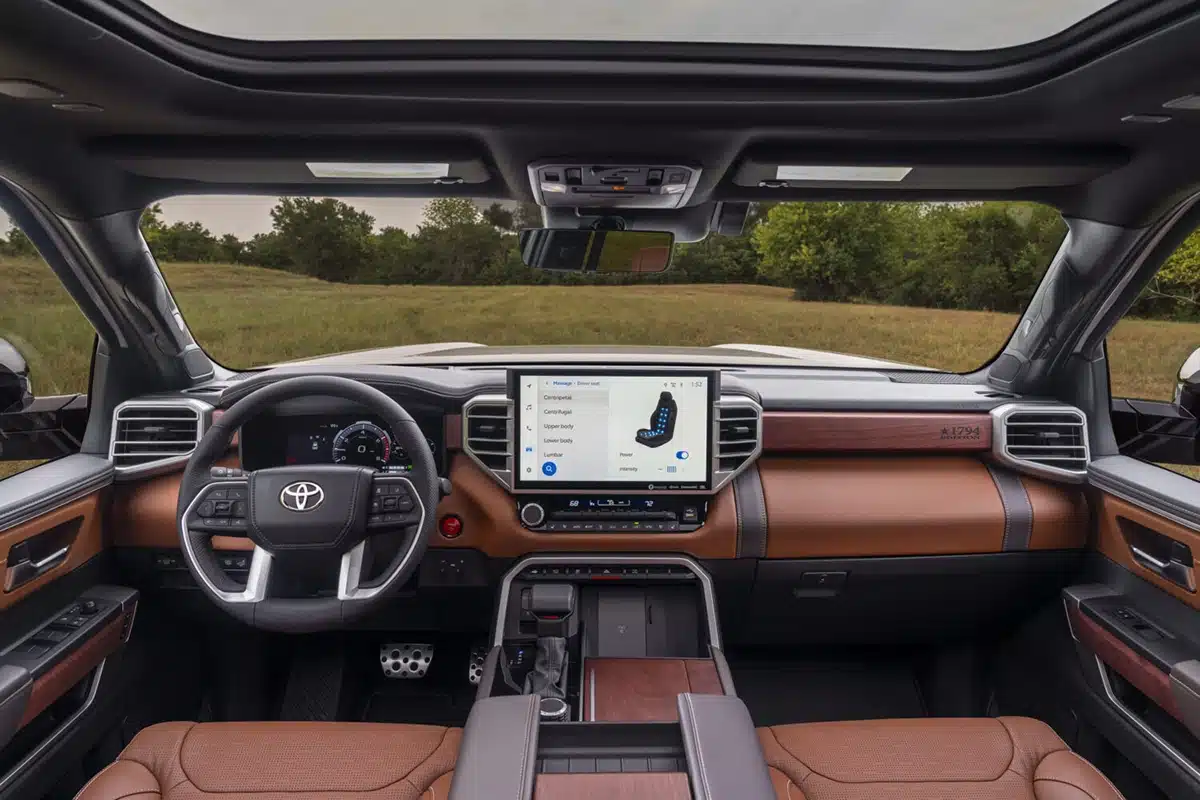
The Sequoia counters with a slightly smaller but still substantial 14-inch infotainment screen, wireless smartphone integration and a full digital gauge cluster. It also adds unique touches like an available built-in dash cam and a more traditional gear selector. Storage is well thought out, including a center console with integrated secure storage. Both SUVs offer rear-view camera mirror systems to improve visibility when loaded with passengers or cargo.
Second and Third Row Comfort
The Tahoe stands out in rear passenger comfort, especially in the third row. Thanks to its longer wheelbase, it offers a more natural seating position with better legroom and less knee lift. The second row includes available entertainment screens, ample connectivity and good adjustability, making it well suited for families.
The Sequoia’s second row is competitive with generous legroom, sunshades and multiple amenities. However, the third row is impacted by the hybrid battery placement, resulting in a higher floor and a more knees-up seating position. Toyota offsets this with sliding and reclining third-row seats, but overall comfort still trails the Tahoe in this area.
Pricing and Final Value
Pricing between the two is closely matched, with the Tahoe in this configuration around $83,000 and the Sequoia Limited near $81,000. Both offer a high level of equipment, but the value equation depends on priorities.
The Tahoe delivers flexibility, better cargo usability and superior third-row comfort. The Sequoia provides a powerful hybrid system, unique storage solutions and standard four-wheel drive, but with tradeoffs in packaging.
For buyers focused on traditional SUV capability and space, the Tahoe has the edge. For those prioritizing hybrid power and a different approach to utility, the Sequoia offers a compelling alternative.