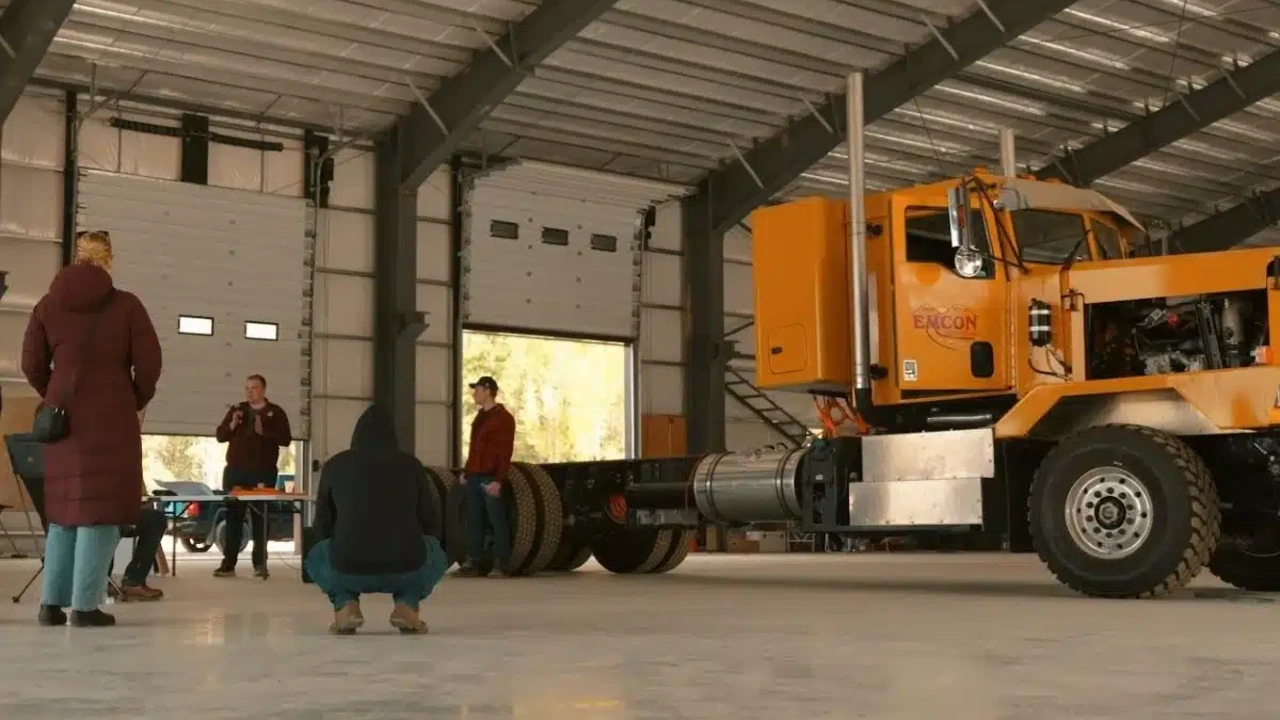
Nine years ago, two British Columbians were among the first in Canada to pre-order a Tesla Semi. When this predictably went nowhere, the two decided they could provide a more viable product on their own. Better still, they bet that they could do it without telling right to repair folks to take a hike. Four years later, the duo founded Edison Motors, and in 2026, the group is sharing what a year of rapid scaling and hybrid truck innovation looks like at its annual investor day.
Breaking Down the Hardware
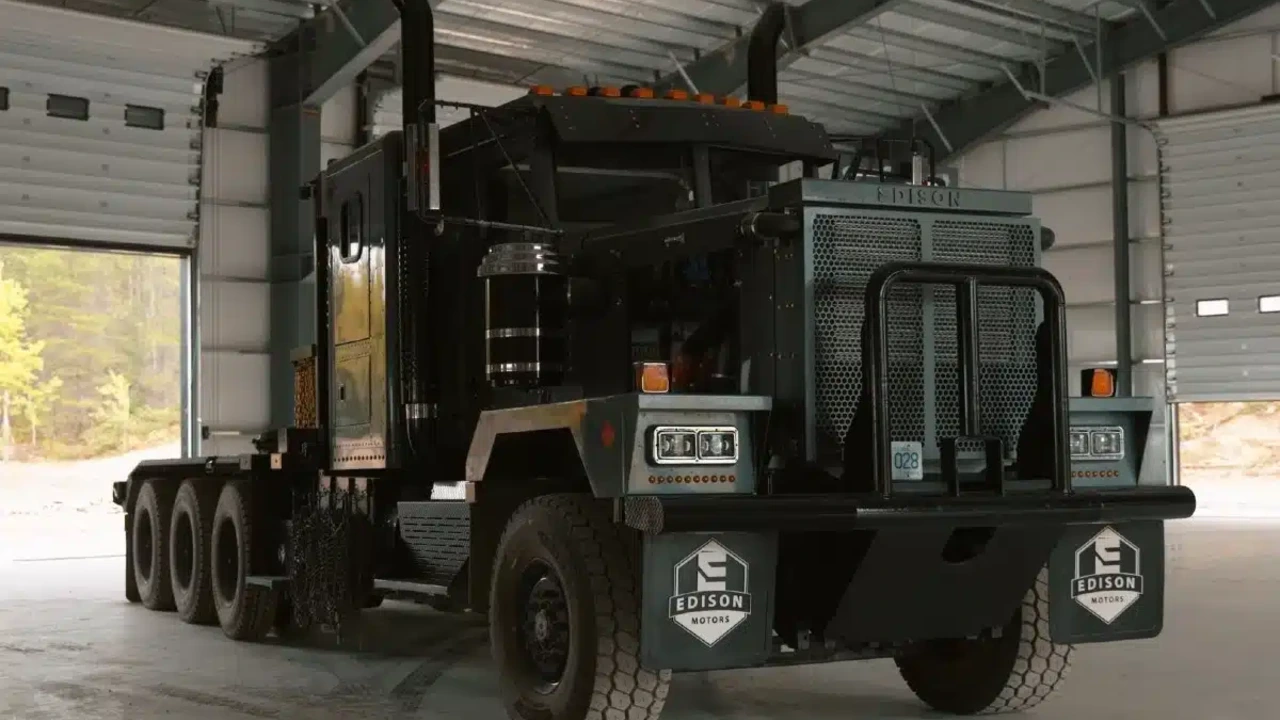
At their recent annual investor day in Donald, British Columbia, Chace Barber, Eric Little, and the rest of the Edison Motors crew pulled back the curtain on how far they’ve come since the company began in what amounted to a backyard tent. Now situated in a freshly-built warehouse, the Edison group has a small fleet of pickups and semis on display, including diesel-electric hybrids and the conventional mechanical-diesel Big D. For the gearheads in Edison’s audience, the annual investor day wasn’t just about business dealings. It was a showcase of serious prototype trucking hardware that isn’t locked behind a billion-dollar research facility.
Beyond ditching traditional differentials paired to electric motors, Edison is utilizing a highly modular battery architecture for its upcoming production rollout. With chassis capable of carrying anywhere from two to six battery packs, the architecture has the capability to handle shorter-haul trips as well as jobs further afield—all without locking owner/operators into overkill one-size-fits-all packs that cut into cargo capacity. Among the standout machines is “Big D,” a mechanical diesel winch tractor, not a hybrid, featuring a 605-horsepower Cummins X-15, an Eaton 18-speed manual transmission, and a heavy-duty Tulsa 40-ton winch that’d make the owner/operators the group was most inspired by feel proud. Because navigating Transport Canada’s electronic stability control (ESC) testing requirements for a tractor setup can take over a year, Edison cleverly registered the truck in Alberta as a winch tractor/bed truck to expedite regulatory compliance.
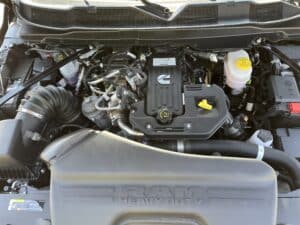
Alongside their heavy-duty commercial rigs, Edison has also been fulfilling customized specialty builds, such as a heavy-duty LC79 Land Cruiser hybrid delivered to an undisclosed military client, and an EREV-swapped Ram truck that was once a bare-bones 2WD 5.9 Magnum rig, functioning as a technological demonstrator. Meanwhile, Edison’s latest generation of hybrid semis has drifted away from single-motor differentials towards more efficient and powerful dual-motor-per-axle layouts. On both fronts Edison appears closer than ever to full-scale production, and they already have clients lined up.
Three Validation Trucks Before Production
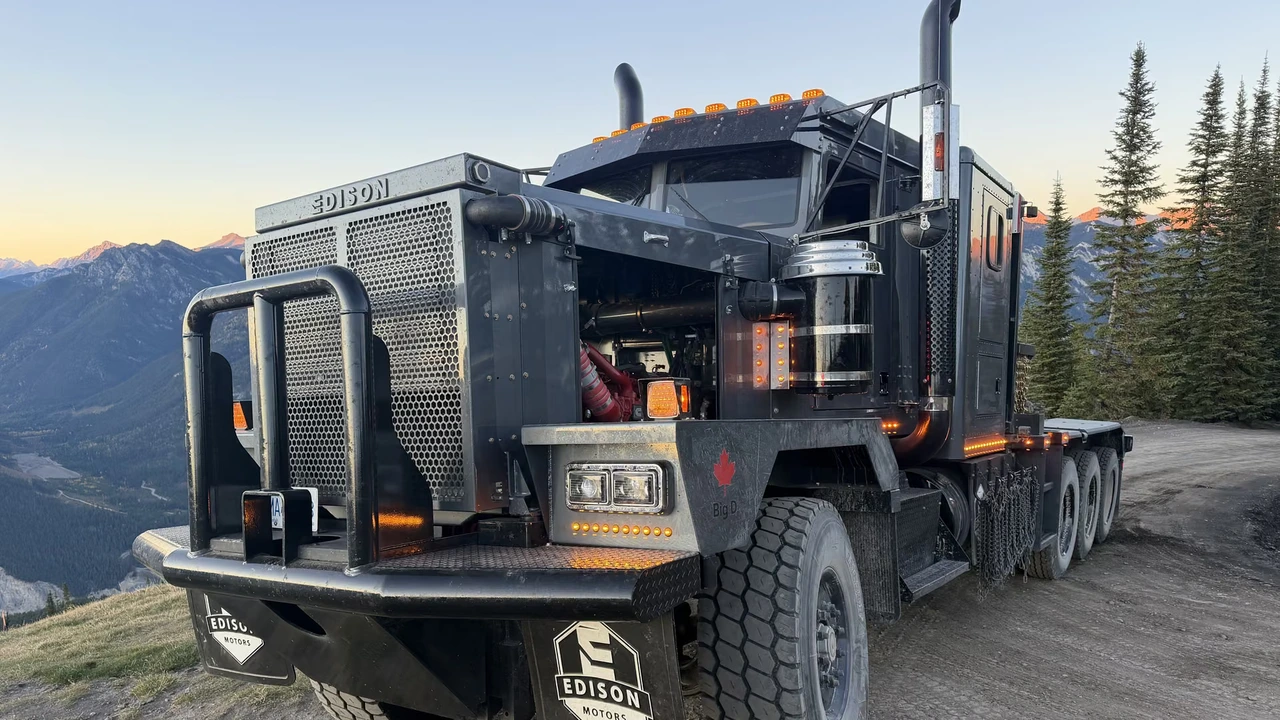
With its latest fourth-generation (V4) design nearing completion, Edison plans three validation trucks: a mechanical truck for logging operations, a customer hybrid and an internal hybrid test truck. At the investor event, the team said design work should be complete within roughly a month, followed by parts ordering and builds to work out remaining issues. These are planned validation trucks, not an already launched production fleet. The team is also targeting a U.S.-based Regulation A funding round of $20 million to $40 million to help get production off the ground.
A capital injection of that size would fund a pilot run of ten production trucks out of their new facility in Donald, British Columbia. From there, the goal is to field production orders from a larger pool of clients ranging from over-the-road truckers to logging operations, and possibly even a handful of intermodal specialists. Edison’s goal is for its fleet of semis to fill the very same roles that modern diesels do, with the aim of reducing fuel use and maintenance through its hybrid powertrains. More power and better MPG are the promise, not a demonstrated outcome for the planned V4 fleet: Edison did not present measured comparative MPG results at this event.
If successful, Edison Motors would deliver on the broken promises of companies hundreds or even thousands of times its size. In doing so, it would prove the future of trucking doesn’t need to rely on fragile, impossible to repair technology or massive corporate campuses. In every way that matters, Edison Motors plans to be the anti Tesla.
Better MPG Depends on the Job
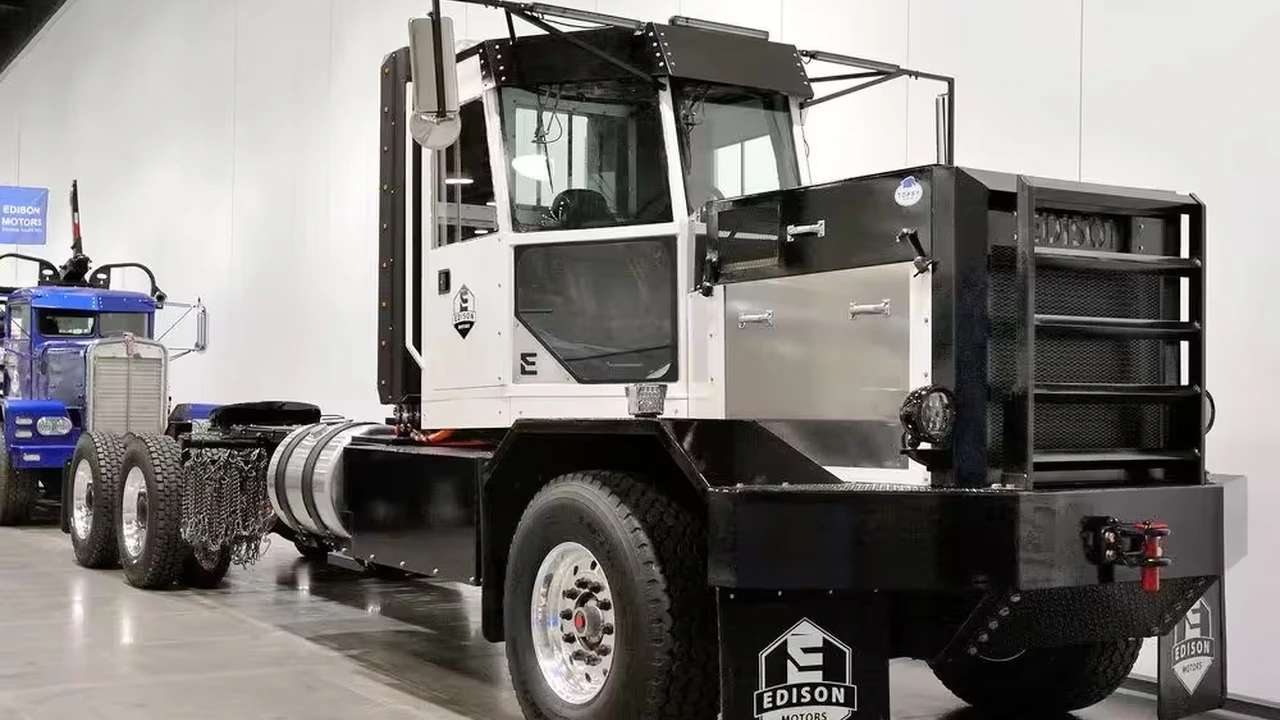
How much fuel could a diesel-electric truck save? Edison’s FAQ estimates savings of 5–10% for highway work and fuel-use reductions of 70–100% in logging or city applications. Those are the company’s estimates, not independently verified test results. The FAQ does not provide a test methodology or a defined comparison baseline for those figures, and it does not establish a measured MPG rating for the planned V4 trucks. A percentage reduction in fuel consumed also is not the same percentage increase in MPG.
The distinction between comparing a hybrid with a conventional diesel and comparing two generations of Edison hardware matters, too. In Edison’s generator-engine discussion, the company says the fuel-economy benefit depends on the job and does not expect a noticeable change versus its previous generator setup. The higher engine output discussed there is generator-engine power, not a directly interchangeable measure of power at the wheels.
That leaves a promising idea with testing still to do, not a blanket promise that every operator will get the same savings. Route, load and duty cycle will determine how useful the hybrid system is. For the upcoming validation trucks, measured fuel use under comparable working conditions is the number that will matter.
A Right to Repair Warrior
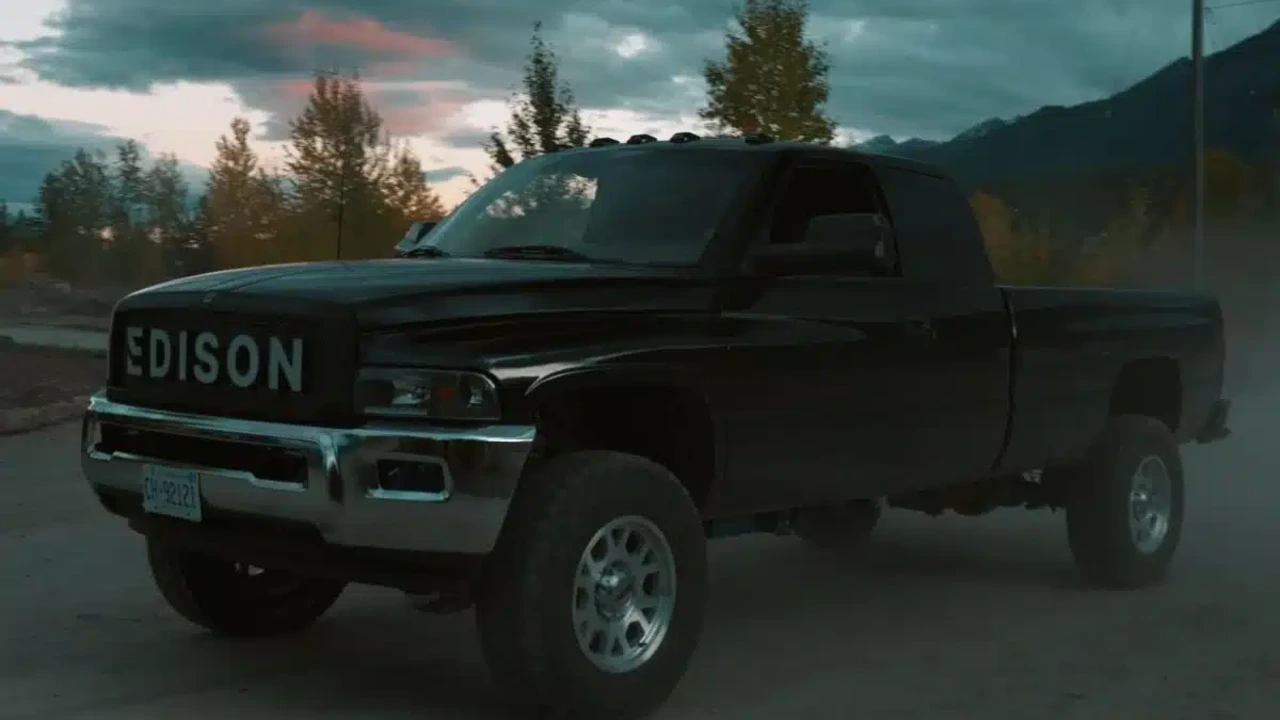
For the everyday pickup truck driver, Edison’s ambitions stretch far beyond the commercial trucking sector. That 5.9-liter Magnum Dodge Ram test mule isn’t just a fun shop project, it’s the rolling billboard for the company’s ability to match the same trends as billion-dollar OEMs. At the present, Detroit titans like Ram and Ford are pivoting hard back to hybrids and extended-range electric vehicles after the pure-EV venture ran into insurmountable hurdles.
Future flagships such as the Ram 1500 REV, formerly called Ramcharger, and Ford F-150 Lightning EREV pursue the same extended-range electric concept. Ford projects more than 700 miles of range for its next-generation Lightning; these are manufacturer targets, not independently verified real-world results. Yet, while those modern rigs are rolling supercomputers wrapped in massive price tags and locked behind proprietary software, Edison is taking a strictly right-to-repair approach to the exact same concept. All of this testing feeds into Edison’s planned incomplete rolling chassis, allowing a chosen truck body to be paired with a diesel-electric powertrain. The company says testing must establish efficiency, reliability and power before the product is ready.
Rather than competing directly with Detroit by selling a complete new pickup, Edison is developing a rolling-chassis alternative for existing truck bodies. That does not mean bypassing dealers: its official pickup-chassis plan calls for dealer installation and service. Market timing remains unconfirmed.
The Roadmap Ahead
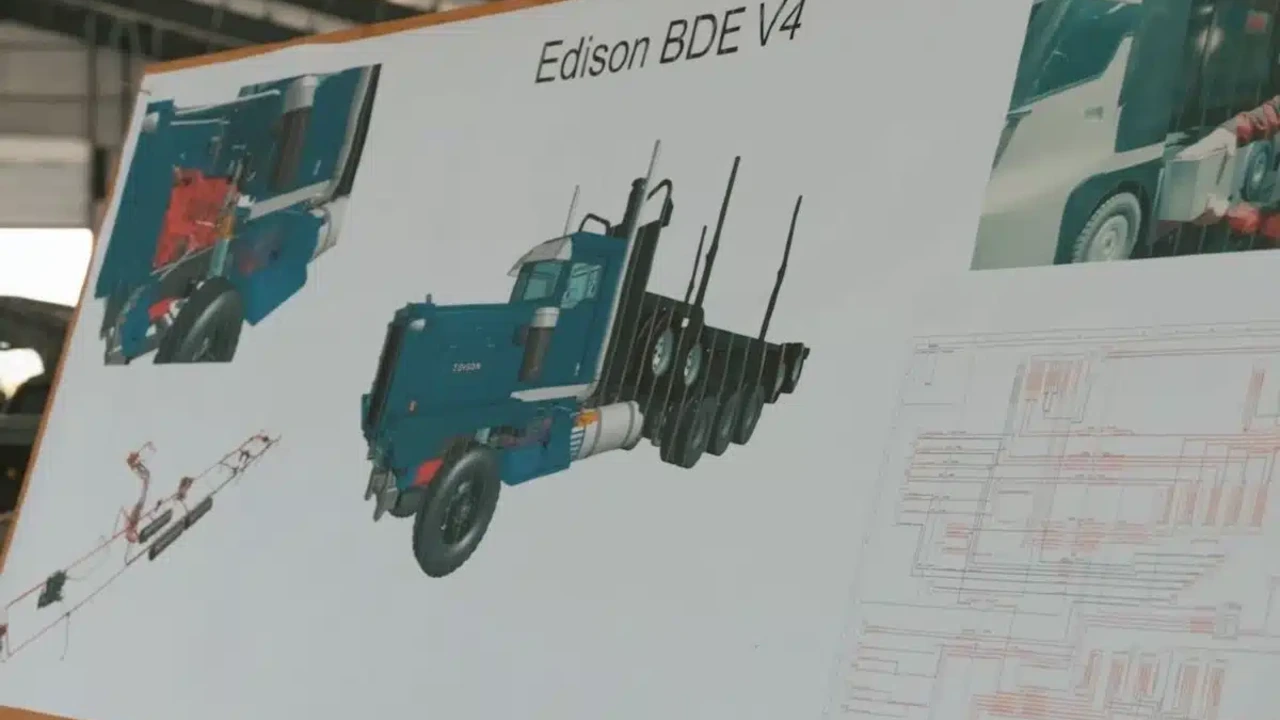
While bringing its diesel-electric rolling chassis to market remains a longer-term goal, the Edison team is already laying the groundwork to translate their heavy-duty engineering down to the consumer level. Design work has officially kicked off on the pickup-sized incomplete chassis, with the stated goal of having a fully realized prototype to reveal by next year’s investor day.
Edison hopes to move from satisfactory validation results to an initial run of ten trucks, with broader orders targeted for the end of next year. Those are company goals, not firm delivery commitments. Funding, testing and production readiness still have to line up. Its investor-day update makes clear that the next step is proving the design before scaling up.