By John Elkin
The story of how Dodge and Cummins came together was years in the making. You can trace the genesis back to the 1973 OPEC oil embargo and the subsequent energy crisis here in the United States, eight years before the initial meetings between the automaker and the diesel engine giant.
With fuel prices rising and automotive consumers demanding fuel efficiency, Detroit was caught flat-footed. It takes time to bring a new design from conception to the showroom floor, so it would take years to retool the Detroit assembly lines. Tightening emissions laws were also sucking the horsepower out of cars and trucks. And then in the late 1970s, the bottom fell out of Chrysler in every way imaginable.
Lee Iacocca to the rescue
When former Ford executive Lee Iacocca arrived at Chrysler to try and take the automaker off life support, he had a lot to do. Bringing the truck division up to speed was important.
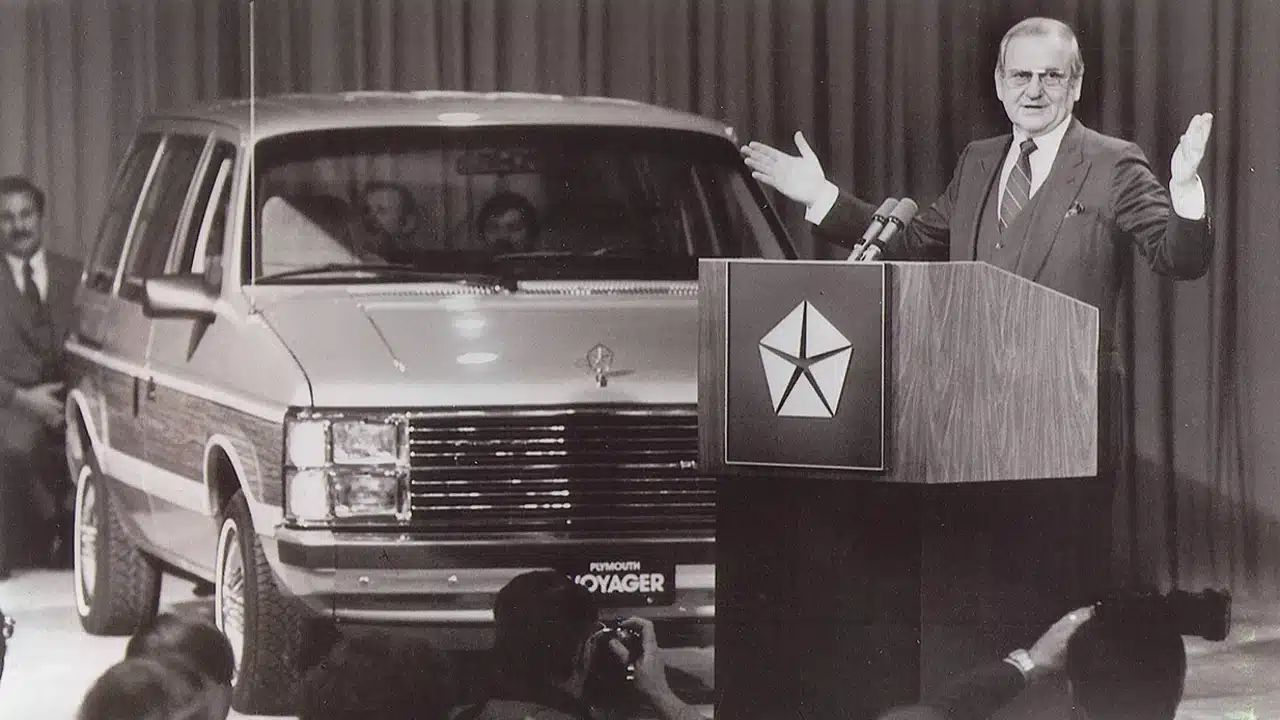
He had to take drastic steps to even keep the doors open at Chrysler headquarters. After his historic moves to save Chrysler, he set out to upgrade every division, including the ailing trucks.
All this started happening in November 1978, which was long after the planning of Dodge’s first diesel truck was well underway. You could not pin this sad tale on Iacocca.
First to diesel, first to fail
Dodge was actually first to install a diesel among the Big Three. Too bad it was the wrong diesel engine.
The Big Three were looking for options to make their pickups more fuel efficient. At this time, diesel fuel was less expensive than gasoline. Hence, lots of cars and mini trucks had a diesel option. Yet, in 1978, no full-size trucks in the American market did.
Dodge owned a 15% stake in Mitsubishi and imported its mini pickup to sell as the D-50. Mitsubishi also had an industrial engine division that developed the 6DR5, a 4.0-liter naturally aspirated six-cylinder that produced an underwhelming 105 horsepower and 169 lb-ft of torque. However, it would produce an astounding 20–24 mpg.
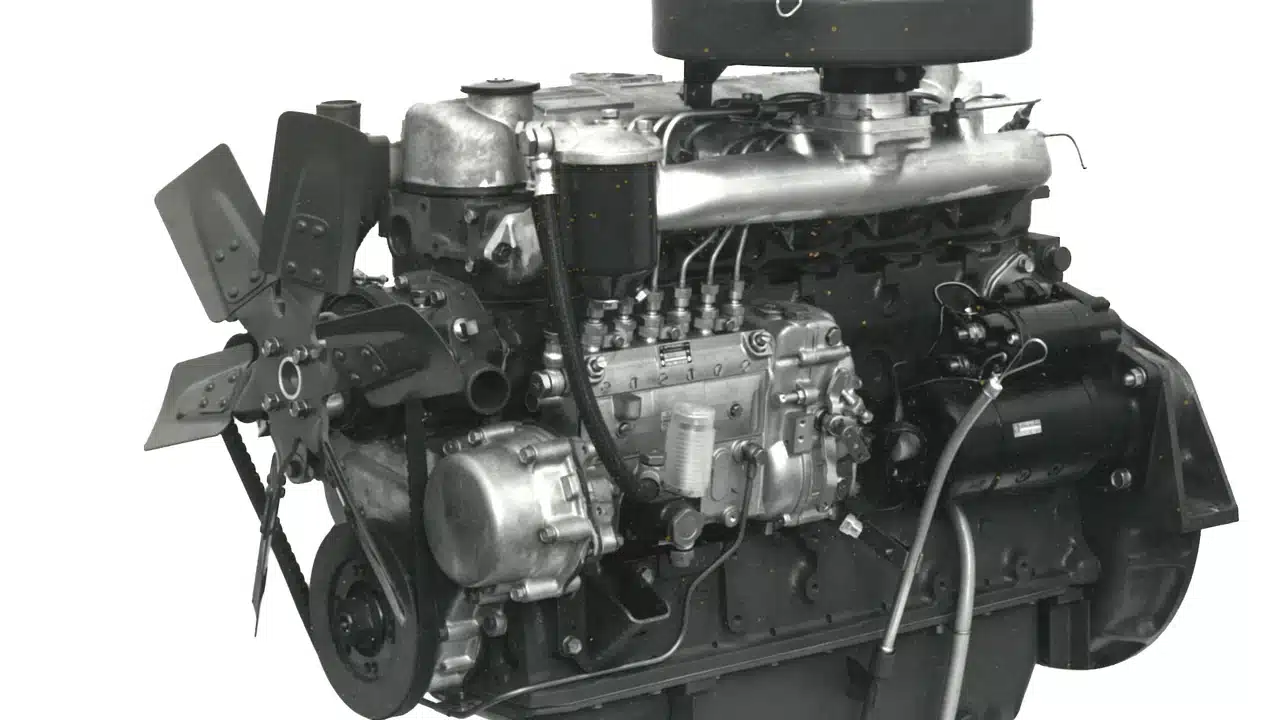
The diesel option hit the market in 1978. It failed with a resounding thud as customers did not respond well to the 60 mph top speed or the glacially slow acceleration. Only about 3,000 units were produced between 1978 and 1979. Finding a surviving unit today with original parts would be difficult.
Dodge gets serious about trying a diesel again… eventually
In 1981, Dodge was a distant third in a three-horse race with Ford and Chevrolet. Its full-size truck was largely outdated with no appreciable body or suspension updates since 1972. Its three-quarter-ton and one-ton trucks offered three gas engines: the venerable 225-cubic-inch slant-six (three-quarter-ton models only) and the 318- and 360-cubic-inch V-8s.
At this point, diesel engines in three-quarter-ton and one-ton trucks were at least a year away, but only GM was ready to pull the trigger for 1982 with the Detroit Diesel 6.2-liter naturally aspirated V-8. Ford would follow in 1983 with the Navistar 6.9-liter naturally aspirated V-8. Dodge was still looking for the right engine.
The truck division knew it could not fall behind in this as well. Chrysler tried talking with Detroit Diesel and Navistar, but their contracts with General Motors and Ford were ironclad. Chrysler started sending out feelers to other options, not knowing that the answer to its problem was about to come knocking on its door.
The birth of the 6BT 12-valve
The engine that would change the landscape of the heavy-duty pickup world started with a joint venture. J.I. Case and Cummins were both looking to build a medium-duty six-cylinder engine. Together they formed Consolidated Diesel Corporation (CDC) in 1980.
The CDC manufacturing plant was based in Rocky Mount, North Carolina. Cummins and J.I. Case pooled capital in order to build the state-of-the-art manufacturing plant to mass-produce medium-duty diesel engines at scale to keep per-unit costs low.
This corporate move left both Cummins and Case to market and sell the engines produced out of the CDC plant as they saw fit. Cummins did own the core engine design of the B-series engine family, leaving it solely responsible for marketing those engines to automakers. Case was more interested in using the engines internally in its own units.
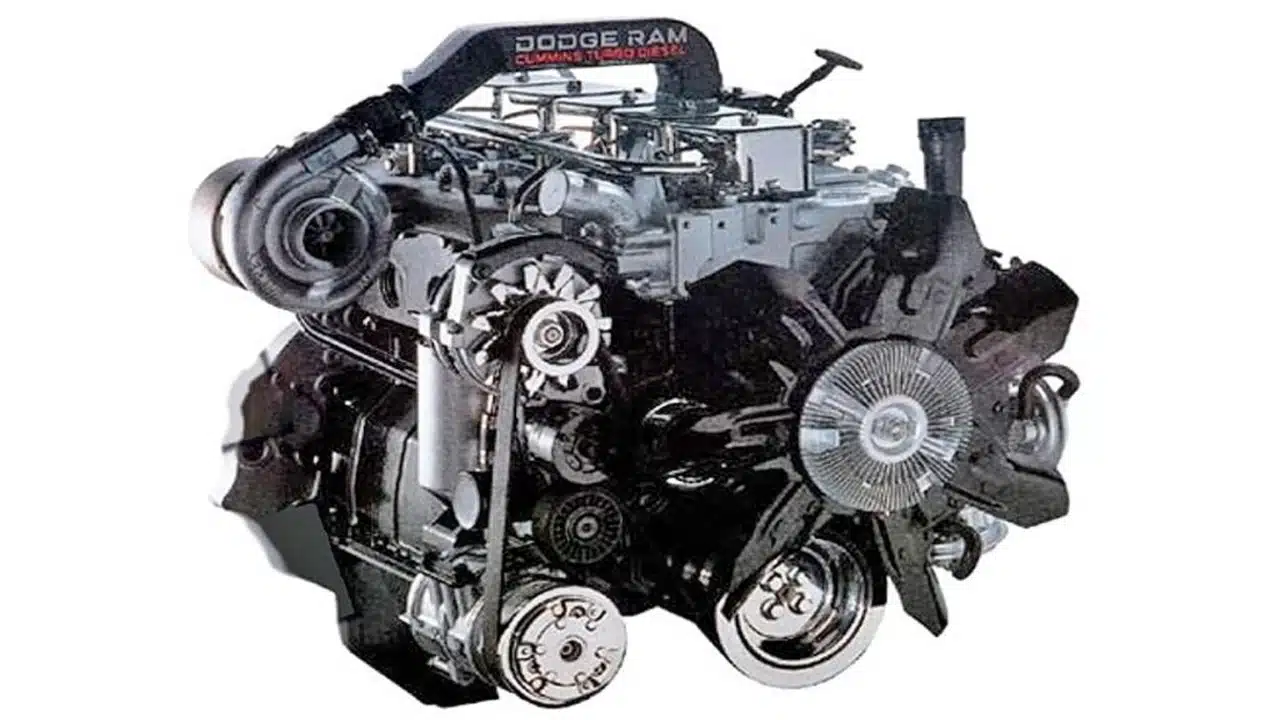
By 1984, CDC debuted the 6BT with the intention of putting the engine in tractors and combines, as well as marine and industrial applications. In terms of sales, the BT series engines were a massive hit in every intended application.
The internals
Unlike light-truck engine designs of the era, the 6BT shared internal components with commercial semi-truck engines. That included a cast-iron block and cylinder head, forged-steel crankshaft and connecting rods, and timing gears instead of a belt or a chain.
It was pure mechanical simplicity in that from 1989 to 1998.5, only one wire was required to run the engine: to open the fuel shut-off solenoid. The fuel injection was mechanical as well, delivered by a Bosch VE rotary pump. With nothing more than simple hand tools, a backyard mechanic could tune in anywhere from 40 to 100 additional horsepower, along with more torque. But more on that later.
The biggest advantage the 6BT had over Ford and Chevy was the fact it came with a turbocharger, which automatically made it more appealing to consumers because of extra power and less of that embarrassing black smoke rolling out of the tailpipes under heavy acceleration.
Knock, knock, knock… cumm-in!
While Chrysler was looking over the landscape deciding what to do with its truck division, the answer was knocking at its own front door.
Cummins Inc. was having its own troubles at the same time. It suffered from both internal and external issues carrying over from the 1970s. But one thing it had going for it was its partnership with J.I. Case to develop a new line of B- and C-series six-cylinder diesel engines.
Cummins targeted Chrysler and set up meetings with the struggling automaker in late 1981. Whether Chrysler knew, going into the meetings, what an opportunity it had to put this engine in its trucks has never been documented. What Cummins offered was a chance to leapfrog Ford and Chevrolet.
Talks stretched into 1982 before an agreement was reached to even start working on a formal contract between the two entities. Those talks stretched into mid-1985 when the deal was finally complete, and all that was left was the engineering.
Test mules and bent parts
Late 1985 and 1986
Now that everything was legal, Dodge received some engines from Cummins and then pulled a 1985 Dodge Ram D-350 Prospector one-ton truck off the assembly line as test mule No. D001. After removing the 360-cubic-inch V-8, engineers started looking into what it would take to shoehorn the 6BT into the existing engine bay and what would need modification.
The 6BT weighed 970 pounds dry and would require four years of mechanical, thermal and structural re-engineering to change the engine bay that used to house a 550-pound 360-cubic-inch V-8 into a suitable home for the diesel. Dimensionally, the straight-six diesel fit after some firewall and engine-mount modifications. The mount changes lowered the center of gravity over the gas engine and allowed the diesel to clear the hood line. The firewall modifications were mostly to ensure the turbocharger housing did not contact the cab wall or melt surrounding components.
1987
Now it was time to tackle the issue that Dodge knew needed attention. The D/W frame was not designed to handle a 1,000-pound engine or 400 lb-ft of torque. Chrysler engineers boxed and reinforced the front frame rails to prevent twisting. In two-wheel-drive models, heavier-duty coil springs were mounted to handle the weight. In four-wheel-drive models, heavier-duty leaf springs were mounted on a Dana 60 axle.
Also in 1987, the A-727 transmission was being addressed with a seriously beefed-up clutch pack and a diesel-specific torque converter to handle 400 lb-ft of torque at 1,700 rpm.
A five-speed manual Getrag 360 received a beefed-up cast-iron case and a large clutch assembly for heavy-duty towing options. It was not perfect, but neither was the A-727 automatic. But they would do for now.
In the rear, a Dana 70 was standard with two optional gear ratios available: either a 3.54:1 or a 4.10:1 final drive.
1988
Next, the cooling system needed attention. Engineers redesigned the front grille, radiator core support and fan shroud to fit the massive high-capacity radiator, which would handle cooling while towing heavy loads.
Cold-start testing showed a need for an electric grid heater in the intake manifold. The Cummins engine did not utilize glow plugs. Adding this system also required the addition of a 120-amp alternator and a high cold-cranking-amp battery.
By mid-1988, Dodge and Cummins had built a fleet of test trucks and completed a durability testing program totaling a reported 11 million miles.
However, the 11 million-mile figure was not all real-world miles. It was broken down by engineering teams between five years of accelerated dynamometer test cell hours and extreme-environment test track work. The actual real-world prototype fleet deployment miles were never released by Chrysler, just the engineering estimate. The routes that Chrysler and Cummins did run these test trucks through included deserts, cold-weather routes and extreme towing over North America’s highest passes.
With testing complete and all engineering changes validated, production started at the CDC factory with the first trucks hitting dealers’ sales floors in late 1988.
Unprecedented sales
Internal sales projections for the entire 1989 model year of the Cummins-powered Dodge trucks ranged from 1,000 to 5,000 units. Chrysler had obviously taken a conservative approach to the Cummins option. Who could blame Chrysler after decades of being the perennial third-place finisher?
The Cummins was in high demand right from the start, so much so that fleet owners, farmers, hotshot haulers and contractors who had previously bought Ford or Chevy were switching to Dodge just for the Cummins option.
Demand was the operative word because over 16,000 units were being ordered by customers and dealers. Demand was so high that Chrysler had to issue a temporary order-taking halt until the CDC factory in North Carolina could get caught up.
Supply chain aftermath
Chrysler and the CDC factory had to act fast for the upcoming 1990–91 model years. Cummins reallocated additional production lines at the CDC factory to meet demand. It was obvious that extra production lines would not be enough. Cummins fast-tracked a whole new engine manufacturing facility in Walesboro, Indiana, dedicated solely to the 6BT. It opened on a limited production schedule in 1991, and by 1992, Walesboro was operating at full capacity.
The aftermarket rushes to cash in
Prior to 1989, the aftermarket landscape for diesel pickups was limited almost exclusively to exhaust kits and K&N air filters. Cummins changed all that in short order with the previously mentioned Bosch VE rotary fuel pump. The period from 1989 to 1990 was known as the “grassroots and free era,” when anyone with basic hand tools could squeeze an extra 30–50 horsepower out of the Cummins.
A popular free hack to get more air to the turbocharger was to cut open parts of the airbox to allow more airflow. Then muffler shops caught on to how easy it was to fabricate a 3.5- or 4-inch straight pipe all the way back to the end of the bed, allowing for a cheap, unrestricted exhaust.
But the Bosch pump was the real magic early on. At the back of the pump was a screw that quickly found a nickname as the “full power screw.” You could increase the fuel flow across the entire rpm band by turning it a little or continuing until you bottomed out the screw.
One issue did become evident quickly. Heavy-footed drivers or heavy haulers who turned the pump up all the way were sometimes unaware of a problem. Because the Bosch VE pump was completely mechanical, it had no computer control, thermal protection, or exhaust temperature sensors. If a driver cranked the fuel screw in for more power, the pump delivered that extra fuel whether the turbocharger could supply enough air to burn it cleanly or not. This led to melted or cracked pistons, cracked exhaust manifolds and damaged turbocharger housings.
Word quickly spread to add an exhaust gas temperature (EGT) gauge to your Cummins-equipped Dodge. Keeping an eye on the EGT avoided expensive damage that was not covered under warranty.
Enter the big boys
Gale Banks Engineering was first to market with professionally built and tested aftermarket parts for the 1989–1990 Cummins. Banks had built an empire building exhausts for motorhomes and turbocharger kits for the 6.2-liter Chevrolet diesels. He quickly came out with an exhaust and a Power Pack that included his exhaust and a high-flow air filter.
BD Diesel Performance out of British Columbia almost immediately came out with an exhaust brake system, known to truckers as a “Jake brake,” to help Cummins-powered trucks towing heavy loads stop safely.
Not to be outdone, diesel performance shops were finding that the Bosch injectors in the 6BT used for industrial and marine applications were larger. When dropped into the Dodge engine, the larger injectors were a direct fit and increased fuel flow.
An unfortunate aftermath
With all the ways to get extra power to go faster and haul heavier loads, an unfortunate truth came to light: the factory transmissions could not handle the extra load. The factory A-727 and the five-speed Getrag were slipping and overheating. All Dodge could do was advise people to use the trucks within the parameters they were designed for.
The aftermarket had other ideas. Sun Coast, ATS Diesel, and DTT (Diesel Transmission Technology) emerged in the early 1990s specifically to build heavy-duty torque converters, valve bodies, and billet shafts for first-generation Dodge Rams.
Bigger is not always better
For the 1991.5 models, Cummins was dealing with increased emissions laws from the government. The aim was to lower nitrogen oxide formation (NO2). To that end, it introduced a factory intercooler and also looked for ways to control EGT numbers and drive pressure under heavy, sustained towing.
Working with Holset, its turbocharger supplier, Cummins decided to increase the turbine housing and compressor wheel size from 18 cm to 21 cm squared. This would get them the desired EGT reduction and also reduce cylinder head backpressure, reducing valve train pressure and head gasket pressures.
Almost immediately, customer complaints came rolling in about increased turbo lag and low power from a standing start until turbo pressure built.
Some went so far as to replace their housings with 16 cm units, but it was an expensive and complicated fix. Dodge and Cummins felt the pressure from the buying public and promised to replace the housing with the 18 cm housing for all 1992.5 and later models.
1994 changes
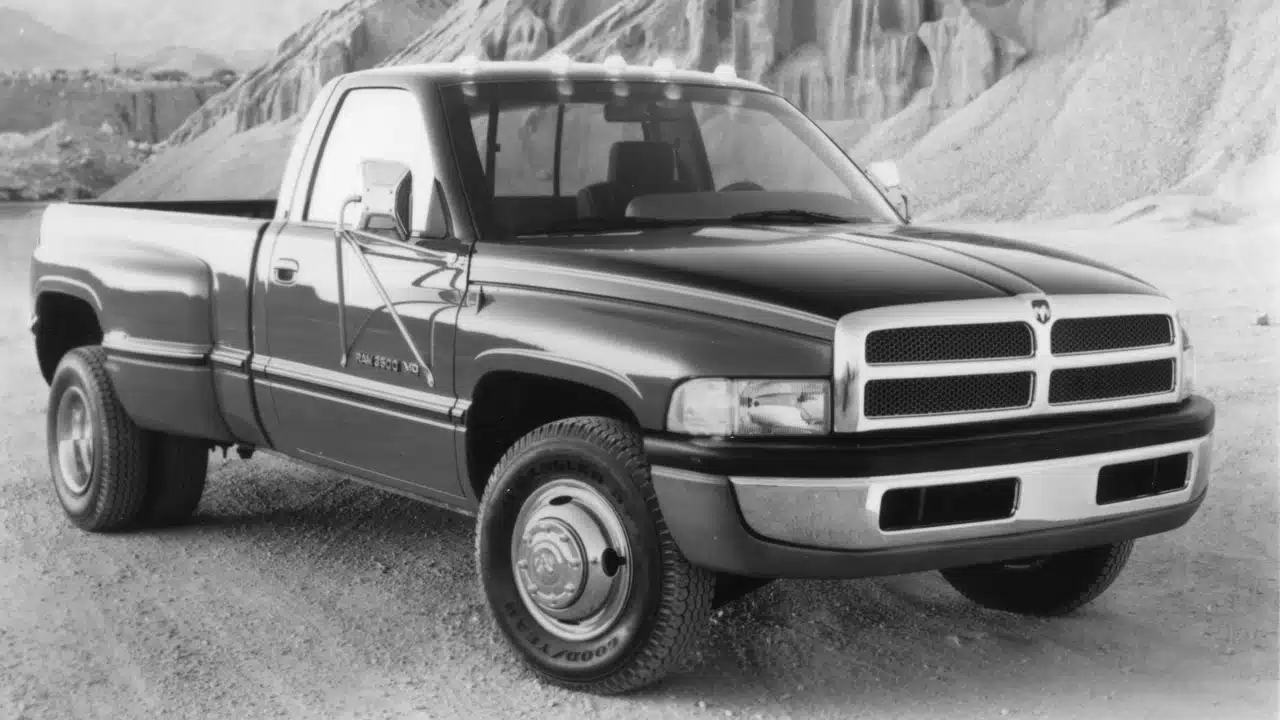
The 1994 model year saw the biggest overhaul of the Dodge truck line in 22 years. It marked the end of the original square body style and ushered in the iconic second-generation Ram (the BR/BE platform). Chassis updates, interior styling, and drivetrain mechanics were completely overhauled.
Unfortunately, with the new model year, the government also introduced even stricter diesel emissions standards. While the 5.9-liter engine remained a 12-valve inline-six, Cummins made major internal and external changes to meet the stricter emissions. On the upside, there was a small boost in power. Now the 6BT would make 160 horsepower with the automatic transmission and 175 horsepower with the manual.
P-pump!
The biggest innovation of the 1994 overhaul, if you ask any Cummins enthusiast, has to be the Bosch P7100 injection pump. Driven by a gear train, the mechanical P-pump provided higher injection pressures and custom tuning potential, earning this era its legendary status.
Drivetrain and axle upgrades
Dodge finally replaced the problematic Getrag five-speed with the New Venture Gear 4500 (NV4500) that featured an iron case and synchronized gears.
The A-727 was replaced as well with a four-speed automatic coded as the 47RH. It featured a torque converter lockup clutch to improve fuel economy and reduce fluid heat under load.
Axles received some upgrades as well with some juggling between the Dana 70 and 80. Three-quarter-ton units with the manual transmission received the Dana 80, which stands to reason since those units would probably be hauling heavier loads. The one-ton dually units received a massive Dana 80 with an 11.25-inch ring gear.
In the front, Dodge engineers flipped the Dana 60 differential housing from the passenger side to the driver side on 4×4 models to match the transfer case output.
1994 was certainly a turning point for Dodge as the new changes set Chrysler sales records and cemented the Dodge as the model of what the future of heavy-duty pickup trucks would be.
The next big thing
Between 1994 and 1998, before the engine change for the 1998.5 model, Cummins tinkered with power output, continually raising the horsepower and torque numbers. Dodge revamped the 47RH transmission and rebadged it the 47RE when Dodge took the transmission from hydraulic shift control to electronic. But that was about it.
It would be great to say that the introduction of the 24-valve was based on some great performance innovation, but once again it was the ever-tightening grip of government oversight on diesel emissions that drove the change to the 6BT.
Not all the news was bad, however. While purists initially missed the pure mechanical simplicity of the earlier engines, the 24-valve configuration brought significant engineering upgrades that made the Dodge Ram faster, cleaner and easier to drive daily. Precise electronic fuel control and better cylinder airflow were achieved with the doubling of valves.
With the 24-valve setup and an automatic transmission, power was bumped again to 215 horsepower and 420 lb-ft of torque. With a manual transmission, there was a bump to 235 horsepower and 460 lb-ft of torque.
The Bosch VP44 pump
Cummins replaced the mechanical P-pump with the Bosch VP44 electronic rotary pump, controlled by an engine computer (ECM) that dynamically adjusted injection timing and fueling thousands of times per minute.
The VP44 was not perfect. Unlike the indestructible oil-lubricated P7100, the VP44 relied entirely on diesel fuel for cooling and lubrication. If the weak factory Dodge lift pump failed, starving the VP44 of fuel pressure, the injection pump would quickly overheat and destroy itself. And that did happen more often than Chrysler wanted.
Dodge eventually sent a patch to dealers to fix the issue. Since the issue was the weak lift pump attached to the engine, not the VP44 itself, dealers fitted a pump directly into the fuel tank. The immersion into cold diesel fuel kept the pump cooler, and pushing the fuel was easier on the pump than pulling from the hot engine compartment. It still was not perfect, but it was better. A true fix would not come until 2003 with a complete redesign and the introduction of the common-rail fuel system. But that is for another article.
In conclusion
Lee Iacocca and Dodge took a massive gamble on an engine never meant for a passenger highway truck. That gamble was widely recognized as the single greatest automotive partnership in American history. The 12-valve 5.9-liter Cummins proved that a tractor engine couldn’t just save a failing pickup truck line; it could turn Chrysler, Dodge and eventually Ram into a dominant force, single-handedly launching the modern diesel performance era that continues to rule the open road today.
While Dodge never did overtake Ford in truck sales (no one has since 1977), it has in certain categories and in certain years overtaken General Motors, lifting it out of perennial third place and into a tight battle for second.
Cummins has not rested on its laurels either. It expanded on its success with the 5.9-liter and, in the search for more power and torque, introduced the 6.7-liter version of the 6BT. It leaves one to wonder where the next big step will be in diesel-powered pickups.