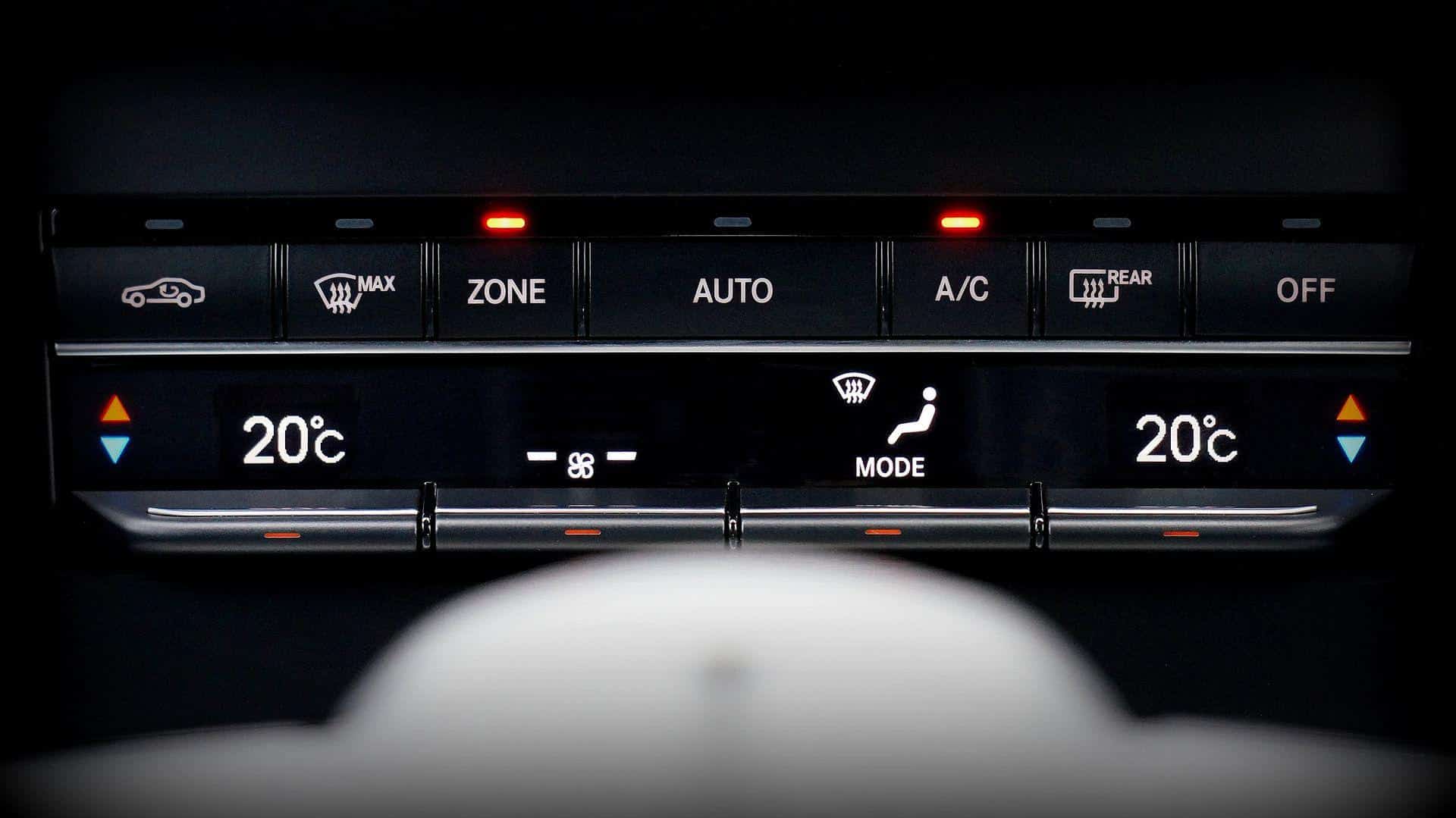
There is a repair bill waiting quietly behind the dashboard of millions of pickups and SUVs, and it usually announces itself the same way: a rapid clicking or knocking sound from behind the glovebox right after startup. The part responsible is a plastic servo motor about the size of a deck of cards. Aftermarket replacements commonly sell for $30 to $80. Yet quotes of $600 to $900 — and beyond on some trucks — are entirely normal, and owners hear them every day.
That gap between a $30 part and a $900 bill is not a scam. It is a knowledge and labor problem, and understanding it is the difference between a Saturday-morning fix and one of the more frustrating line items in truck ownership.
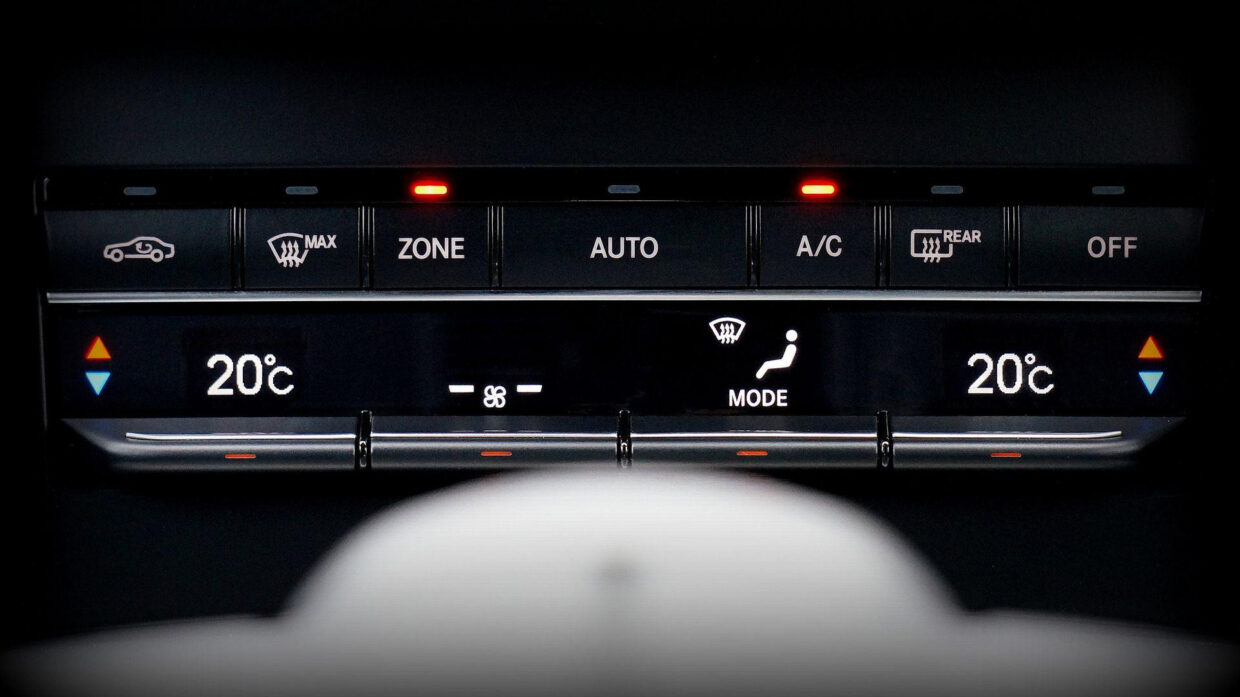
Dual-zone climate controls: each function on this panel is moved by its own actuator behind the dash. (Photo by Mike Bird/Pexels)
The Plastic Servo You Did Not Know Was in Your Dash
Your HVAC system moves air through a series of doors inside the dash: one blends hot and cold air to hit your set temperature, one directs air between the vents, floor, and defroster, and one controls recirculation. Each door is moved by its own small electric actuator — a plastic gearbox with a position sensor.
Most trucks have two to four of them. Dual-zone climate control adds more, because each side of the cab gets its own blend door.
The failure mode is mundane: the plastic gear teeth inside the actuator wear or strip, or the position sensor loses track of where the door is. The actuator then hunts back and forth trying to find a position it can never confirm — that is the clicking. GM trucks of the 2014–2019 generation and Ford F-150s and Rangers are famous for it — famous enough that many owners learn to recognize the sound before their shop does.
A Click, a Clunk, or Heat Stuck on One Side
A failing actuator gives itself away in a few distinct ways:
- A repeated clicking or ticking from behind the dash, often loudest for a few seconds after you start the truck
- Temperature stuck on full hot or full cold no matter what the dial says
- On dual-zone systems, the driver’s side blowing cold while the passenger side blows hot, or the reverse
- Air refusing to move between vent modes — stuck on defrost, or nothing reaching the floor
Note what is not on that list: weak airflow or air that is cool but not cold. Those symptoms point toward the blower motor or the refrigerant system instead. A misdiagnosis here is expensive in both directions — actuators get replaced to chase A/C problems they cannot cause, and compressors get quoted for what is actually a $40 plastic servo.
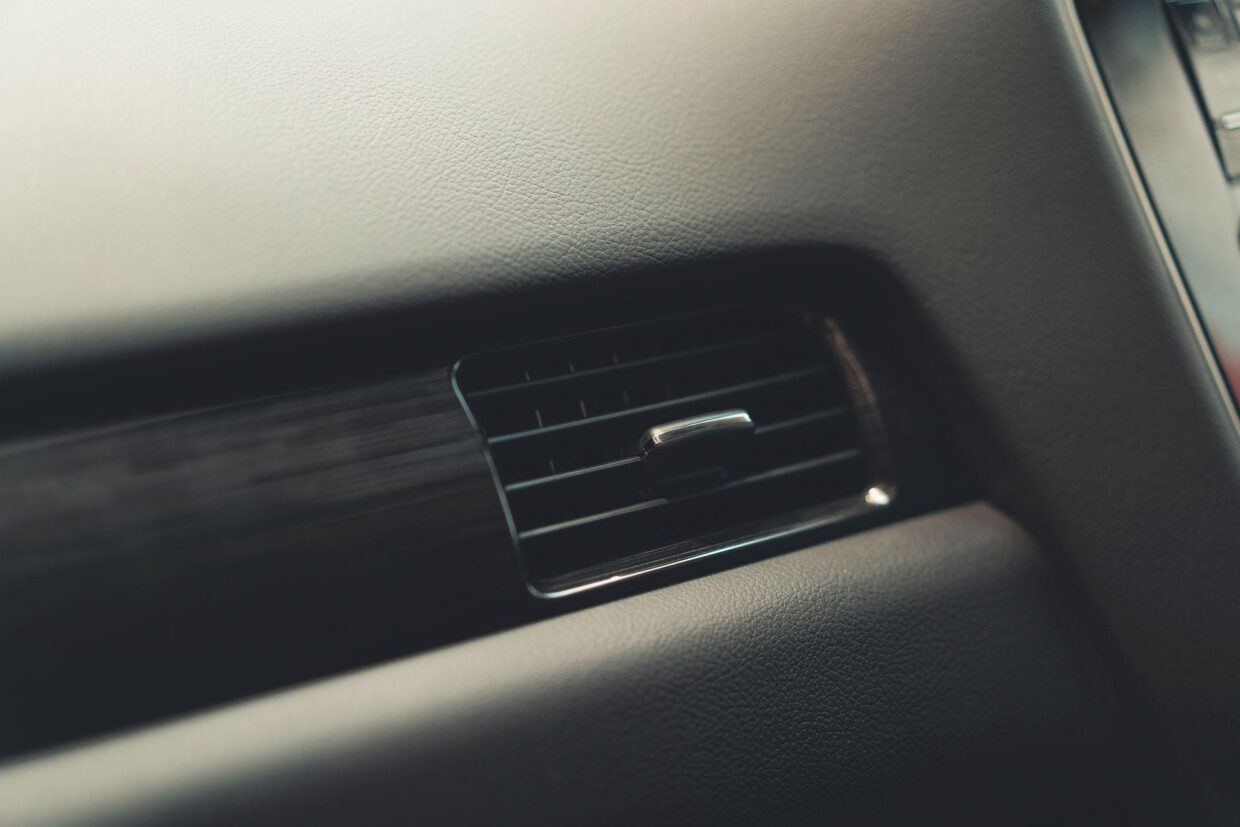
Behind every vent is a door — and behind every door, a plastic actuator. (Photo by Asm Arif/Pexels)
How a $30 Part Becomes a $900 Quote
The part is one line on the bill. The labor is the rest, and the labor depends entirely on which actuator failed and which truck you drive.
RepairPal’s national estimate puts blend door actuator replacement at $459 to $601 on average — roughly $150 in parts and $300 to $450 in labor. But the spread by vehicle is enormous. RepairPal’s numbers run $282 to $378 for a Ford F-150, $612 to $861 for a Ford Ranger, and $607 to $828 for a Ford Explorer — before taxes, fees, and dealer labor rates that can push the final number past four figures.
The difference is access. Some actuators sit in plain view above the glovebox and come out with two or three screws. Others hide deep enough that the book procedure calls for dropping steering column trim or pulling apart half the dash. Same part, same failure, wildly different bill.
Which Actuator Is It? The Part Is Cheap. Guessing Is Not.
Here is where owners get burned twice. Because a truck carries several near-identical actuators, replacing the wrong one means paying the labor bill again. The symptoms overlap — a stuck temperature door and a stuck mode door can feel similar from the driver’s seat — and on many trucks the actuators are not interchangeable even though they look alike.
Take the 2016 Silverado 1500 with dual-zone automatic climate control as a concrete example. The factory service manual lists four separate actuators: a left and a right temperature valve actuator, a mode valve actuator, and an air inlet valve actuator. And instead of describing where each one sits, the manual tells you something more useful — what has to come off the truck before you can reach it. For the right-side (passenger) temperature actuator, the only listed prerequisite is the instrument panel insulator: five bolts. For the left-side temperature actuator and the air inlet actuator, the prerequisite is removing the instrument panel assembly. That is the dash. Same clicking sound from the driver’s seat; very different afternoons.
There is also a step almost nobody mentions until the new part misbehaves: many trucks, GM models especially, require a calibration or relearn sequence after an actuator is replaced. Skip it, and the brand-new actuator can index itself wrong — leaving you with a truck that clicks less but still will not hit the temperature you asked for.
GM’s own recalibration procedure for the Silverado is a good example of how specific this gets. The factory manual gives two ways to do it: a relearn run from a scan tool, or a no-tool sequence — pull the HVAC control module’s fuse for at least 10 seconds, reinstall it, start the truck, and then leave everything alone for 40 seconds while the module sweeps the doors and relearns their positions. The manual explicitly warns against touching the HVAC controls during that self-calibration; interrupt it and the system misbehaves until the relearn is done properly. There is even a dedicated trouble code, B101E-4B, for a relearn that failed — and the same procedure tells the technician to confirm the actuator is physically rotating (stripped gears are the classic failure) before condemning the new part or the module. Nobody guesses details like that; they are either in front of you or they are not.
The Cheapest Move: Read the Procedure Before You Approve the Bill
Everything that makes this repair expensive — which actuator, where it hides, what comes apart to reach it, what gets recalibrated afterward — is written down. The factory service manual for your exact truck is the same documentation the dealer technician is following, including the access steps, the actuator locations by function, the relearn procedure for your model year, and even the door position and feedback trouble codes — B0408 and B0413 among them — that a scan tool surfaces when a door loses its place. It specs the job down to 2.5 N·m, or 22 pound-inches, on the small fasteners you will touch along the way.
That information pays for itself in either direction. If yours turns out to be the passenger-side unit, the 2016 Silverado procedure amounts to five insulator bolts, one electrical connector, one mounting fastener, and the calibration sequence — a genuine 30-minute driveway job. If the procedure shows the dash coming apart, you now know the $800 quote is honest labor, not padding — and you can approve it without the nagging feeling that a $30 part just cost you a mortgage payment.
Either way, you have turned the clicking sound behind your dash from a mystery into a decision. On this repair, that is worth more than the part.