AUTO.MOTO.PT is a Portuguese vehicle board where used pickups and SUVs sit in their own filters instead of next to sofas and phones. An F-150 or a Tahoe does not translate one-for-one onto those listings. The country still runs trucks and SUV every day. They are just smaller, more often diesel, and more often sold as used working or family vehicles than as lifestyle trucks.
A dedicated search is built around cars, SUVs, pickups and commercial vans. Private sellers get two standard ads a month. Dealers sit in the same results. Filters cover body type, region, year, mileage, fuel and price, which is what you need when you are trying to separate a compact crossover from a midsize pickup.
The trucks are midsize, not full-size
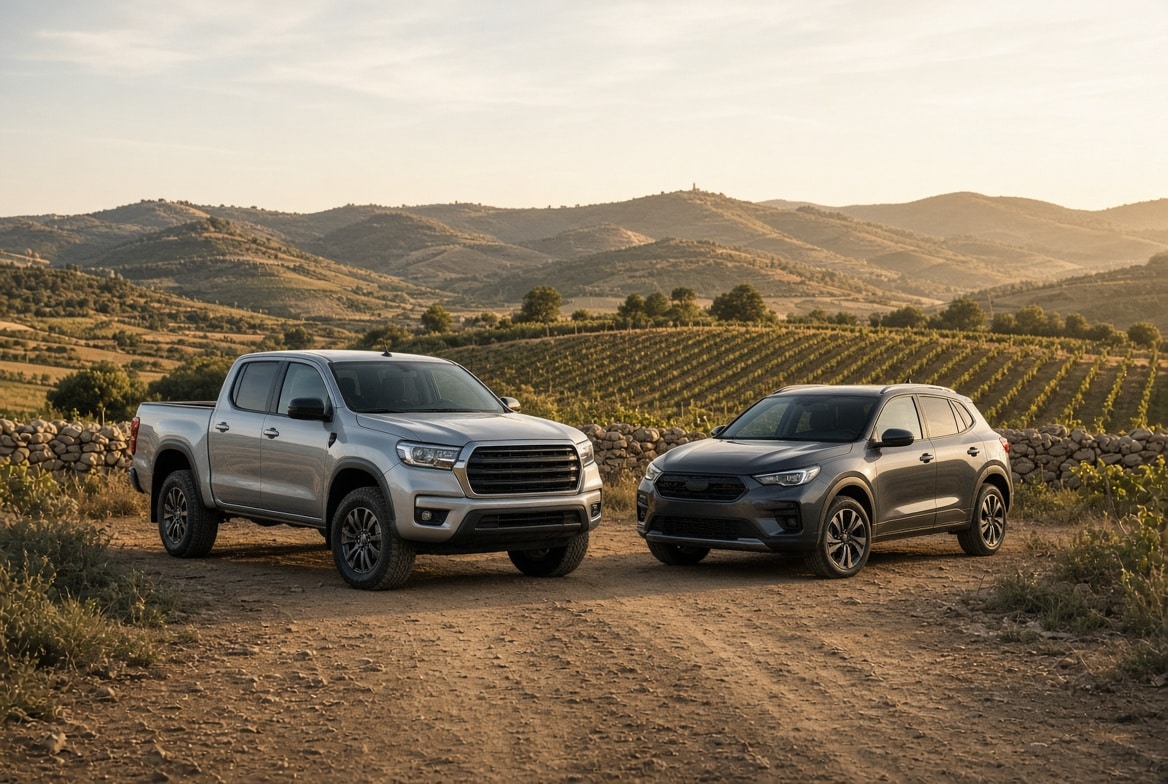
Portugal’s pickup conversation is Toyota Hilux, Ford Ranger, Mitsubishi L200, Isuzu D-Max. Crew cabs with a short bed. Diesel fours. Four-wheel drive because of farms, building sites and wet dirt, not because someone wants a parade truck. Payload and tow ratings exist, but they sit in a different band than a half-ton American pickup. You will not find a 3.5-liter EcoBoost and a 13,000-pound trailer as the default listing.
That does not make them toys. A used Hilux in Portugal is often a tool: vineyard, municipal work, contractor, island service vehicle. Look at service stamps, DPF history and whether the bed has been used as a bed. The same questions you ask of a work Silverado still apply. The scale is smaller.
SUVs do the family and highway work
On the SUV side the volume is compact and midsize crossovers. Peugeot 2008 and 3008 show up constantly. So do Tucson, Sportage, Tiguan, RAV4 and the occasional larger Volkswagen or BMW. Body-on-frame SUVs in the Tahoe or Sequoia sense are rare. Unibody crossovers do the school run, the Algarve weekend and the wet motorway to Porto.
For a PUTT reader that split matters. In the U.S. a lot of buyers treat a midsize SUV and a midsize pickup as cousins. In Portugal the pickup is still closer to a commercial vehicle, and the SUV is the default family machine. If you are shopping from abroad, do not assume “SUV” means three-row, body-on-frame and a tow package. Read the body type filter twice.
What to inspect before you message the seller
Mileage in kilometres. Service books in Portuguese. Timing belts on diesels that have lived in stop-start city traffic. Rust in wheel arches if the truck sat near the coast. AdBlue and DPF on later diesels. A second set of photos of the underbody if the listing is only studio shots of the grille.
Ask for the VIN and the registration district. The islands (Madeira, Azores) are on the same platform, which is useful and also a logistics problem if you planned to pick the truck up in Lisbon on a Tuesday. Two free private ads keep a lot of one-owner SUVs on the board. It also means some listings are thin. A short description is not automatically a bad truck. It is a reason to ask more questions.
Towing is legal and common with the right setup, but European hitch ratings and licence rules are not the same as a U.S. owner’s manual. If towing is the point of the purchase, get the exact braked figure from the listing or the seller. Do not guess from the badge.
Why a truck site should care about a Portuguese board
Used pickups and SUVs do not only live in one country’s classifieds. The same Hilux platform is sold on several continents. Watching how Portugal prices diesels, how many kilometres a five-year-old Ranger has, and how compact SUVs dwarf full-size trucks on a national board is useful context. It is also a reminder that “truck” is not a single product.
Search by body type first. If you want a pickup, filter for pickup. If you want a family SUV, filter for that and ignore the commercial vans sitting one tab over. The machinery is familiar. The mix on the lot is not.