Pickup trucks live a harder life than most vehicles on the road. They tow trailers, haul equipment, crawl over rocks, and absorb the punishment of washboard dirt roads for years without complaint. Every bolt-on part added to a truck, whether it’s a wheel spacer or a replacement control arm, has to survive that same abuse without loosening, cracking, or throwing the suspension geometry out of alignment. Getting that level of durability from a mass-produced part is difficult, which is why more truck part manufacturers have shifted toward precision machining for the components that matter most.
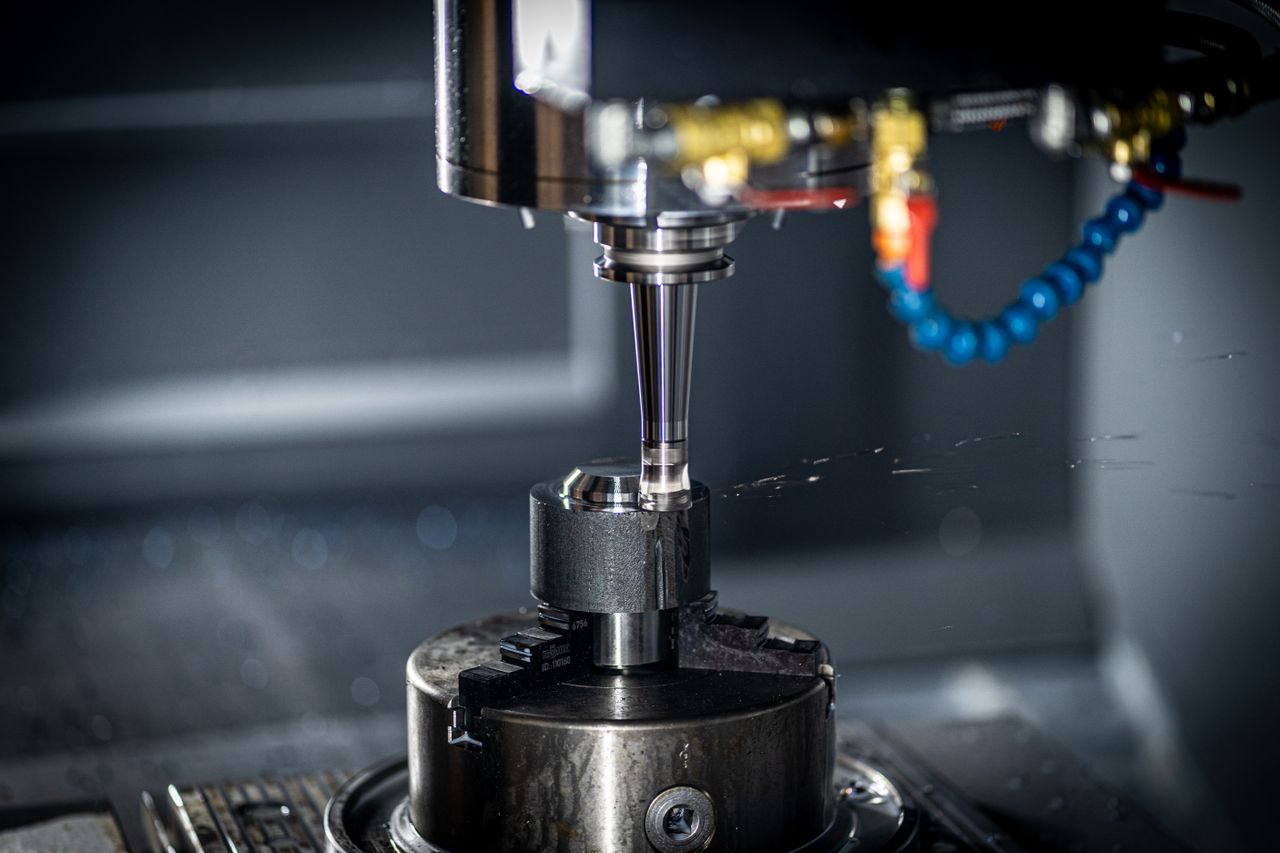
CNC machining, short for computer numerical control machining, uses programmed cutting tools to remove material from a solid block or forging until the final shape emerges. Working from a digital blueprint, the process controls every dimension down to a fraction of a millimeter. That precision translates into parts that bolt up correctly the first time and hold their intended geometry over years of use, which matters when the part in question is holding a wheel onto a truck axle at highway speed. This precision is about geometric accuracy and consistency, not a guarantee of raw material strength; strength still comes down to the alloy, how the raw material was formed, and how it’s heat treated.
Turning Raw Metal Into Truck-Ready Components
Companies offering CNC machining services work from various starting materials depending on the part, including billet, forgings, and pre-cast blanks. Billet stock offers a consistent, known composition throughout the block, which gives machinists a predictable material to cut from, though billet isn’t automatically free of internal defects and isn’t always the best choice for parts facing high-cycle fatigue loading. For safety-critical suspension parts like control arms, hubs, and steering knuckles, many manufacturers prefer forgings as the starting point, since forging preserves grain flow lines that follow the part’s shape and generally hold up better under repeated stress than a shape cut entirely from a solid billet.
The aluminum alloys chosen for truck parts, often grades like 6061 or 7075, are selected for a specific balance of strength and weight, but the alloy designation alone doesn’t tell the whole story. Temper (the heat treatment condition, such as T6 or T73), fatigue performance, and corrosion protection all factor into whether a given alloy and finishing process suit a load-bearing part. 7075 in certain tempers offers excellent strength-to-weight, but it also requires attention to stress corrosion cracking, one reason manufacturers validate these parts through testing rather than relying on the alloy name alone.
Once the rough shape is cut, the part goes through finishing passes that refine bearing surfaces, bolt holes, and mating faces to extremely tight tolerances. This is where machining’s fit advantage becomes obvious regardless of starting material. A hub or knuckle machined to within thousandths of an inch slides into place against factory components without shimming or forcing, reducing the misalignment that leads to premature wear on tires and bearings.
Why Wheel Spacers and Hubs Demand Exact Tolerances
Wheel spacers seem like a simple part, just a disc of metal that pushes the wheel outward for better clearance or stance, but the tolerances involved are anything but simple. A spacer that’s even slightly out of round or unevenly thick creates a wobble that transmits through the wheel bearing every time the truck moves, gradually wearing out components never designed to compensate for that imbalance. CNC-cut spacers are machined flat and true on both faces, so the wheel sits square against the hub as intended.
Hubs carry even higher stakes because they house the bearing assembly the whole wheel rotates around. The bolt pattern, bearing bore, and mounting flange all have to align within narrow margins, since any deviation multiplies into vibration and heat at the bearing surface. Machining these components to final dimensions keeps geometry consistent across every unit in a run, which is harder to guarantee with processes carrying more variables between units. Off-road use adds another layer of demand: precision CNC machining lets engineers finish critical sections to a specific bore tolerance or surface finish, matching the part to where stress concentrates.
Building Suspension Components That Handle Off-Road Loads
Control arms and steering knuckles absorb some of the harshest forces a truck experiences, especially when towing or off-roading. These parts connect the wheel to the frame and manage cornering forces and sudden impacts alike. A poorly specified control arm can flex or crack under repeated impact, throwing off alignment or failing outright.
Many aftermarket control arms start as a forging that already carries favorable grain structure through the highly loaded sections, with CNC machining used afterward to cut mounting bores, bushing seats, and bolt holes to exact tolerances. This pairs the forged blank’s fatigue resistance with the dimensional accuracy machining provides, which matters when a part has to bolt to factory mounting points without shimming.
Steering knuckles face similar demands, transmitting braking force, steering input, and impact loads simultaneously. Custom CNC machining lets manufacturers finish knuckles with precise bearing bores and mounting points matched to a specific truck’s geometry, which matters for lifted trucks or larger tires that change stock stress angles. Reputable manufacturers back this up with material certification, heat treatment records, and load testing rather than relying on machining precision alone.
Recovery Mounts and Brackets Built for Real-World Abuse
Recovery mounts, the points where a truck attaches a tow strap or winch cable, take some of the most violent loading on the vehicle. A stuck truck being pulled out of mud generates sudden, uneven force that can exceed the truck’s own weight in an instant. A mount that isn’t built to exact specifications risks bending or tearing away from the frame under that kind of shock loading.
Recovery mounts are commonly built from high-strength steel plate, welded or forged, since steel’s toughness under shock loading suits this application better than aluminum in most cases. CNC machining still plays a role, cutting bolt patterns and mounting interfaces to precise dimensions so the mount lines up with the frame and distributes force evenly. Because that step is digitally controlled, every mount produced against the same program carries identical hole placement, which matters when relying on that hardware in an actual recovery.
Brackets for skid plates, bumpers, and auxiliary lighting benefit from the same consistency. High-precision CNC machining ensures bracket holes line up with factory mounting points without redrilling or bending, saving installation time and avoiding new stress risers in the metal.
The Lasting Value of Precision-Made Truck Parts
The shift toward CNC-machined components for pickup trucks reflects a simple reality: parts that fit correctly and handle stress predictably last longer than those shaped without that level of dimensional control. From wheel spacers and hubs to control arms, steering knuckles, recovery mounts, and brackets, each component benefits from the same core advantage: a process that treats every unit with the accuracy the original engineering called for, built on a material foundation chosen to match the loads it will actually see. For truck owners who tow heavy loads or drive rough trails, that combination ends up mattering far more than it might seem at first glance.