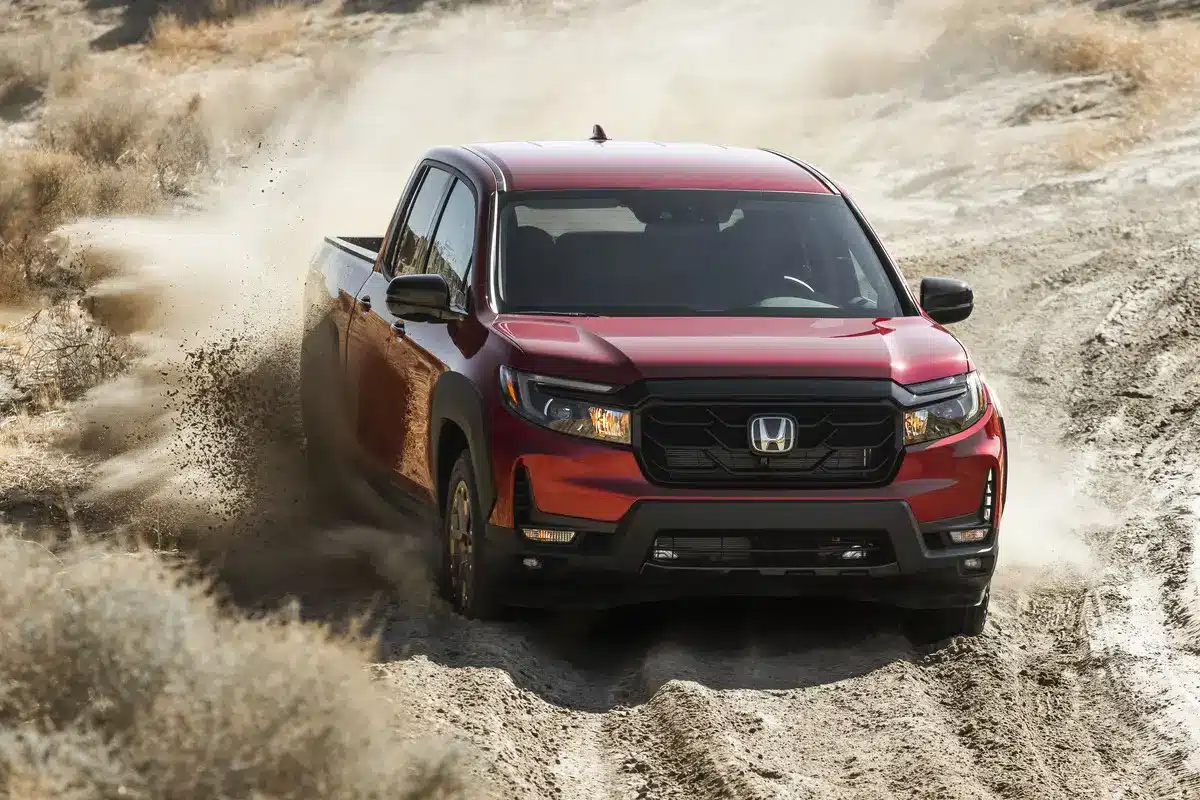
The second-generation Ridgeline went on sale in the U.S. market in the 2017 model year. Known as the “cruck” or car-based pickup truck, the Ridgeline is popular for its smooth ride quality, useful multi-tailgate and bed size, and crossover-like interior. This Honda does have a few known problems.
This information comes from multiple sources, including the National Highway Traffic Safety Administration (NHTSA), Honda press releases, consumer forums, technician forums, and social media.
Ridgeline Engine & Transmission Problems
The following are recalls and service bulletins directly related to the truck’s drivetrain. They cover problems related to the engine, transmission, differentials, etc.These are grouped by year of issue with recalls listed first, followed by bulletins.
Fuel Pump Failure (23V-858 & 21V-215): some 2013-2023 model year Honda Ridgelines may have a faulty fuel pump, which could fail, causing the engine to stall.
Engine Connecting Rod Bearing (23V-751): In some 2019 Ridgeline models, the connecting rod bearing in the engine may wear and seize, causing engine damage.
Timing Belt Split (19V-298): In some 2019 Ridgeline vehicles, the timing belt teeth may separate from the belt, potentially causing engine failure.
Fuel Pump Feed Port Cracks (19V-053): Exposure to some acids, such as those in car wash soaps, could cause the fuel pump feed port to crack in some 2017-2019 Ridgeline trucks.
Torque Converter Lockup: (TSB 17-025 / 17-026): Address torque converter lock-up clutch judder in 2017 models with the 6-speed automatic transmission by flushing transmission fluid and updating PCM/TCM software.
Major Recalls for the Ridgeline

The following are recalls that affected a large number of Ridgeline trucks after leaving the factory. These do not include items found in the Engine & Transmission section above. NHTSA recall numbers are listed in parentheses and sorted by year of issue.
Rear Subframe Corrosion (26V-365): Affects 2017–2023 Ridgeline models in salt-belt states where the rear subframe may corrode and cause suspension failure.
Seat Weight Sensor (26V-332 & 24V-064): Affects select 2017–2021, 2023, and 2025 Ridgeline models where a cracking front passenger seat sensor can short-circuit and cause unintended airbag deployment.
Back Over Prevention Camera (24V-321 & 22V-867): Some 2017-2024 Ridgeline vehicles may have fatigue or breakage in the tailgate wire harness, causing the rear camera to disconnect.
Rack and Pinion Steering Loose (24V-184): Affects 2023 model year Ridgelines. The inner ball joint housing in the steering gearbox may loosen and detach from the steering rack.
Brake Master Cylinder Fastener (23V-458): The tie rod fastener on some 2020-2023 Ridgeline vehicles may have been improperly assembled, which could lead to the brake master cylinder separating from the booster assembly.
Side Mirror Heating Pad (23V-174): Some 2020-2021 Ridgeline trucks may have improperly bonded side view mirror heating pads, allowing the mirror glass to detach.
Hood Latch Striker (21V-932): The hood latch striker on some 2017-2020 Ridgelines may become damaged and separate from the hood, causing it to open during driving.
Seat Belt Retractor (21V-900): Some 2022 Ridgeline vehicles may have a faulty second-row center seatbelt assembly that may deactivate its retractor improperly. This could cause a child safety seat to be improperly secured in that seating position.
Tonneau Cover Hinge Deformation( 20E-068): Honda Genuine Accessory Tonneau Covers (Part #08Z07-T6Z-100F) may develop deformed hinges if improperly secured in the open or closed position, leading to the cover separating from the vehicle.
Right Center Pillar Clip (18V-848): In some 2019 Ridgeline vehicles, the mounting holes for the clip securing the right-center pillar may be too large, which could result in airbag interference or trim panel separation during a crash.
Faulty Air Bags (18V-664): In some 2019 models, a manufacturing error in the Supplemental Restraint System (SRS) control unit could result in air bags or seatbelt pretensioners no deploying in the event of a crash.
Improperly Secured Passenger Seats (18V-221): In some 2018 model year Rigelines, improperly manufactured rivets holding the seats in place may cause the seats to separate from the frame in a crash.
Tailgate Connection Terminals (16V-888): Affecting some 2017 models, an improper seal on the connector for the wiring harness located under the truck bed drain hole could cause terminals to corrode and fail.
Technical Service Bulletins for the Honda Ridgeline
A technical service bulletin (TSB) is a notice sent to dealerships and technicians with instructions for repair or replacement of an vehicle part. These bulletins usually follow recalls, common warranty claims, or known issues and are often an indicator of a problem Honda is aware of but that is not subject to a safety recall.
Hood Vibration (TSB 21-086): Outlines adjustment procedures and reinforcement for hood flutter/vibration at highway speeds.
PCM Catalytic Converter Misinterpretation (TSB 21-010 & 19-072): Addresses PCM software misinterpreting normal sensor inputs as a degraded catalytic converter on 2017+ models, accompanied by software patches and extended catalyst warranties.
Keyless Start System (TSB 20-117): Warranty extension and replacement instructions for failing push-to-start switches throwing code B12C5 on 2017 models.
EVAP Vent Clogging (TSB 20-002): Fixes Check Engine lights with code P2422 caused by dirt and debris clogging the EVAP canister vent tube (2017–2020).
Seat Adjuster Noise (TSB 19-024): Corrects buzzing or whining noises when moving front seats forward/backward due to unlubricated flex cables.
High-Pressure Fuel Pump (TSB 16-013): Addresses chirping noises or internal wear from high-pressure fuel pumps on early second-gen V6 engines.
Honda Ridgeline Known Problems
These known issues are those commonly-reported by owners and technicians in forums and social media, but not covered by a recall or TSB.
Clog-prone Fuel Injectors: Early second-generation trucks (especially the 2017 model year) suffer from manufacturing debris or premature failure in fuel injectors, causing engine misfires and rough running
Sluggish Infotainment: Touchscreens in pre-2024 refreshes are prone to freezing, lagging, or dropping phone integration.
Battery Drain: Parasitic electrical draws from the keyless entry system and module management can intermittently drain the battery overnight.
VCM (Variable Cylinder Management) Vibrations: Some owners experience slight vibrations or shuddering during cylinder deactivation, which can be mitigated with aftermarket VCM muzzler devices.
Water Leaks: Early 2017 production models reported minor cabin or third-brake-light water leaks during heavy rain or car washes.
Tailgate and Trim Rattles: Minor interior dash rattles and tailgate trim looseness are common complaints across high-mileage units of this generation
How To Check For Recalls On Your Honda

The easiest way to check for current recalls that may affect your Ridgeline is to visit the National Highway Traffic Safety Administration (NHTSA) Recalls page and enter your license plate or 17-digit vehicle identification number (VIN) to run a search. You can also do this at the Honda Recall Lookup page.