Buying a used truck is a little like trying DIY home repairs. Sometimes you get something that will make you happy for years to come. Sometimes you discover a new catchphrase that can’t be used in mixed company. Most of the difference between the two isn’t luck, it’s knowledge.
The good news is that most used trucks are solid investments—if you know what to look for. Modern pickups are built to last, and many easily cross 200,000 miles and beyond with proper maintenance. The bad news is that trucks often live harder lives than cars. They tow, haul, plow snow, bounce across trails, and idle for long hours without adding mileage.
Here’s how to separate the workhorses from the money pits.
Walk Away If…

Some things are an immediate no-go, especially if it’s not mentioned in the listing and the truck isn’t priced accordingly. Here’s a short list of reasons to turn around and leave without pause:
- Seller won’t allow a mechanic’s inspection
- VIN doesn’t match paperwork
- Fresh undercoating hides the frame
- Check engine light was “just reset”
- Title lists a salvage vehicle
- Seller has no title
Start With Your Needs, Not Your Dreams
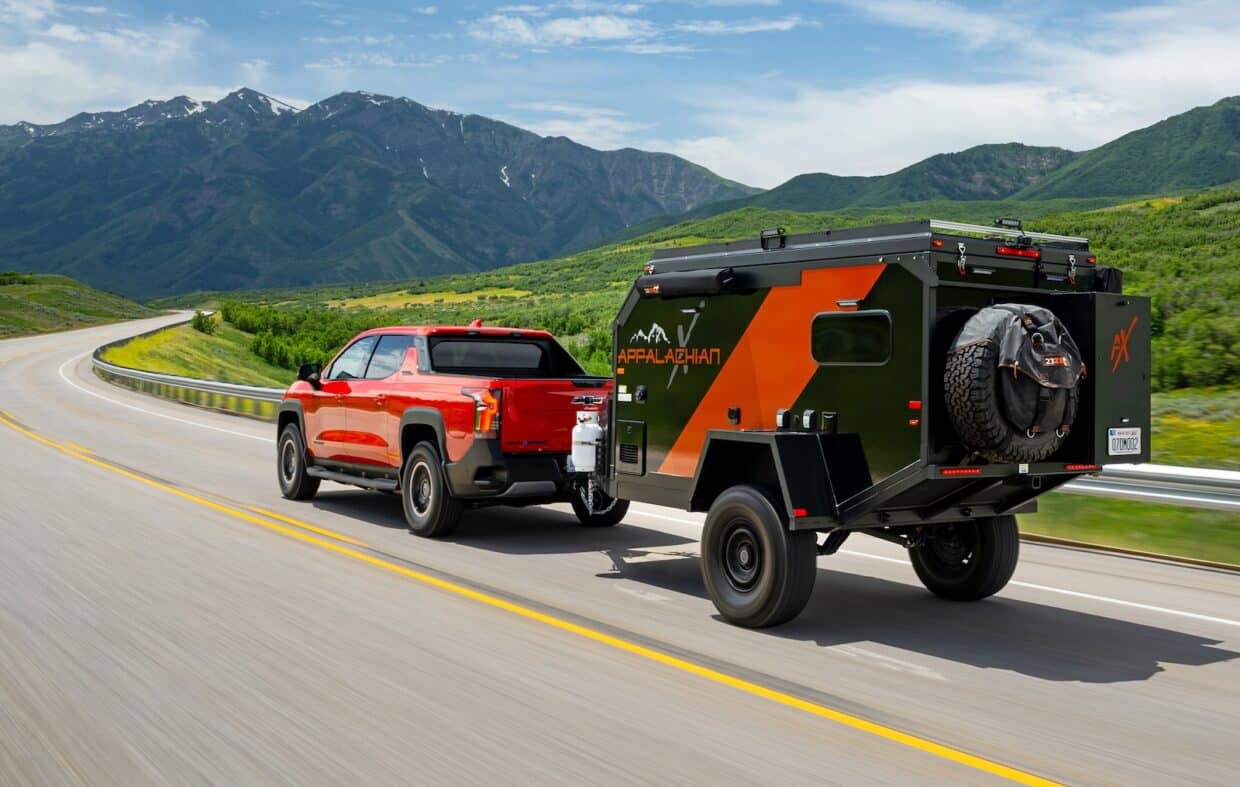
Everyone wants a one-ton diesel with enough torque to rewind time like Superman when Lois died. Most people really just need to pick up mulch twice a year and occasionally tow a fishing boat.
Before looking at listings, ask yourself:
- What will I actually tow?
- How much payload do I really need?
- How often will I realistically drive it?
- Is fuel economy important to me?
- Do I really need four-wheel drive?
Buying more truck than you need usually means paying more upfront and then spending more again on fuel, insurance, maintenance, and replacement tires down the line. Those massive all-terrain tires may look fantastic in Instagram photos, but your accountant will begin sending strongly worded letters threatening audit every time one wears out.
Half-ton pickups fit the needs of the overwhelming majority of buyers. Three-quarter-ton and one-ton trucks make sense if you’re regularly towing (actually) heavy trailers, hauling equipment, or moonlighting as a construction foreman on weekends.
It’s also important to consider costs of ownership when deciding to buy a used truck. The insurance, maintenance costs, and frequency of repair are often dramatically different when looking at a midsized, half-ton, or heavy duty pickup. Make sure you have a good idea of what costs will be. Australian buyers pricing the same decision can run a quote with insurers such as NRMA Insurance before committing, since cover on a heavy-duty ute rarely costs what cover on a half-ton does. Don’t be shocked to find out that an oil change and fluid check in a 2500-class diesel truck is double or more the price compared to a gasoline-powered 1500.
Research the Specific Engine
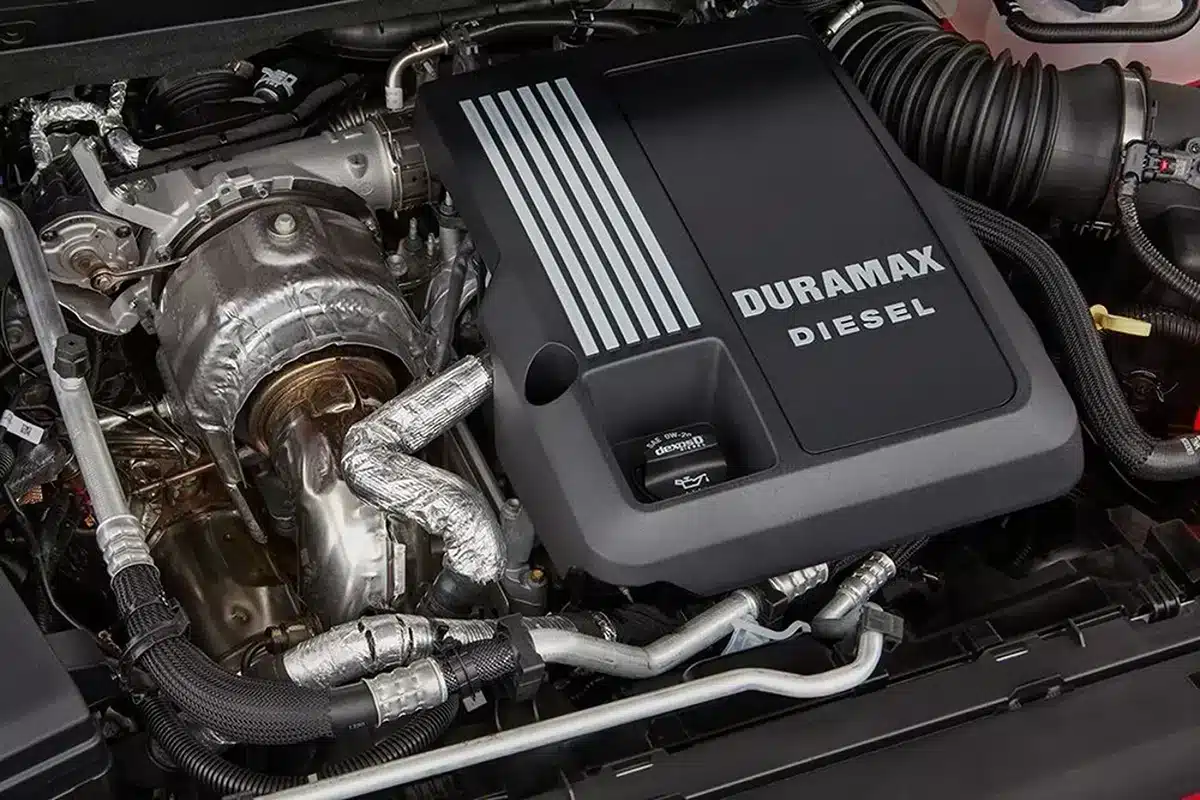
Here’s the thing about trucks: the badge on the grille tells only half the story. Most full-sized trucks, for example, have been offered with everything from naturally aspirated V6s to turbocharged options, diesels, and various V8s. Even midsized trucks have gone from natural V6s being the norm to a mix of turbocharged and non-turbo options. Transmissions have, similarly, changed a lot over the past couple of decades, going from gears you can count one-handed up to both hands at once.
Some drivetrains are legendary. It’s what they’re legendary for that matters. Not all legends are heroes.
Spend a little time researching the exact engine and transmission in the truck you’re considering. Look for recurring issues rather than isolated horror stories. Every engine has at least one owner convinced it will summon Armageddon.
No matter the model, every truck has its known problems. Ford’s early 5.4 Triton had timing concerns. Some GM 5.3 V8s developed AFM lifter failures. Certain EcoDiesels earned reputations for emissions-related problems. The point isn’t avoiding every engine with a known issue (because that’s impossible), it’s knowing what those issues cost if they happen or if those issues have been resolved.
Recall histories, technical service bulletins, and teardown videos can reveal weaknesses that a glossy used car dealership listing conveniently forgets to mention. Even forums, if taken with some salt, can shed light on common issues a truck you’re considering might have.
Don’t Fear the Mileage
Mileage matters, but maintenance matters more. Once you’ve narrowed your search to a few trucks, it’s time to stop looking at the odometer and start looking at how the truck was treated.
A truck with 180,000 miles and a binder full of service records is usually a safer purchase than one with 85,000 miles that appears to have been maintained using positive affirmations and scented essential oils.
Look for documentation of:
- Oil changes (and how regular they’ve been) and whether the right lubricant was used for the engine type. Diesel trucks in particular require oils formulated for high-load, high-temperature operation; a diesel engine maintenance guide can help you verify whether the service history reflects proper spec compliance.
- Transmission service
- Differential and transfer case fluid replacement
- Cooling system flushes
- Brake fluid checks/flushes
- Tire rotations/replacements
- Spark plug & filter replacements
- Suspension, brake pads/rotors, wheel alignments
- Fluid analysis reports
- Recall repairs
Maintenance records are like good personal references on a résumé. They don’t guarantee perfection, but they’re a lot more reassuring than someone saying, “Trust me.”
Before You Test Drive That Truck
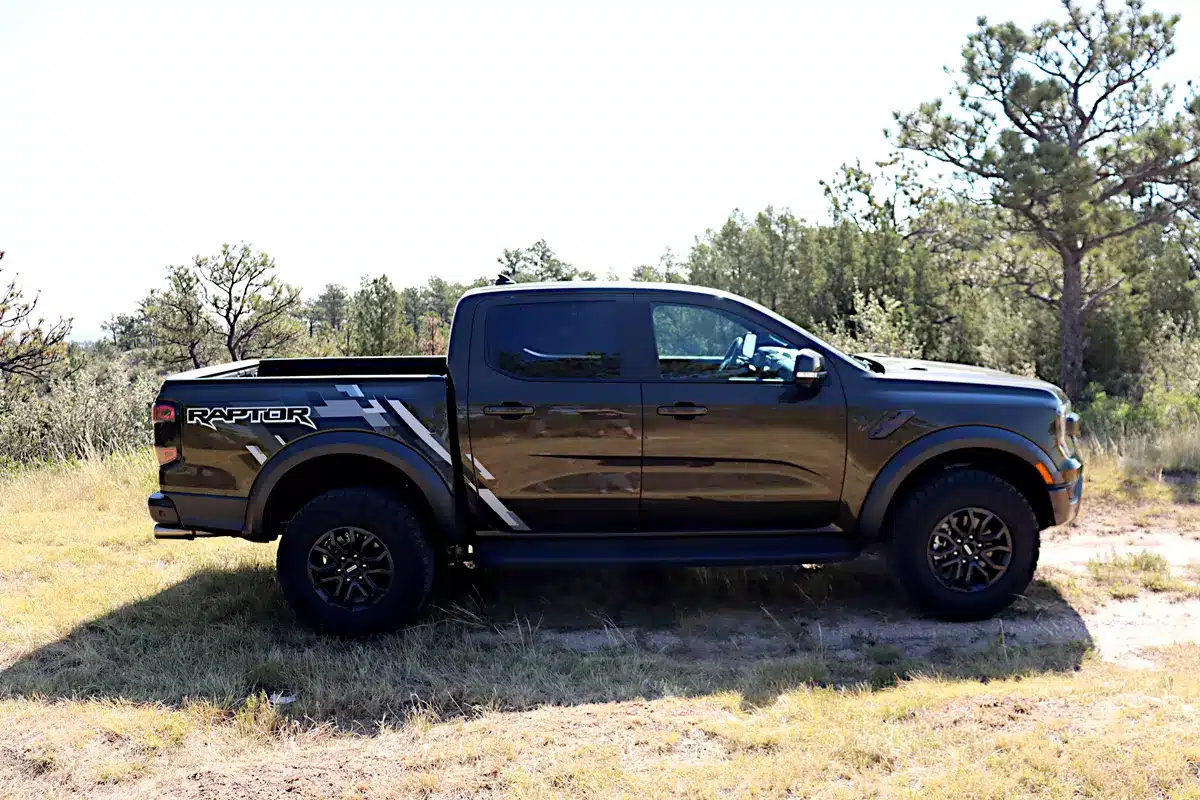
Start with a walk around the truck. Look for:
- Uneven panel gaps
- Mismatched paint
- Rust around wheel wells and frame rails
- Bent bumpers
- Excessive dents in the bed
- Cracked lights
- Uneven tire wear
Uneven panel gaps indicate a likely body problem or repair, such as sagging door hinges or an accident requiring body work. Mismatched paint does the same. Rust happens, but if it’s getting thick, it’ll probably happen around the wheel wells or on the frame. Bent bumpers, excessive damage to the bed, and cracked lighting are all indications of heavy use and maybe neglect. Uneven tire wear often points toward suspension or alignment issues.
Make sure you open every door (looking at the sills and underneath the door itself), check underneath the truck, and look specifically at the frame. Surface rust might be OK, but heavy rust, especially on the frame or in the wheel wells, indicates something more. Heavy scaling, flaking metal, or fresh undercoating applied suspiciously to only one section deserves closer inspection. Fresh black paint underneath is usually a reason to find a different truck.
Match the Claimed History With What the Truck Tells You

Trucks are meant to work. There’s nothing wrong with that. But you want to know how they’ve worked. These observations may not fully sway your buy decision, but they definitely tell you what could potentially be wrong or go wrong with a particular pickup.
Signs of heavy towing include:
- Worn receiver hitch
- Trailer brake controller
- Sagging rear suspension
- Burnt transmission fluid
- Heavy wear inside the bed
Off-road use leaves clues too:
- Scratched skid plates
- Damaged control arms
- Mud packed into hidden areas
- Dented differential covers
- Rock damage underneath
None of these automatically eliminate a truck, but heavy towing could mean drivetrain or differential issues later. Off-road use could mean suspension components are more worn than their years of service indicate. Look for the truck’s verification of the life story its current owner tells you. A “pavement princess” that’s “always been garaged and never seen dirt” won’t have dried up mud chunks embedded in its rocker panels or a cracked dashboard.
Don’t Ignore Modifications
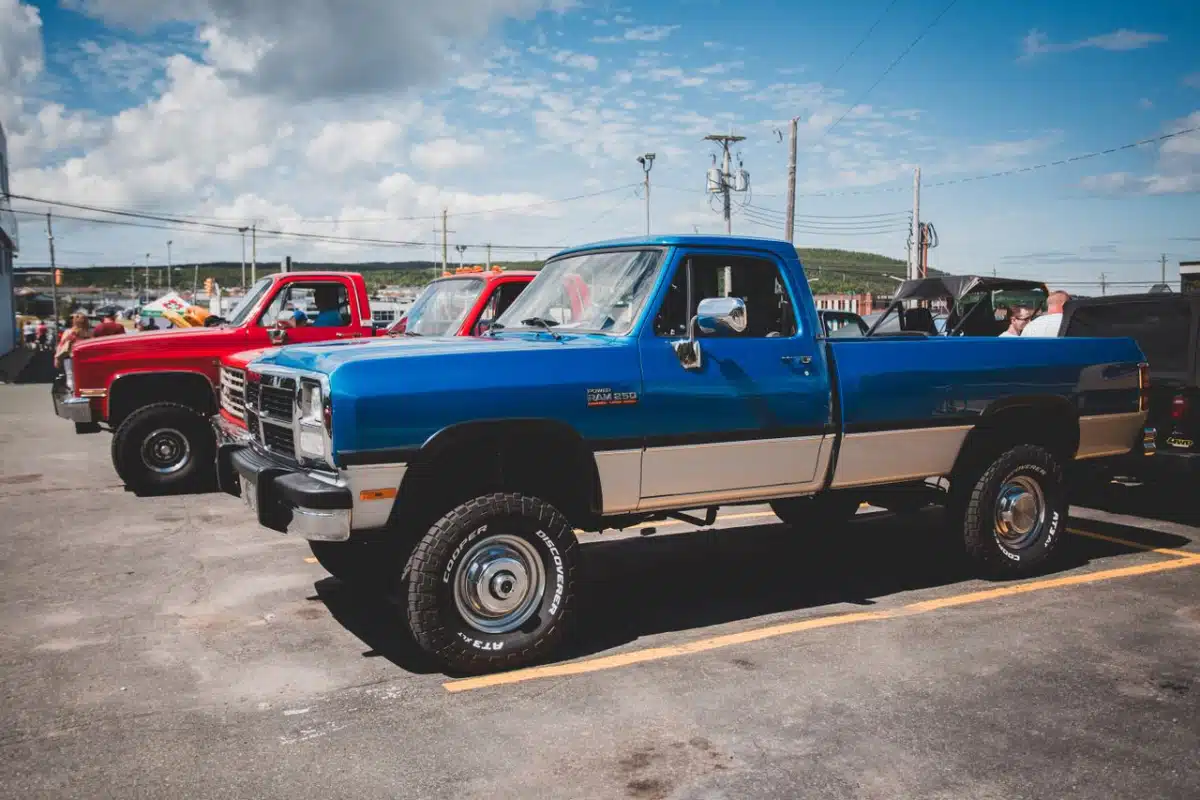
Lift kits, oversized tires, performance tunes, deleted diesel emissions systems, custom wiring… These can be either warning signs or upsides. They definitely demand that you ask more questions before buying.
Quality modifications installed professionally are usually fine and can add some value to the truck. But it’s possible that at least some of the mods you’re seeing weren’t professionally installed. Cheap modifications installed by someone’s cousin who owns a good-sized tarp for working under are always suspicious. Some modifications are downright illegal, even if the owner doesn’t realize it.
Whenever possible, stock trucks are usually the safest bet when you buy a used truck. The engineers who designed the suspension generally had a better understanding of geometry than Chad from Facebook Marketplace would.
Take a Real Test Drive

Five minutes around the block tells you almost nothing useful. Even the least shifty of sellers knows that fresh oil and clearing engine codes will probably pass a two-mile, five-minute test drive. Put a mix of use into the truck instead. If the seller protests too much, find another truck and let them sucker someone else.
- Drive on city streets
- Drive on the highway
- Find rough pavement
- Make tight turns in a parking lot
Pay attention to:
- Transmission shifts
- Steering feel
- Brake vibration
- Suspension noises
- Wheel bearing hum
- Engine temperature
- Warning lights
If it’s a four-wheel-drive truck, engage four-high and, if conditions safely allow, verify that four-low works properly. It’s surprising how many “works perfectly” four-wheel-drive systems haven’t actually been used since they left the factory. Like everything else, the 4WD system needs lubrication and that lubrication comes from being used.
After the test drive, crawl underneath the truck. Look for:
- Oil leaks
- Coolant leaks
- Transmission or differential seepage
- Damaged exhaust
- Torn CV boots
And look for rust, specifically on or around:
- Frame rails
- Spring hangers
- Cab mounts
- Brake lines
- Bed supports
Next, bring your OBD scan tool. A low-cost tool (under $50) will tell you a lot that you can’t see just eyeballing the dashboard. A scan can tell you what pending codes, recently-cleared codes, emissions readiness monitoring, and other live data is present.
Get a Vehicle History Report
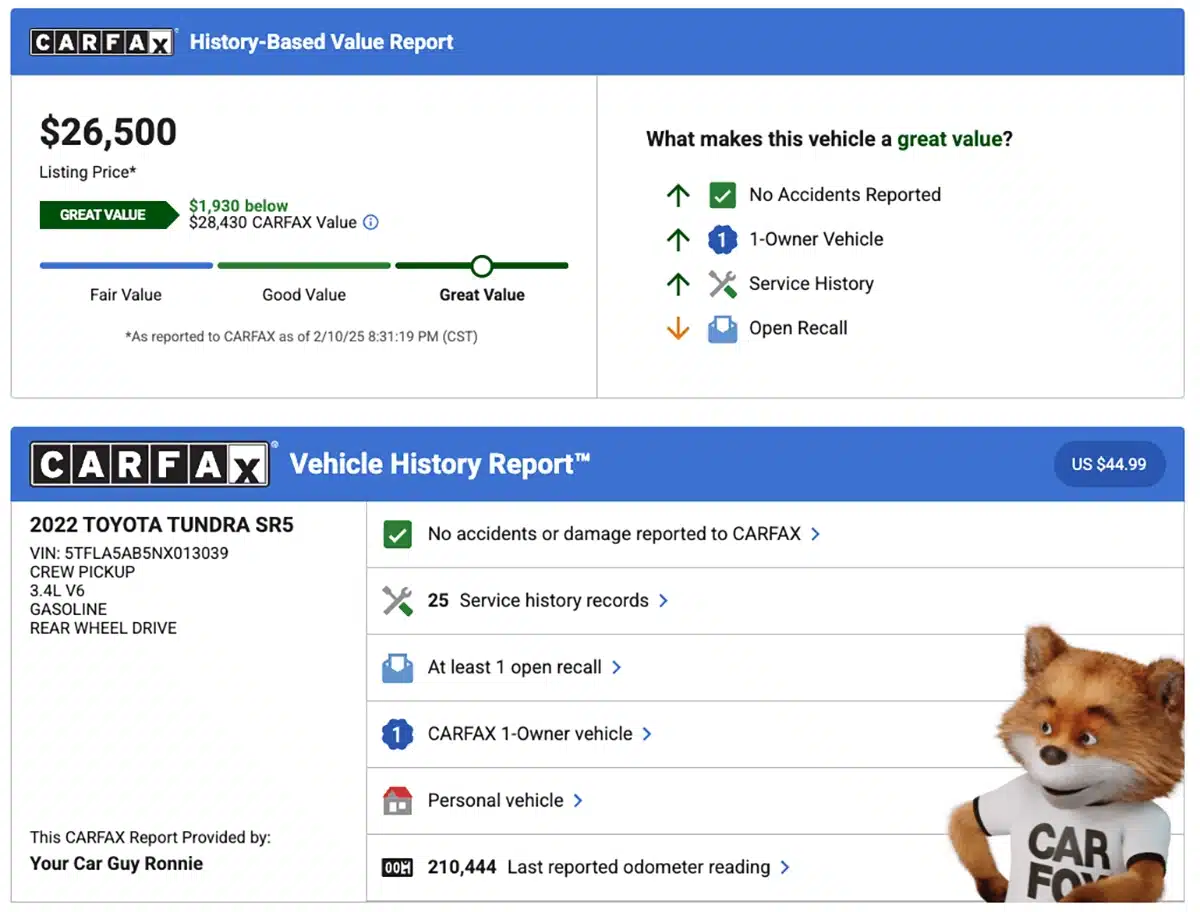
Up to this point, everything you’ve spent to check your potential new ride has just been time. Now it’s time to spend a little money because you don’t always get what you pay for with a truck’s price, but you do get it when you buy a few things first. Start with a vehicle history report. These aren’t perfect, but they’re valuable to see before you buy a used truck.
Look for:
- Accident history
- Title problems
- Flood damage
- Odometer discrepancies
- Number of owners
- Service history
Remember that not every accident gets reported, so don’t rely on history reports alone. Think of this as another tool and not the entire toolbox.
Pay for a Pre-Purchase Inspection

This may be the best money you’ll spend. If you’re serious about buying the used truck at this point, it’s worth spending money on an independent (meaning you pick, not the seller) mechanic to give it a thorough look-see. This will cost a couple of hundred dollars or more, but it will definitely be worth it. That little bit of cash now can save you thousands later.
The mechanic will often spot suspension wear, fluid leaks, hidden accident damage, engine concerns, and pending repairs that even experienced buyers miss.
The goal is to make sure that the used truck you buy isn’t going to immediately start raiding your retirement fund.
Negotiate the Price, But Be Realistic

Haggling is generally part of the used truck buying experience. But don’t expect to “get a great deal” when the market says otherwise. Trucks hold their value far better than do cars and most crossovers.
Research the market and see what similar pickups are selling for in your area. Citing a cheaper truck in Missouri when you live in Nevada isn’t going to help your case. The seller will, rightfully, tell you to go to Missouri then. Instead, try for a realistic discount or concession. Use the leverage you actually have rather than hoping the seller has some urgency in making the deal.
Maintenance history (or a lack thereof), problems you noted that weren’t in the listing, things your mechanic might have seen and the costs associated with fixing them are all things you can rightly use to drive down the price. Likewise, an unrealistic seller who believes that the cost of parts and labor to add upgrades is directly added to the selling price should be noted as unrealistic. This is especially true if the modification could mean legal or other costs down the road, such as emissions deletes or bead-locked tires being sold on an on-road truck.
Also note raised ownership costs because of changes or problems with the truck. Modifications can mean higher insurance or more risk of mechanical failure down the line.
Trust Your Instincts

If something feels off, walk away. There will always be another truck. If you feel even the least bit unsure about the truck you’re considering, leave it and think it over.
High-pressure sellers, incomplete paperwork, vague maintenance history, suspicious noises, or stories that become more complicated every time you ask a question are all reasons to keep shopping.
Buying a used truck isn’t about finding perfection. Every used vehicle has a few quirks. The goal is finding one whose flaws are known, manageable, and reflected in the asking price.
A little patience goes a long way. The truck you skip today could save you thousands in repairs tomorrow. The one you eventually buy should be ready to haul lumber, tow a camper, survive the daily commute, and maybe even earn a little character along the way. Without requiring you to become close personal friends with your mechanic.
The best used truck isn’t the newest one or the cheapest one. It’s the one whose history you understand, whose flaws you can live with, and whose next 100,000 miles you’re confident in. Buy that truck and you’ll spend more time using it than fixing it.
This post contains sponsored and/or affiliate links — we may receive a small commission for products purchased via links in this story, or we may have received compensation for including the link.