
As LiFePO4 lithium batteries continue to gain popularity in pickup trucks, SUVs, RVs, and trailer power systems, more vehicle owners are integrating lithium setups into their core electrical upgrades.
For the limited space in these vehicles, brands such as LiTime offer a range of compact lithium battery solutions, including the LiTime 12V 100Ah Xtra-Mini Bluetooth Small LiFePO4 Battery, the LiTime 12V 100Ah Ultra Slim Bluetooth Self-Heating Battery, and the LiTime 12V 200Ah Xtra Mini RV battery. These options cover different space constraints, installation needs, and off-grid runtime requirements. Among these choices, selecting the right configuration has become increasingly important.
While lithium batteries offer clear advantages over traditional lead-acid batteries in terms of weight, efficiency, and cycle life, their real-world performance still depends on usage habits, charging systems, storage conditions, and temperature management.
This article explains how to better identify and choose the right lithium battery solution for your specific use case, and how consistent, proper usage habits can help extend battery life.
Battery Selection for Pickup and SUV Power Systems
Based on typical pickup and SUV installation spaces and use cases, the following are three common LiFePO4 battery configurations and their applications. You can choose according to your vehicles.
Compact Installation Solution (For Tight Spaces) — LiTime 12V 100Ah Xtra-Mini Bluetooth Small LiFePO4 Battery
Designed for space-limited installations, this battery features a compact Group 22NF form factor (9.02 × 5.43 × 8.19 in) and weighs only about 19.13 lbs. It is roughly 23% lighter than a standard 12V 100Ah LiFePO4 battery and about 70% lighter than an equivalent 12V 100Ah AGM battery. At about half the size of a Group 31 battery, it still delivers a solid 1280 Wh capacity with stable output in a compact footprint.
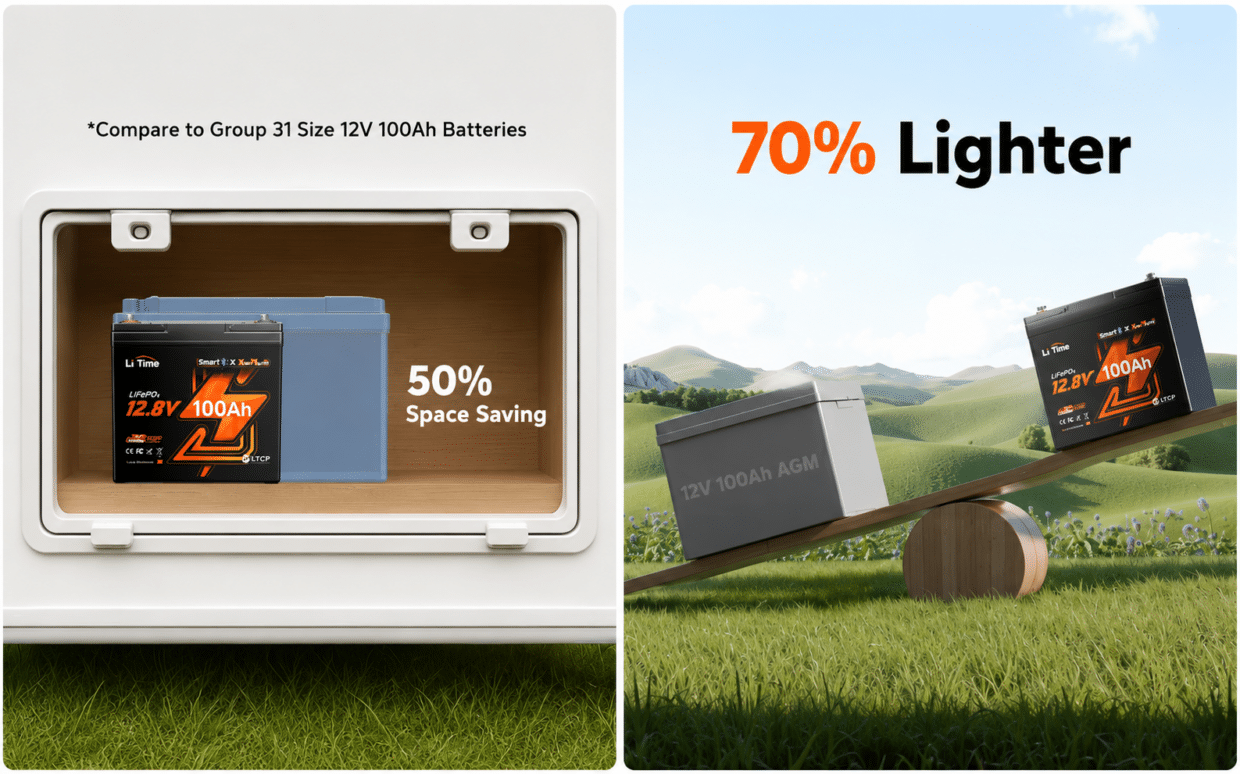
Built-in Bluetooth monitoring provides real-time battery status tracking, improving visibility and control in both off-grid and vehicle applications.
It is well-suited for space-constrained setups such as SUV cargo areas or custom pickup electrical systems, reliably powering essentials like portable refrigerators, lighting, and basic electronics.
Ultra-Slim Hidden Installation Solution — LiTime 12V 100Ah Ultra Slim LiFePO4 Bluetooth Self-Heating Battery
Featuring an ultra-slim, flat-profile design, this battery measures L19.68 × W11.02 × H2.44 in, with a thickness of just 2.44 inches and a weight of approximately 33.5 lbs. It can be flexibly installed under seats, inside wall cavities, storage compartments, cabinets, or integrated vehicle structures.
It is compatible with popular van and truck platforms such as Ford Transit, Mercedes-Benz Sprinter, RAM ProMaster, Toyota Tacoma, and Jeep Wrangler, making it ideal for RV builds, overlanding setups, and custom vehicle power systems.
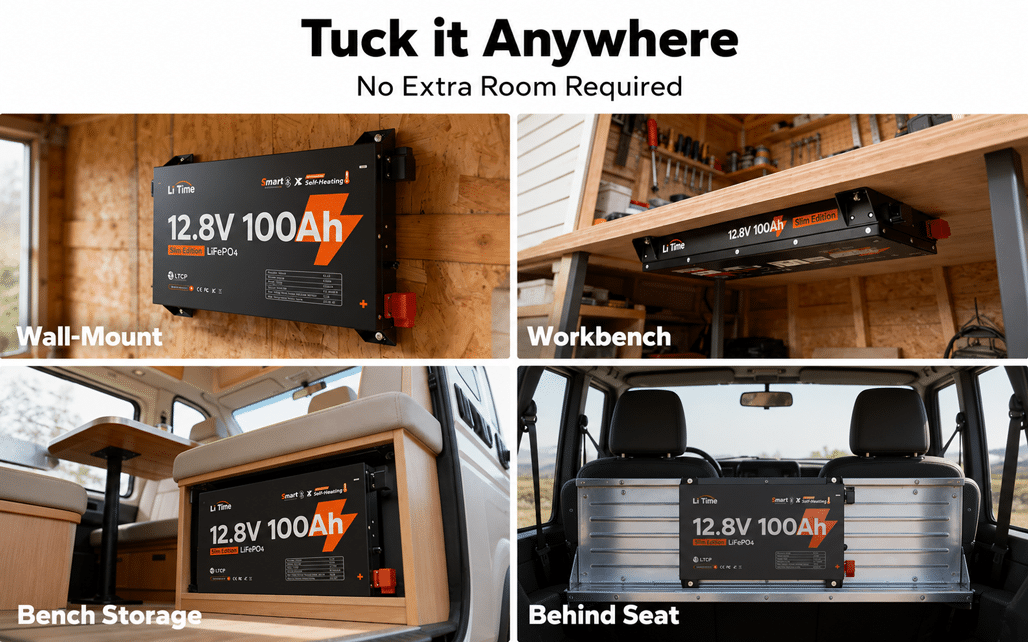
The rugged metal housing is rated IP65 for dust and water resistance, improving durability in outdoor environments. It also features LiHeat™ dual-mode self-heating technology, enabling low-temperature charging and stable operation in environments from −20°C to 60°C.
High-Capacity Long-Range Solution — LiTime 12V 200Ah Xtra Mini RV Lithium Battery
This battery delivers 200Ah capacity within a footprint close to a Group 31 size, achieving a strong balance between space efficiency and energy density. Compared with traditional 12V 200Ah LiFePO4 batteries, it reduces volume by about 41%, and compared with 12V 200Ah deep-cycle lead-acid batteries, it reduces size by about 48%, while effectively doubling usable energy.
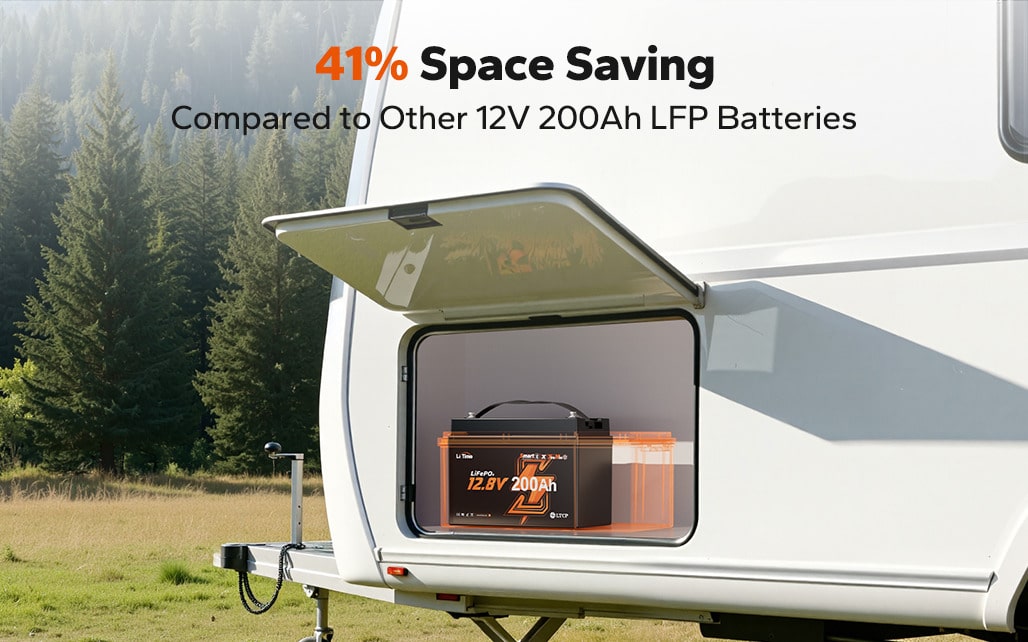
It is designed for high-demand applications such as long-distance overlanding, trailer camping, and RV off-grid power systems. It can simultaneously support multiple loads—including refrigerators, cooking appliances, lighting, and communication devices—reducing recharge frequency and improving overall off-grid endurance.
In addition to battery products, LiTime also provides complete system solutions for RVs, including AC-DC chargers, DC-DC chargers, MPPT solar charge controllers, inverters, and other accessories. These components can be used together to build a fully integrated system, reducing compatibility issues across different brands while delivering more efficient energy management and improved stability.
Why Pickup and SUV Applications Require More Battery Maintenance Awareness
While LiFePO4 batteries are inherently more stable, the following factors still have a meaningful impact on long-term performance:
- Long-term storage at full charge
- Deep discharge without timely recharge
- High-temperature exposure (e.g., truck beds under direct sunlight or enclosed compartments)
- Incompatible chargers or improper charging profiles
- Voltage imbalance in multi-battery systems
These issues usually don’t cause immediate failure, but they gradually reduce usable capacity and overall system efficiency over time.
Key Methods to Extend Lithium Battery Life
Tip 1: Storage State of Charge Management (Critical for Seasonal Users)
For users who don’t operate their vehicle power systems regularly (such as weekend campers or seasonal towing users), storage conditions play a major role in long-term battery health.
It is generally recommended to store the battery at around 50% state of charge (SOC), which offers a good balance between chemical stability and minimizing self-discharge effects.
In real-world pickup and SUV use, best practices include:
- Charge or discharge to approximately 50% before storage
- Disconnect all external loads
- Protect terminals to prevent corrosion or accidental short circuits
- Store in a cool, dry environment
- Avoid long-term storage in hot enclosed spaces such as vehicle cabins or truck beds
- Perform a recharge every 2–3 months
Tip 2: Post-Storage Inspection Before Reuse
When a battery has been stored for an extended period (e.g., more than 3 months), a quick inspection before reinstalling it into a pickup, SUV, or trailer system helps ensure safe and reliable operation.
Inspection checklist includes:
- Swelling, cracks, or visible deformation of the casing
- Unusual odor or signs of leakage
- Corrosion or loosened terminals
It is recommended to use a lithium-compatible charger with an activation function to fully recharge the battery, wake the BMS from protection mode, and restore normal operating conditions.
Tip 3: Voltage Balancing in Multi-Battery Systems (Critical for RV and Trailer Applications)
In RV, trailer, and expanded SUV power systems, multi-battery setups (series or parallel) are common. In these configurations, voltage differences between batteries can gradually build up over time.
Without proper balancing, system performance is often limited by the weakest battery in the pack.
Common balancing methods include:
- Fully charging each battery individually to 100%
- Connecting batteries in parallel and allowing them to rest for 12–24 hours
- Using a dedicated battery balancer for system management
If balancing is skipped, it may lead to:
- Reduced overall system efficiency
- Uneven load distribution
- Faster degradation or premature failure of weaker batteries
Tip 4: Daily Usage and Maintenance Habits (Key to Long-Term Stability)
In pickup and SUV applications, battery lifespan is often influenced more by daily habits than by individual charge cycles.
Practices to avoid:
- Using batteries in high-humidity or water-exposed environments
- Ignoring loose or corroded terminals
- Allowing metal tools or objects to cause short circuits
- Operating the system in sealed, high-temperature environments
Recommended practices:
- Regularly inspect all electrical connections
- Keep terminals clean and tightly secured
- Ensure proper ventilation during operation
- Avoid frequent deep discharges (below 20%)
- Follow proper storage procedures when not in use
Tip 5: Charging Strategy Optimization (A Key Factor in Real-World Performance)
Charging behavior plays a major role in long-term lithium battery performance in truck, SUV, and trailer systems.
Recommendations include:
- Avoid keeping the battery at 0% or 100% for extended periods
- Use chargers compatible with LiFePO4 chemistry
- Avoid low-quality or mismatched charging equipment
- Prevent overcharging or unstable voltage input
In everyday use, maintaining a 20%–80% SOC range typically provides the best balance between usable power and long-term battery life.
Tip 6: Temperature Management (A Critical Variable in Vehicle Applications)
Temperature is one of the most important—and often overlooked—factors affecting lithium battery lifespan.High temperatures accelerate internal chemical aging, while low temperatures reduce discharge efficiency and can impact charging safety.
Recommended operating and charging ranges:
- Standard batteries: 0°C–50°C (32°F–122°F)
- Self-heating batteries: -20°C–50°C (-4°F–122°F)
Avoid:
- Direct sun exposure in truck beds
- Heat buildup in sealed toolboxes or compartments
- Installation near engine or exhaust heat sources
Conclusion: Reliability Comes From the System Use, Not Just the Battery
Long-term reliability for lithium batteries depends on overall system design and real-world usage habits—not just the battery itself.
Key principles include:
- Proper state-of-charge management during storage and daily use
- Compatible and stable charging systems
- Effective temperature control in vehicle environments
- Regular inspection and system balancing
- Selecting the right battery configuration for the application
When these basics are followed, lithium batteries can deliver more stable performance and a more reliable, sustainable mobile power experience.