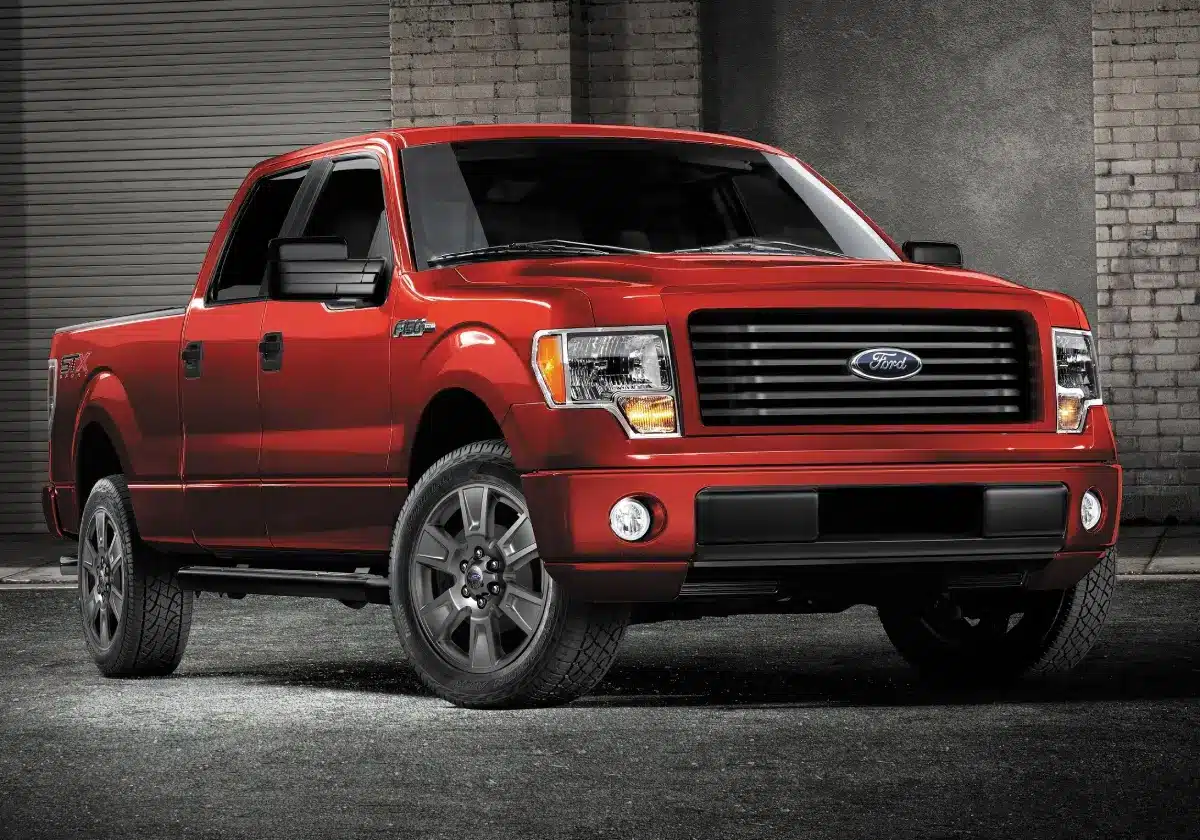
A recall of 44,963 Ford F-150 pickups for transmissions that might downshift unexpectedly, potentially leading to a loss of control when the transmission slams into first gear.
Ford Motor Company (Ford) is recalling certain model year 2014 F-150 vehicles previously repaired incorrectly under recall number 24V444. A loss of signal between the transmission output shaft speed sensor and the powertrain control module (PCM) can cause the transmission to unexpectedly downshift into first gear.
The date VINs are planned to be searchable is July 6th, 2026.
Here is the relevant information from the NHTSA Recall notice:
NHTSA ID Number: 26V378000
Manufacturer: Ford Motor Company
Components: POWER TRAIN
Potential Number of Units Affected: 44963
Descriptive Information:
The Ford process is capable of determining which software part numbers have been installed in production and service. Affected vehicles may not have received the Powertrain Control Module (PCM) software remedy for Ford Recall 24S37 / 24V444.
These F-150 pickups are not produced in VIN order. Information as to the applicability of this action to specific vehicles can best be obtained by either calling Ford’s toll-free line (1-866-436-7332) or by contacting a local Ford or Lincoln dealer who can obtain specific information regarding the vehicles from the Ford On-line Automotive Service Information System (OASIS) database.
44,963 F-150 vehicles are affected.
Description of the defect or noncompliance:
According to Ford’s records, certain 2014 MY Ford F-150 vehicles did not have the remedy for Safety Recall 24S37 / 24V-444 installed correctly but were recorded as having the repair successfully completed. Because the correct software update remedy may not be installed on the vehicle, the underlying condition specified in Safety Recall 24S37 / 24V-444 may still exist, and the vehicles may experience an intermittent loss of the transmission Output Shaft Speed (OSS) sensor signal to the Powertrain Control Module (PCM), potentially resulting in a temporary, unintended downshift into first gear.
Description of the safety risk, including crash, fire, death, injury:
The underlying safety risk specified in Safety Recall 24S37 / 24V-444 still exists on this specified vehicle. Ford described that safety risk as, “Depending on the vehicle speed at the time of an intermittent OSS failure, an abrupt transmission downshift to first gear could occur. A downshift to first gear without warning could result in a loss of vehicle control, increasing the risk of a crash.”
Description of the cause:
Ford has identified various causal factors of an intermittent OSS signal in this population of vehicles, including contamination, power short to ground, connector corrosion, connector pin swaging, and incorrect outputs from the OSS sensor.
Identification of any warning that can occur:
A downshift to first gear may illuminate a Malfunction Indicator Light (MIL). In some cases, the OSS signal could recover while driving and the vehicle will resume normal function; in other cases, the vehicle may need to be stopped and restarted to regain normal transmission operation.
Chronology
On November 26, 2024, an issue pertaining to incomplete software recall remedies was brought to Ford’s Critical Concern Group (CCRG) for review. This issue was initially identified in a Quality Office forum, where an audit was requested for software part numbers applied to vehicles remedied under a sample of field service actions (FSAs). Initial review of three FSAs revealed insufficient data to confirm correct software application across all FSAs using the current field service tool, known as FDRS. CCRG decided to conduct further investigation.
In December 2024, a cross-functional team was formed to audit all software FSAs that used the FDRS service tool, with its first focus being on safety and compliance FSAs. Templates were created to track software lineage part numbers.
On December 19, 2024, Ford informed NHTSA of this concern — the service tool data confirmed that the software state on the service tool at the time of installation matches the FSA software release for most vehicles. However, there are vehicles that do not have a match between the software state on the service tool and the FSA software release. Ford discussed with NHTSA its plan to address the mismatched vehicles.
In January 2025, the cross-functional team created database records to store all software lineage part numbers for previously launched FSAs. The team then began auditing the current software level for every VIN repaired under several previously launched FSAs.
In March 2025, during a comprehensive audit of software-related FSAs dating back to 2017, discrepancies were identified during the transition between the legacy field service tool, known as IDS, and the new FDRS service tool. The audit revealed that implementation inconsistencies found in FDRS could also be present within the IDS software as well as a significant lack of historical data. Further investigation was deemed necessary.
In November 2025, a harvest program was approved to assess the success of remedies applied using the IDS tool for programs administered during this transition period. Results of this harvest program showed that in some FSAs, the intended remedy software may not have been successfully applied to all vehicles.
On April 16, 2026, the matter was presented to the Critical Concern Review Group (CCRG). The CCRG determined that several FSAs that had a recall remedy implemented using the IDS tool may have been closed without that remedy being installed. As a result, an activity was initiated to verify the software levels of vehicles that previously received these FSA repairs. The VINs included in this program are both (1) VINs confirmed to contain the incorrect software, and (2) VINs with a closed FSA, but the software version cannot be confirmed due to gaps in the records.
On May 27, 2026, Ford’s audit team confirmed that the software state matched the FSA software release in a subset of vehicles out of the total population of completed FSA 24S37 remedy repairs.
On June 2, 2026, Ford’s Field Review Committee reviewed the concern and approved a field action.
Description of remedy program:
Owners will be notified by mail and instructed to take their vehicle to a Ford or Lincoln dealer to have the PCM software updated. Then, the software part numbers will be validated using the Software Validation Form in the Professional Technician System before the FSA is closed. There will be no charge for this service.
Ford provided the general reimbursement plan for the cost of remedies paid for by vehicle owners prior to notification of a safety recall in May 2023. Owners who have paid to have these repairs completed at their own expense may be eligible for reimbursement, in accordance with the recall reimbursement plan on file with NHTSA.
How remedy component differs from recalled component:
The software service package will have the intended remedy for 24S37 / 24V-444.
Identify how/when recall condition was corrected in production:
Not required per 49 Part 573.
Description of recall schedule:
Notification to dealers is expected to occur on July 6th, 2026. Mailing of remedy owner notification letters is expected to begin July 6th, 2026, and is expected to be completed by July 10th, 2026.