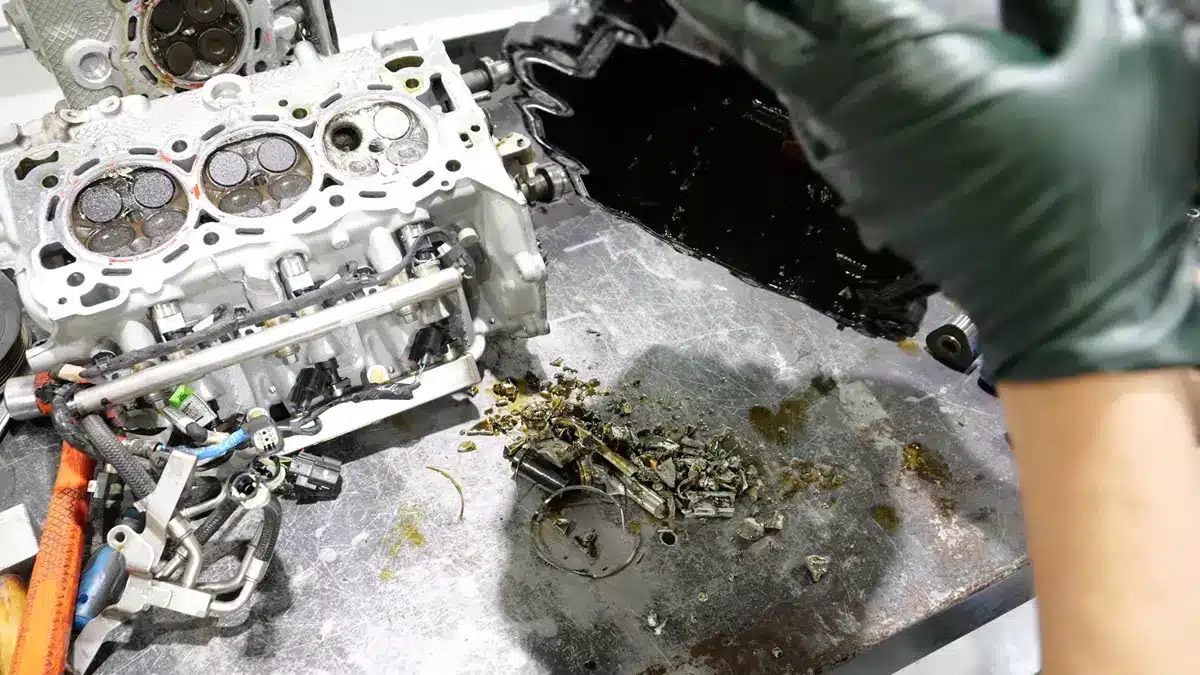
The 2.7-liter EcoBoost engine (aka “The Nano”) is considered one of the most robust and problem-free engines in Ford’s lineup. It’s found in several popular vehicles like the F-150, the Bronco, the Ranger, and others. Its reputation for strong power output and dependability is well-earned. Yet the second-generation of the 2.7L EcoBoost (2018 model year forward) has two common failure points that owners should be aware of.
In a series of engine teardown videos, YouTuber I Do Cars takes three 2.7L EcoBoost engines apart, finding a couple of possible reasons for their demise. The engines lived different lives before being condemned after failure, but have similar internal signs of design flaws.
The First Problem: Valves Melting
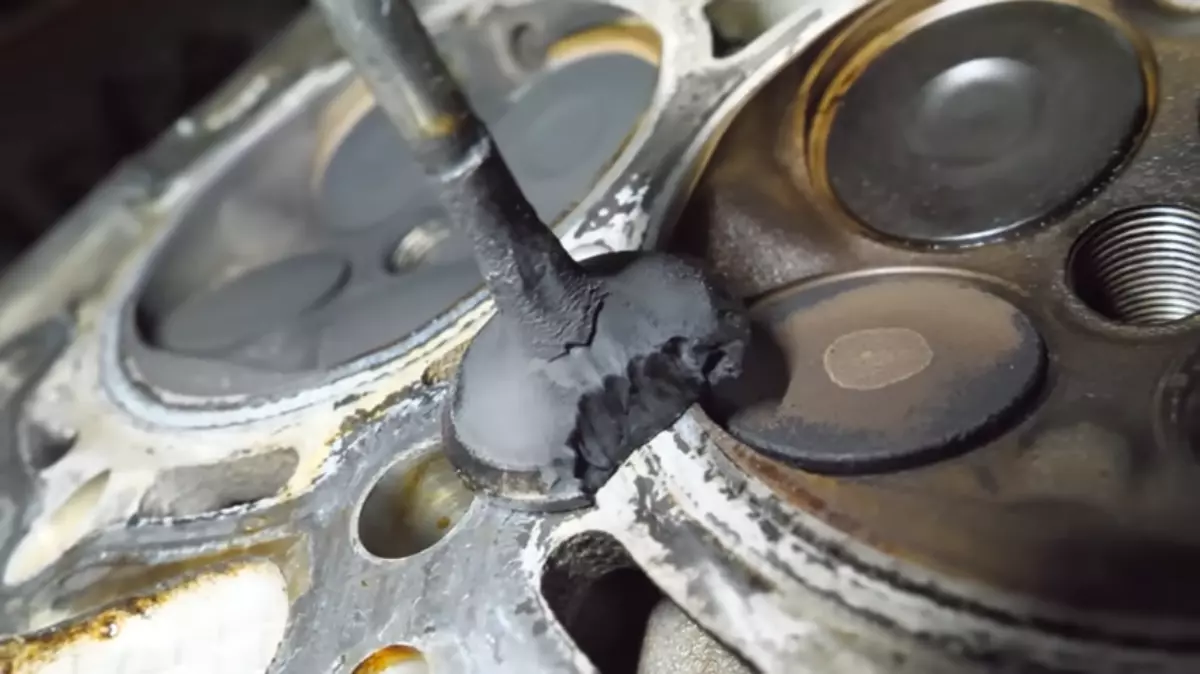
Early in its production life, the 2.7 Nano had a recall for intake valves being brittle and requiring replacement. Each of the engines being torn down was beyond that recall, having either had the work done to fix it or being made after the problem was remedied at the factory. Yet they also had valve failures. Just not on the intake side.
Two of the three engines being torn down had very clear exhaust valve melting that ultimately doomed them. The third had signs that this problem was coming.
The reason for the melting isn’t easy to diagnose. Most likely it is from bad fuel, too much fuel, a failing fuel pump, or bad valve rings or ring seats. Probably a combination of these things.
The 2nd-generation 2.7L EcoBoost uses both port and direct injection. This means that it sprays fuel onto the back sides of the intake valves as well as directly into the combustion chamber. This has advantages, such as keeping the intake valves clear of carbon buildup during low-RPM and high-torque operation, but this feature could also be leading to over-fuel in the combustion process.
A rich fuel mixture could mean that unburnt fuel is being ejected with the exhaust and potentially coating or detonating on the exhaust valves. It could also cause over-pressure in the chamber or late detonation (knock) that would exploit weak points such as valve rings or the valves themselves. Since the exhaust valves would be the valves opening nearest these events, they’d be most susceptible to damage.
The causes here are all speculative, but further analysis of 2.7L EcoBoost engines whose exhaust valves have melted as shown in this I Do Cars’ series of videos could find the culprit(s).
The Second Failure Point: Plastic Pan Means Too Much Gasket Goop
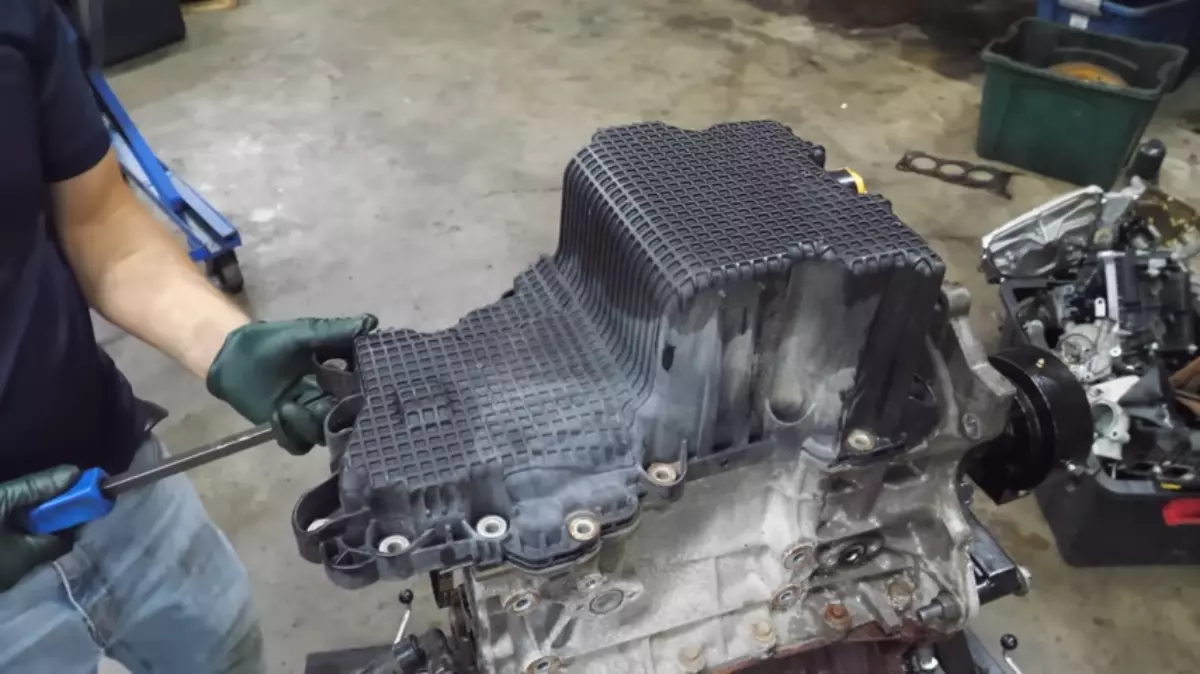
For owners of Ford’s trucks and SUVs, the 2.7L EcoBoost has a design problem. It utilizes a plastic oil pan. All by itself, this probably isn’t a big issue. But the gasket seal used to keep it in place might be.
Copious amounts of the silicon and other materials that commonly make up gaskets in engines is often an eventual cause of oil starvation in the engine. The extra material that squeezes into the pan when its bolts are torqued down can eventually get into the oil itself. Once there, it can circulate and clog oil ports. Especially the smaller ones such as those towards the top of the block. This can cause bearing failures, overheating, or worse.
This overabundance of gasket seal was seen in all three engine teardowns by I Do Cars when the oil pan was removed from the 2.7L EcoBoost.
Teardown Also Reveals High Points of the 2.7L EcoBoost Nano
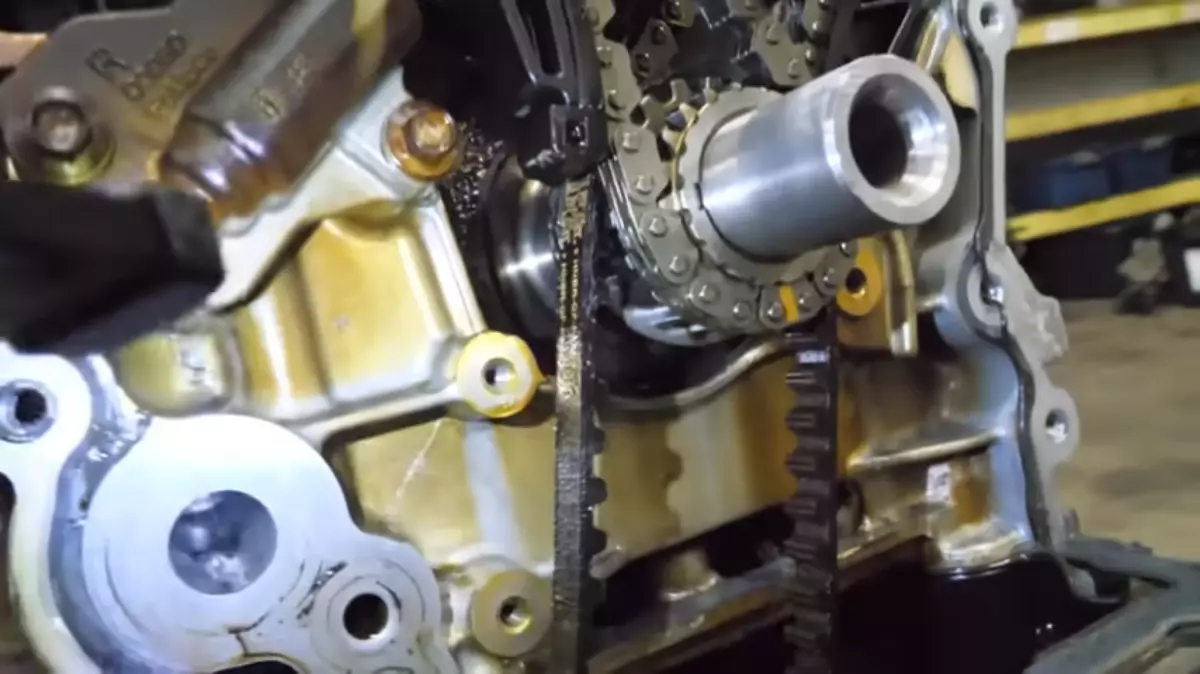
The teardown videos also reveal some high points for the 2.7L Nano. Not only are turbochargers rarely a failure point, but the engine block itself is very robustly designed. Made of compacted graphite-iron, the main block is extremely strong. Underneath, aluminum in a strong latticework creates stiffening in the lower block. A plastic oil pan is probably the only questionable design feature of the short block itself.
Further, both the pistons and main bearing caps are of a split-cap design, which means they’re forged as one piece and then fractured apart to create a perfectly-matched connection point when clamped. Fractured piston caps are not totally uncommon, especially in diesel engine design, but are relatively rare in light-duty applications. Fractured main bearing caps are almost unheard of outside of racing and very heavy-duty applications.
Even the oft-maligned, but so far extremely durable kevlar oil pump belt isn’t a weak point in this 2.7L engine. At least not until its maintenance interval comes around.
What Can Be Learned From These 2.7L EcoBoost Teardowns
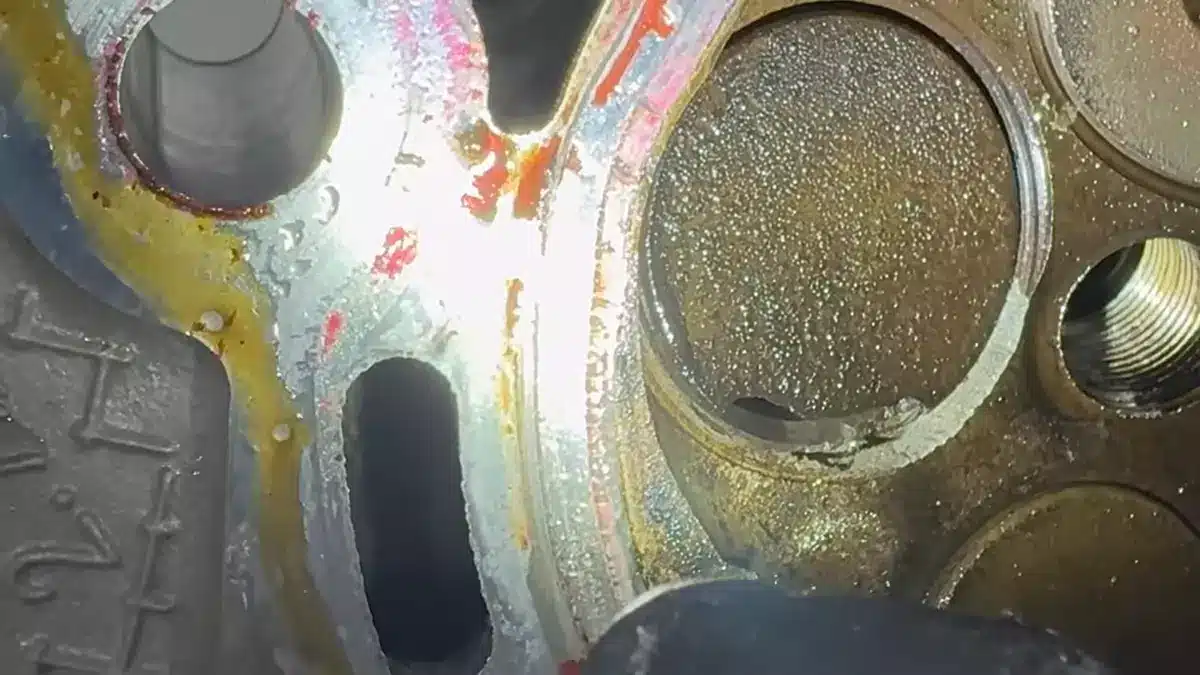
The biggest takeaway is that an exhaust valve failure point in the second-generation 2.7L Nano might be more common than expected. Because failures like this can happen and not immediately cause engine breakdown, it may be seen as a symptom rather than root cause of a decommissioned engine. Or maybe never noticed to start with as most warrantied engines are turned in for core value and subsequently crushed.
We can also see, first hand, that while the maintenance interval cost of replacing the oil pump belt is expensive, the belt itself doesn’t seem to be a problem component in the 2.7L EcoBoost. This should help put to rest the complaints many enthusiasts have about this engine.
Finally, despite its extremely robust design overall, the 2.7L EcoBoost Nano does have some questionable design features. Such as the lack of a weep hole on the transverse-mounted versions and the aforementioned exhaust valve issues.
For the most part, the 2.7’s design is very strong and well-suited to the applications it’s meant for. Perhaps even overbuilt in some cases.